
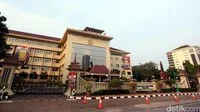
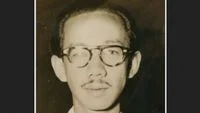
In the complex tapestry of Indonesia’s state-building era, the foundations of national institutions were forged amid intense political friction, revolutionary fervor, and ideological battles. Recently, President Prabowo Subianto paid homage to several legendary figures of the Indonesian National Police (Polri), highlighting their exceptional leadership and unyielding integrity during the formative years of the republic. Among these towering figures is Raden Said Soekanto Tjokrodiatmodjo, the inaugural Chief of the Indonesian National Police. While history frequently celebrates iconic successors such as General Hoegeng Imam Santoso for their uncompromising honesty, it was Soekanto who shouldered the monumental burden of transforming a fragmented, colonial security apparatus into a unified national police force immediately following Indonesia’s declaration of independence in 1945.
However, Soekanto’s monumental contributions were ultimately overshadowed by a dramatic power struggle, intense internal institutional conflict, and politically damaging controversies involving his spiritual practices and alleged affiliations with esoteric movements like Freemasonry. His departure from the pinnacle of law enforcement on December 14, 1959, marked not only the end of a remarkable 14-year tenure but also a critical turning point in the relationship between professional state institutions and the mercurial political landscape of President Sukarno’s Guided Democracy.
The Genesis of the Indonesian National Police: Foundation and Structural Vision
Appointed as the first head of the police force on September 29, 1945, Raden Said Soekanto Tjokrodiatmodjo stepped into a volatile vacuum. The newly proclaimed Republic of Indonesia lacked centralized administrative infrastructure, standardized communication channels, and a unified security apparatus. Soekanto’s immediate mandate extended far beyond conventional law enforcement; he was tasked with conceptualizing, organizing, and institutionalizing a national police force from the ground up while the nation was actively fighting to preserve its independence against Dutch military re-occupation efforts.
During his decade-and-a-half in command, Soekanto engineered the foundational architecture of Polri. His strategic vision focused on three critical pillars: establishing comprehensive police education and training academies to professionalize the rank and file, centralizing disparate regional police units that had operated autonomously under local militias or colonial remnants, and constructing a centralized headquarters capable of commanding nationwide operations. Despite severe budget constraints, wartime destruction, and logistical nightmares, Soekanto managed to instill a distinct institutional identity that separated the police from the military, establishing civil law enforcement as a pillar of the sovereign state.
Yet, the unprecedented length of his tenure—spanning from the tumultuous Indonesian National Revolution through the parliamentary democracy era and into the early stages of Guided Democracy—bred institutional fatigue, generational friction among officers, and mounting political vulnerability.
Spiritualism, Mysticism, and Institutional Friction
By the late 1950s, cracks within the upper echelons of the police force began to widen. A primary catalyst for internal dissent was Soekanto’s deep engagement with Javanese mysticism (kejawen), broader kebatinan spiritualism, and non-traditional philosophies, including Indian yoga practices. In an era where modern state institutions were rapidly seeking secular, rationalized identities, Soekanto’s personal pursuits became a lightning rod for criticism from ambitious younger officers.
According to historical accounts, including insights from Toti Soebianto, Soekanto’s former aide-de-camp, in his 1998 biographical work Sosok Raden Said Soekanto Tjokrodiatmodjo: Melalui Spiritual Membangun Polisi yang Profesional, the police chief viewed spiritualism not as a distraction, but as an essential philosophical anchor for building the mental resilience, emotional maturity, and moral integrity required of a modern police officer. Soekanto believed that physical and tactical training alone were insufficient without a deeply rooted spiritual conscience to resist corruption and abuse of power.
Conversely, many high-ranking officers perceived these practices as archaic, esoteric, and unbecoming of a modern national security leader. This cultural divide within the headquarters eroded the chain of command. General Hoegeng Imam Santoso, who later became the fifth Kapolri, documented in his 2009 biography Hoegeng: Oase Menyejukkan di Tengah Perilaku Koruptif Para Pemimpin Bangsa that the internal opposition reached a boiling point when a faction of senior officers drafted a formal resolution directed at President Sukarno.
"A number of high-ranking POLRI officers submitted a sort of resolution to President Sukarno, the essence of which was that they no longer recognized the leadership of Kapolri R.S. Soekanto," Hoegeng wrote, clarifying that he remained detached from the rebellious faction’s direct maneuvers. The dissident officers argued that Soekanto was no longer effective because his attention was allegedly monopolized by his mystical pursuits.
Concurrently, rumors and allegations swirled regarding Soekanto’s alleged involvement with international esoteric organizations, specifically the Freemasons. Historical records confirm that Soekanto was active within Freemasonry circles and was reportedly appointed as the Grand Master of the Grand Lodge of Indonesia (Loji Timur Agung) in 1959. While these associations fueled conservative political rhetoric and added fuel to the fire for his detractors, historians note that neither mystical activities nor Freemason connections were ever legally substantiated as formal grounds for his eventual dismissal.
The Climax of Conflict: Mutiny, Suspension, and Direct Intervention by Sukarno
The ideological and operational schism within the police force soon transformed into an open institutional war. Recognizing that a faction of officers was actively undermining his authority, Soekanto decided to take decisive disciplinary action. On December 11, 1959, he publicly announced the existence of a conspiratorial clique within the police administration that he accused of systematically sabotaging organizational unity, operational discipline, and the strict military-style hierarchy of the force.
As documented in contemporary reports from the Merdeka newspaper on December 16, 1959, Soekanto delivered a scathing critique of the dissidents, accusing them of trying to usurp power through illicit and unethical means. "They have abused the name of the State Police Corps in Java in dishonest and base ways. They have stabbed the body of the police from behind and have tried to place themselves in the leadership positions of a nation’s police force," Soekanto stated at the time. To restore order, he promptly issued suspensions against several high-ranking officers implicated in the conspiracy.
However, Soekanto miscalculated the political backing of his subordinates within the corridors of the presidential palace. President Sukarno, who was actively consolidating his political power under the newly introduced framework of Guided Democracy and balancing various factions within the military and police to maintain his "Nasakom" (Nationalism, Religion, Communism) equilibrium, viewed Soekanto’s disciplinary actions as insubordination against presidential oversight. Sukarno explicitly commanded Soekanto to rescind the suspensions against the rebellious officers.
Refusing to back down and determined to protect the internal discipline of the institution he built, Soekanto stood his ground. This direct defiance of presidential instruction sealed his fate.
The Fall from Power and the Transition of Command
The confrontation between the nation’s chief law enforcement officer and the head of state reached its inevitable conclusion on December 14, 1959. President Sukarno officially terminated Soekanto’s tenure, citing direct violations of presidential commands as the official justification for the abrupt removal.
"The president has taken action on December 14, 1959; the Chief of State Police as the highest official of the state police has violated the president’s orders," Sukarno declared in an official statement addressing the dismissal.
According to Hoegeng’s historical recollections, Sukarno ultimately capitulated to the political pressure exerted by the anti-Soekanto faction within the police high command, utilizing the insubordination dispute as a convenient mechanism to purge a leader who had lost the consensus of his subordinates. In the aftermath of his dismissal, the government offered Soekanto a diplomatic exit strategy, appointing him as an ambassador to Turkey—an offer he declined. Command of the national police was subsequently transferred to Sukarno Djojonegoro.
Broader Implications and Posthumous Vindication
The downfall of Raden Said Soekanto Tjokrodiatmodjo offers critical insights into the fragile intersections of institutional autonomy, political loyalty, and personal philosophy in newly independent post-colonial states. Soekanto’s exit highlighted the inherent vulnerabilities of technocratic and foundational leaders when traditional bureaucratic chains of command fracture under political polarization and internal factionalism. His case underscored the ongoing struggle within the Indonesian security apparatus to balance modern administrative structures with traditional cultural values, a tension that would repeatedly surface throughout Indonesian political history.
Despite the unceremonious conclusion of his 14-year leadership and the controversies surrounding his mystical practices and political associations, history has ultimately rehabilitated Soekanto’s legacy. Decades after his departure, the Indonesian state formally recognized his monumental contributions to national development. In November 2020, the government posthumously conferred upon Raden Said Soekanto Tjokrodiatmodjo the prestigious title of National Hero (Pahlawan Nasional).
Today, as contemporary leaders like President Prabowo Subianto reflect on the historical architects of Indonesia’s state organs, Soekanto is remembered not for the political intrigues that ended his career, but for his ascetic personal integrity, his post-retirement modesty, and his enduring achievement: laying the indispensable structural and moral cornerstones upon which the Indonesian National Police stands today.



0 Komentar
Sampaikan opini dan diskusi yang membangun dengan bahasa yang santun.
Belum Ada Komentar
Jadilah yang pertama memberikan tanggapan mengenai berita ini.