
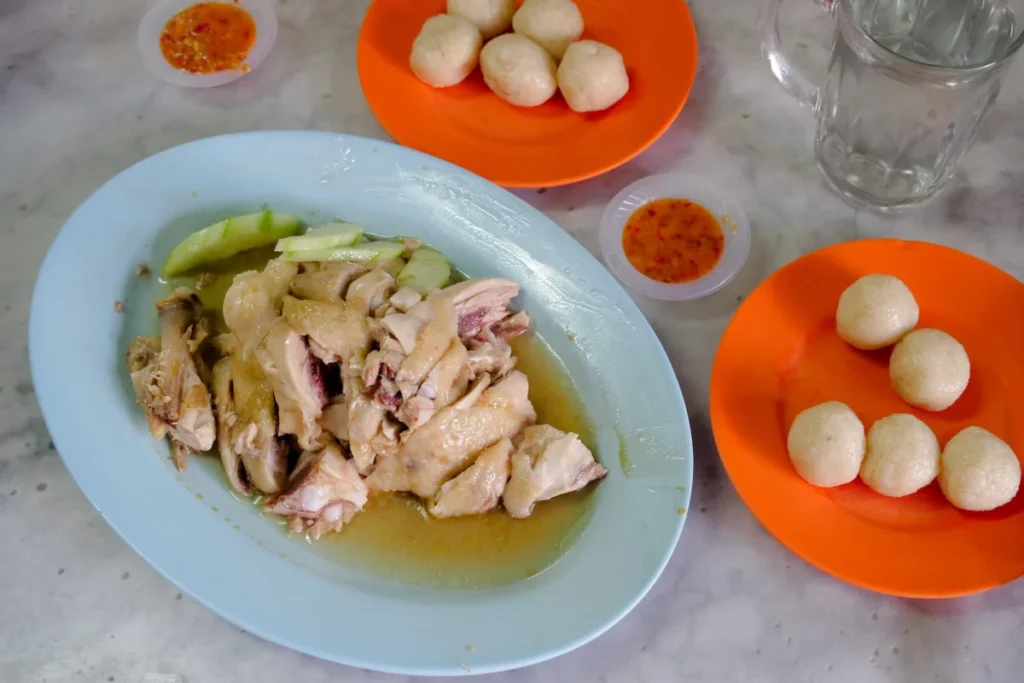
The historic coastal city of Melaka, Malaysia, situated along the storied Straits of Malacca, remains a focal point of Southeast Asian cultural exchange, blending indigenous Malay, Peranakan, and Chinese influences. Among the myriad culinary offerings that draw international travelers to this UNESCO World Heritage city, one establishment consistently commands daily queues and critical acclaim: Kedai Kopi Chung Wah. Located strategically at the corner of Jonker Street near the iconic flower-lined bridge, this modest, family-run Hainanese coffee shop has perfected a regional variation of a classic diaspora dish: chicken served alongside hand-rolled, dense rice spheres.
As global food tourism continues to expand, legacy establishments like Kedai Kopi Chung Wah serve as vital repositories of intangible cultural heritage. Analyzing the mechanics of their operations, historical context, and cultural significance reveals how a simple breakfast and lunch staple transcends nourishment to become a testament to migration, adaptation, and culinary resilience.
Historical Context and Cultural Roots
The presence of Hainanese cuisine in Malaysia is tied directly to historic migration patterns. Beginning in the mid-19th century and accelerating into the early 20th century, immigrants from the island province of Hainan in southern China arrived in British Malaya. Finding many commercial sectors already occupied by earlier waves of Chinese immigrants from the Hokkien, Cantonese, and Teochew dialect groups, the Hainanese community frequently established themselves in the domestic service, catering, and kopitiam (coffee shop) sectors.
In adapting their traditional regional dishes to local ingredients and tastes, Hainanese immigrants transformed poached chicken and seasoned rice into a cohesive, highly optimized meal. However, the specific iteration found in Melaka—the Hainanese chicken rice ball—introduced a distinct regional innovation driven by logistics and practicality. Historical accounts indicate that early Hainanese vendors compressed cooked rice into tight, spherical shapes to keep the grain warm for longer periods while transporting the food to remote agricultural and mining work sites, or while selling it as a portable meal along the streets. Today, this functional adaptation has been elevated to a defining regional delicacy, distinguishing Melaka’s chicken rice culture from variations found in Singapore, Kuala Lumpur, or Penang.
Culinary Anatomy: The Anatomy of a Melaka Classic
Operating efficiently under high-volume daily demand, Kedai Kopi Chung Wah adheres to a strict, time-tested preparation schedule. The restaurant opens promptly at 9:00 AM, closing by mid-afternoon (3:00 PM on weekdays, 4:00 PM on weekends) or whenever the day’s provisions run out.

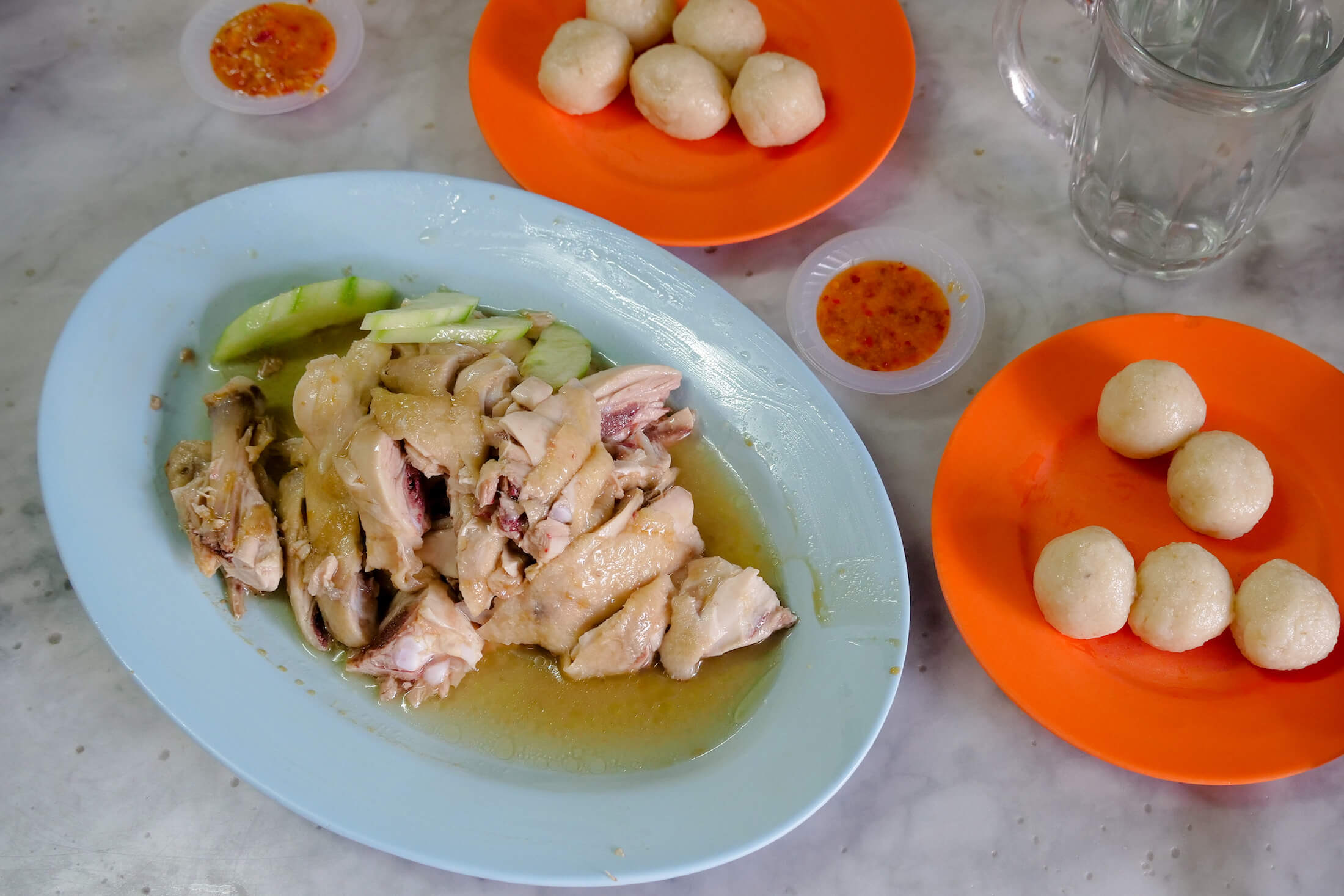
The preparation of the meal is divided into three distinct culinary components: the poultry, the dipping condiment, and the signature rice balls.
- The Poultry: The chicken is poached using traditional techniques that yield exceptionally tender meat and soft, gelatinous skin. Infused with aromatics such as ginger, scallions, and subtle smoke-process notes, the poultry is chopped rapidly by kitchen staff to match the relentless pace of incoming diners.
- The Dipping Sauce: While the poached chicken provides a clean, savory base, the accompanying chili-and-vinegar sauce elevates the dish. Heavy on pounded garlic, fermented chili, and sharp citrus or vinegar notes, the condiment bridges Chinese culinary technique with Malay flavor profiles, introducing a sharp, acidic contrast to the rich poultry.
- The Rice Balls: Unlike loose-grain preparations, the rice is cooked in chicken broth infused with rendered fats and ginger, resulting in a dense, aromatic product. While still hot, the rice is manually compressed into firm spheres that maintain their structural integrity on the plate. The texture evokes the caramelized, slightly toasted bottom crust of a traditional rice cooker—firm, cohesive, and deeply savory.
Operational Logistics and Consumer Experience
The dining experience at Kedai Kopi Chung Wah is characterized by rapid turnover and streamlined ordering protocols designed to manage high foot traffic. Diners frequently encounter queues extending onto Jonker Street, particularly during weekend peaks and school holiday periods.
Upon securing a table—often through a cooperative effort where one party member holds seating while another navigates the queue—the ordering system is remarkably concise. Service staff determine the order size based on headcount, allocating a proportional number of plates of rice balls, paired with chicken ordered by the half or whole portion. Meals are typically accompanied by traditional local beverages, including Nanyang-style robusta coffee (kopi) and brewed Chinese tea.

With meal pricing remaining highly accessible—a typical multi-person lunch totaling approximately 28 Malaysian Ringgit (USD $6.77)—the establishment maintains its appeal to both local patrons and international culinary tourists.
Broader Economic and Tourism Implications
The enduring popularity of legacy eateries like Kedai Kopi Chung Wah underscores the economic viability of culinary tourism in secondary heritage cities. Melaka’s tourism sector relies heavily on its multicultural identity, with food serving as a primary driver for repeat visitors.
Urban planners and tourism boards frequently cite heritage food vendors as essential anchors for foot traffic in historical districts such as Jonker Walk. However, these businesses face modern operational challenges, including succession planning, rising commercial real estate pressures, and the difficulty of scaling labor-intensive preparation methods. Hand-rolling rice balls requires specialized labor and adherence to strict hygiene and timing standards that resist complete industrial automation. Consequently, the preservation of these culinary techniques depends on generational knowledge transfer within family enterprises.

As culinary diplomacy and intangible heritage gain recognition from global organizations like UNESCO, establishments that preserve pre-war immigrant recipes offer vital insights into the shared history of Southeast Asia. Kedai Kopi Chung Wah remains a living archive of this heritage, demonstrating that the intersection of simple ingredients, historical migration, and rigorous craftsmanship can sustain cultural relevance across generations.







0 Komentar
Sampaikan opini dan diskusi yang membangun dengan bahasa yang santun.
No Comments Yet
Be the first to share your thoughts on this story.