Unlocking the Complex Chemistry of Your Morning Brew: What’s Really Inside a Cup of Coffee

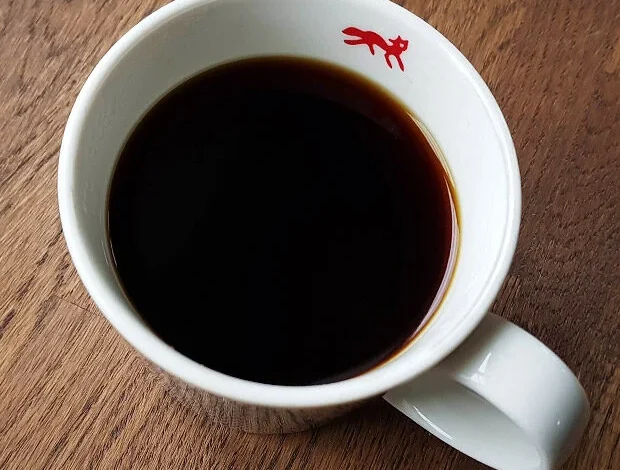
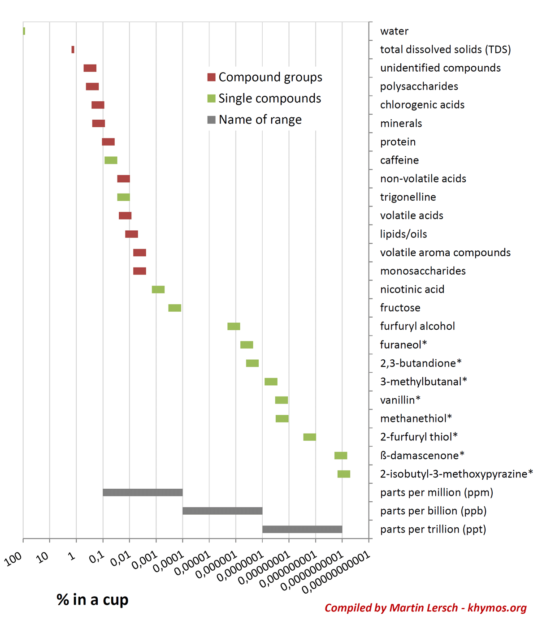
Recent investigations into coffee chemistry and extraction physics have shed new light on what constitutes a standard cup of black coffee, revealing a complex matrix of thousands of distinct chemical compounds. While consumers frequently rely on basic metrics such as Total Dissolved Solids (TDS) to measure the strength of their brew, food scientists and analytical chemists point out that these figures tell only a fraction of the story. A typical cup of black coffee consists of more than 98.5 percent water, leaving a mere 1.2 to 1.5 percent as dissolved and suspended solids. Yet, within that minuscule fraction lies an extraordinarily sophisticated symphony of volatile and non-volatile molecules responsible for color, body, aroma, and taste.
The Historical Evolution of Coffee Aroma Analysis
The scientific quest to decode the exact composition of coffee aroma has spanned several decades, moving from rudimentary sensory evaluations to advanced chromatographic techniques capable of isolating individual chemical components. Historically, the coffee industry and academic researchers relied heavily on subjective tasting panels to categorize flavor profiles into broad descriptors like nutty, fruity, or chocolaty. However, the advent of instrumental analysis in the late 20th century transformed the field of flavor chemistry.
A pivotal milestone occurred in 1996, when researchers P. Semmelroch and W. Grosch published a landmark study in the Journal of Agricultural and Food Chemistry. By analyzing 22 key volatile compounds extracted from coffee beans, the researchers successfully synthesized two "model" coffees designed to mimic Arabica and Robusta profiles. While sensory assessors confirmed that these artificial concoctions were "clearly coffee-like," they fell short of replicating the profound depth of a naturally brewed cup. This demonstrated early on that a small handful of isolated chemicals could not fully capture the sensory nuances of authentic coffee.
Further progress was made in 2002 through an Aroma Extract Dilution Analysis (AEDA) conducted by C. Sanz and colleagues. This study revealed a striking limitation in contemporary analytical chemistry: out of 40 key odorants identified in coffee, 13 remained completely unknown. Researchers attributed this knowledge gap to two primary factors: extremely low concentrations that complicate sample collection for structure elucidation, and the structural complexity of larger molecules that resist rapid identification. These historical benchmarks underscore the continuous evolution of food science as it attempts to map every molecular contributor to the human coffee experience.
Breaking Down the Brew: Volatiles, Non-Volatiles, and Solvents
To understand how a cup of coffee delivers its characteristic sensory experience, chemists divide its chemical constituents into two primary categories: volatile and non-volatile compounds. Volatile compounds readily vaporize at room temperature, traveling upward through the nasal passages to register as aroma. Conversely, non-volatile compounds remain in the liquid phase, interacting directly with taste receptors on the tongue to produce sensations of bitterness, sweetness, acidity, and astringency. Additionally, non-volatile lipids and microscopic insoluble particles contribute significantly to the mouthfeel, or body, of the beverage.

Looking more closely at the soluble components extracted during brewing, a standard cup contains a diverse mixture of carbohydrates, organic acids, minerals, salts, proteins, lipids, and caffeine. A significant portion of the dissolved solids also consists of unidentified compounds, many of which are believed to dictate the deep brown coloration and inherent bitterness of the beverage.
Furthermore, the behavior of these molecules is heavily influenced by their chemical polarity. Polar compounds—such as acids, minerals, proteins, and carbohydrates—readily dissolve in water, allowing water to extract more than 75 percent of these polar components from the coffee grounds during a standard brew cycle. On the other hand, non-volatile lipids and volatile aroma compounds are largely non-polar. Their solubility in water is markedly lower, meaning that standard water-based extraction typically captures only 10 to 30 percent of the available non-polar compounds. Food scientists suggest that utilizing alternative, less polar solvents—such as ethanol—could unlock entirely new dimensions of extraction, though such methods remain confined to laboratory settings rather than commercial cafes.
The Paradox of Concentration: Trace Compounds and Odor Activity Values
One of the most fascinating revelations in modern flavor chemistry is that a compound’s concentration in a beverage does not necessarily correlate with its impact on human perception. While linear relationships apply to individual compounds, comparing different substances reveals a starkly different reality due to human olfactory sensitivity. The human nose possesses unique odor thresholds for every chemical entity. Consequently, a trace compound present at an infinitesimal concentration of 0.0000000001 percent can exert just as much influence over the overall flavor profile as a major component present at 0.01 percent.
To quantify this phenomenon, food scientists utilize the Odor Activity Value (OAV), which is calculated by dividing a compound’s concentration in the beverage by its individual odor threshold. A prime example of this disproportionate impact is beta-damascenone, a potent aromatic molecule belonging to the rose ketone family. First discovered in rose oil during the 1960s—and subsequently utilized by fragrance houses like Firmenich in iconic perfumes such as Dior’s Poison—beta-damascenone has since been identified as one of the top five key odorants in coffee.
Despite being present in coffee at concentrations as low as 1 part per trillion (ppt), beta-damascenone profoundly shapes the aromatic profile of the brew due to the extreme sensitivity of human olfactory receptors. This dynamic illustrates why measuring the absolute quantity of a chemical provides an incomplete picture of flavor perception, as minute trace elements often dictate the sensory character of the final product.
Industry Implications and the Limitations of TDS Measurements
In the commercial coffee sector and specialty cafe environments, Total Dissolved Solids (TDS) remains the gold standard for measuring brew strength. Typically falling between 1.2 and 1.5 percent in a standard cup of black coffee, TDS is easily quantified using a refractometer. This metric allows baristas and roasters to maintain consistency, monitor extraction efficiency, and adhere to established brewing guidelines set by organizations such as the Specialty Coffee Association (SCA).
However, industry experts and analytical chemists caution against over-relying on TDS as an indicator of flavor quality. Because TDS measures the aggregate mass of all dissolved solids, it fails to account for the qualitative composition of those solids. Specifically, because polar and non-polar compounds extract at vastly different rates and efficiencies, two cups of coffee with identical TDS readings can exhibit wildly divergent flavor and aroma profiles. A high TDS measurement indicates a "strong" coffee in terms of dissolved mass, but it provides virtually no predictive insight into whether the beverage will taste balanced, overly acidic, bitter, or delightfully aromatic.
Broader Impact and Future Horizons
The growing intersection between advanced analytical chemistry and daily culinary practices carries significant implications for the global coffee industry. As researchers continue to isolate and characterize previously unknown odorants—utilizing sophisticated tools like gas chromatography-olfactometry and mass spectrometry—roasters and agricultural scientists gain a deeper understanding of how bean origin, roasting profiles, and brewing parameters interact at a molecular level.
For commercial producers, mapping the precise chemical markers of quality enables better quality control, targeted processing methods to preserve delicate volatiles, and improved breeding programs for coffee varietals resilient to climate change. Meanwhile, specialty coffee professionals are increasingly recognizing that mechanical metrics must be paired with sensory evaluation to achieve optimal extraction.
Ultimately, while laboratory instruments continue to demystify the complex matrix of the coffee bean, the human nose remains the ultimate analytical detector. As research in food chemistry progresses, the ongoing exploration of coffee extraction promises to reveal even more about the hidden chemistry that transforms a handful of roasted seeds into one of the world’s most beloved and complex beverages.
Related posts: