
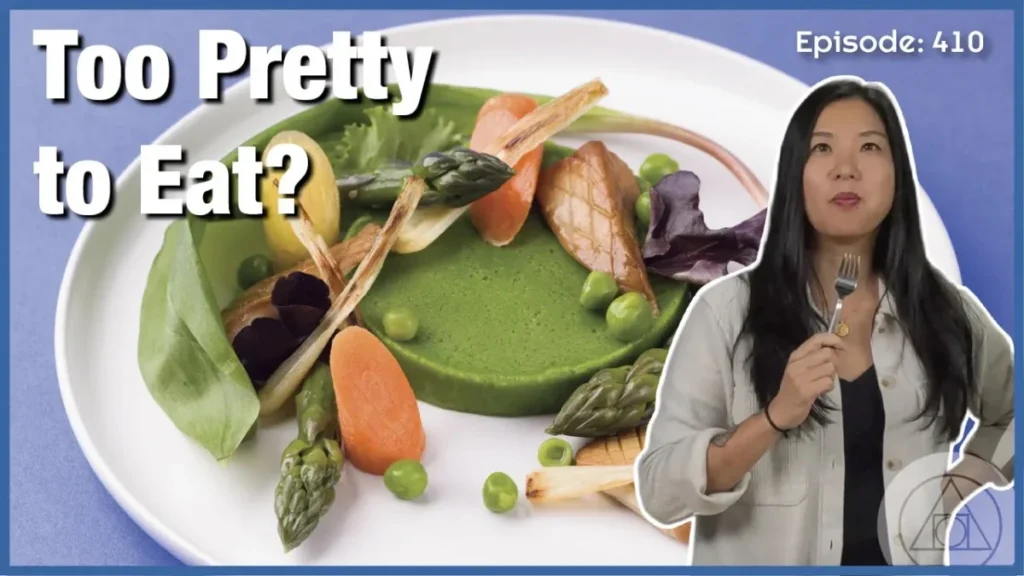
The culinary landscape has witnessed a persistent trend toward the "molecular" and "deconstructed" movement, where traditional definitions of standard dishes are being challenged through scientific technique and modern gastronomy. In the 410th episode of the series "We Transform Food," produced by Modernist Pantry, the focus shifts to the intersection of savory application and dessert-style textures, specifically through the creation of a Spring Pea Panna Cotta Salad. This dish serves as a case study for how hydrocolloids and plant-based gelling agents are revolutionizing the way chefs approach vegetable-forward menus. By replacing the traditional gelatin derived from animal collagen with agar-agar or carrageenan—standard staples in modern modernist kitchens—the preparation demonstrates a shift toward vegan-friendly, texture-driven dining that emphasizes the natural essence of seasonal produce.
The Evolution of Modernist Gastronomy
Modernist cooking, a culinary movement that gained significant momentum in the early 2000s, relies on the scientific understanding of food chemistry to create novel textures and presentations. The Panna Cotta, historically a Northern Italian dessert made of sweetened cream thickened with gelatin, is now being reimagined as a savory vehicle for vegetable extracts.
The transition of the Panna Cotta from a sugary confection to a savory appetizer represents a broader industry trend of "savory desserts" and "vegetable-based pastry." According to food industry analysts, the demand for plant-based ingredients has grown by approximately 12% annually over the last decade, forcing professional chefs to find new ways to utilize vegetables beyond roasting, steaming, or sautéing. By integrating sweet spring peas—which contain high levels of natural sugars—into a creamy, chilled emulsion, chefs can bridge the gap between appetizer and dessert, creating a dish that feels familiar in texture but entirely surprising in flavor profile.
Technical Breakdown: Ingredients and Methodology
At the core of the Spring Pea Panna Cotta is the management of hydrocolloids. Unlike traditional recipes that require animal-based gelatin, the modernist approach utilizes specific powders that offer greater thermal stability. This is critical when serving a dish that features warm, crisp components like sautéed mushrooms or blanched asparagus alongside a chilled, delicate panna cotta.
The methodology involves:
- Extraction: Pureeing fresh, sweet peas and passing them through a fine-mesh chinois to achieve a smooth, vibrant green liquid.
- Emulsification: Incorporating a fat source, such as high-quality olive oil or coconut milk, to provide the mouthfeel typically associated with dairy cream.
- Stabilization: Adding the precise percentage of hydrocolloids to achieve a "set" that is firm enough to hold its shape on a plate, yet soft enough to melt on the palate.
- Plating: The assembly focuses on contrast. The "salad" component consists of micro-vegetables, tender herbs, and earthier elements like mushrooms to balance the sweetness of the pea base.
Chronology of the "We Transform Food" Series
"We Transform Food" has served as a digital repository for culinary innovation since its inception. The series was designed by Modernist Pantry to provide home cooks and professional chefs with the tools to replicate restaurant-grade techniques.
- Early Stages (Episodes 1–100): The series focused on foundational modernist techniques, such as spherification and foam creation, aimed at introducing hobbyists to high-end equipment like immersion circulators and vacuum sealers.
- Expansion (Episodes 101–300): The scope widened to include fermentation, smoking techniques, and the use of natural enzymes to alter the texture of proteins.
- Current Phase (Episodes 301–410+): The focus has shifted toward sustainability and "conscious cooking." Episode 410 represents this maturation, moving away from purely aesthetic tricks to dishes that prioritize seasonal, vegetable-centric ingredients.
Data on Plant-Based Ingredient Adoption
The integration of modernist techniques in vegetable-heavy dishes is supported by shifting market data. According to a report by the Good Food Institute, the alternative protein and plant-based ingredient sector saw record investment in the last fiscal year. As consumers demand higher-quality, plant-forward options, the culinary arts have responded by adopting techniques that improve the "bite" and "mouthfeel" of vegetables.

The pea, specifically, has become a focus of food technology due to its protein profile and color retention. In professional kitchens, the ability to maintain the "spring green" hue of a pea puree is a mark of technical proficiency, often requiring the use of cooling baths and precise temperature control—a staple of the modernist approach demonstrated in the series.
Implications for the Culinary Industry
The professional consensus regarding dishes like the Spring Pea Panna Cotta Salad is that it challenges the conventional hierarchy of ingredients. By removing the reliance on animal fats and proteins, the dish highlights the potential for "clean label" cooking. Chefs participating in this movement argue that the focus should be on the transformation of raw material through scientific intervention, rather than masking it with heavy sauces or excessive heat.
Furthermore, the implications for the home kitchen are significant. The accessibility of equipment like high-speed blenders and digital scales—which measure ingredients to the 0.01-gram accuracy required for hydrocolloids—has democratized these techniques. What was once the domain of three-Michelin-star restaurants is now being performed in residential kitchens across the globe.
Official Stance and Educational Goals
Modernist Pantry, the organization behind the production, maintains that their objective is the demystification of complex food science. By documenting these processes, they aim to bridge the gap between laboratory science and the dining room table.
"Our goal is not to complicate the process," a spokesperson for the series noted in a previous dispatch, "but to provide the language and the tools necessary for any chef—home or professional—to push the boundaries of what is possible on a plate." The episode featuring the Spring Pea Panna Cotta is specifically designed to encourage viewers to reconsider the "salad" as a composed dish, where temperature and texture are as vital as the ingredients themselves.
Broader Context: The Future of Texture
As the food industry looks toward a more sustainable future, the techniques showcased in Episode 410 offer a blueprint for success. The use of hydrocolloids to create creamy, plant-based textures allows for the reduction of saturated fats and dairy, potentially addressing both health concerns and environmental impact.
However, the transition is not without challenges. The technical barrier to entry remains the most significant hurdle. Precise measuring, a deep understanding of ingredient properties, and the need for specialized tools are barriers that continue to define the modernist culinary space. As educational content continues to propagate, these barriers are expected to lower, allowing for a more widespread adoption of these methods in daily meal preparation.
Ultimately, the Spring Pea Panna Cotta Salad is more than just a recipe; it is a manifestation of the current culinary zeitgeist. It is a dish that honors the freshness of spring, utilizes the precision of modern science, and serves as a testament to the fact that the most memorable dining experiences are often those that force us to re-examine our most basic assumptions about food. Through the consistent efforts of platforms like "We Transform Food," the evolution of the kitchen continues to move toward a future that is simultaneously more scientific and more deeply connected to the natural ingredients of the earth.




0 Komentar
Sampaikan opini dan diskusi yang membangun dengan bahasa yang santun.
Belum Ada Komentar
Jadilah yang pertama memberikan tanggapan mengenai berita ini.