Bridging the Financial Divide: How Young Field Officers and Ultra-Micro Holding Drive Economic Inclusion in Remote Indonesian Islands

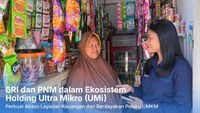
Violend Trintje Ory wakes up each morning knowing her daily commute is anything but ordinary. For the 23-year-old Account Officer working for Permodalan Nasional Madani (PNM), getting to work involves leaving her living quarters and embarking on a 45-minute journey across land and water to reach the remote island communities of Banda Neira in Central Maluku. Assigned to this historic island group from her previous station in Ambon, Vio carries a singular mission: to establish and nurture the newly minted Banda Unit, the very first operational branch of PNM in the region.
In a nation as geographically complex and culturally diverse as Indonesia, financial inclusion is rarely just a matter of digital infrastructure or centralized banking policies. More often than not, it is a human endeavor defined by physical endurance, cultural patience, and interpersonal trust. Vio’s daily routine epitomizes this reality. Armed with determination and a stack of informational materials, she navigates the geographical extremities of the Banda archipelago—shifting seamlessly from motor vehicles to motorized boats, and finally to walking on foot where motorized transport cannot reach—to introduce the concept of micro-financing to families who have historically remained unbanked or underserved by traditional financial institutions.
The arrival of PNM Mekaar, an acronym for Membina Ekonomi Keluarga Sejahtera (Fostering the Economy of Prosperous Families), in Banda Neira represents a micro-level manifestation of a much larger national financial strategy. It is a story of grassroots resilience, institutional synergy, and the transformative power of economic empowerment in Indonesia’s outermost regions.
Overcoming Skepticism: The Ground-Level Reality of Financial Literacy
When Vio and her team first stepped foot onto Banda Neira to introduce PNM Mekaar, they were met not with open arms, but with profound hesitation. For many residents of the remote island, financial institutions were distant, intimidating entities associated with bureaucratic red tape or predatory informal lenders. The concept of group-based lending and structured micro-enterprise development was entirely foreign.
Rather than resorting to aggressive marketing or high-pressure tactics, Vio adopted a strategy rooted in empathy and gradual relationship-building. "When we first arrived, they were skeptical. We did not force it on those who felt hesitant. But we embraced those who trusted us for the process moving forward," Vio explains, reflecting on her initial months in the field.
This patient, community-centric approach requires immense emotional intelligence and cultural sensitivity. Vio does not merely pitch financial products; she sits with prospective clients, listens to their daily struggles, understands their family dynamics, and maps out how a small injection of capital could alter their socioeconomic trajectory. Because motorized vehicles cannot navigate every corner of the island’s more rugged terrains, Vio and her colleagues frequently walk from house to house, carrying the message of financial empowerment on foot. Over time, as early adopters experienced the tangible benefits of the program, word of mouth organically dissolved the remaining skepticism, paving the way for wider community acceptance.
From Domestic Labor to Micro-Entrepreneurship: Real-World Impacts
The true metric of success for field officers like Vio is not merely the number of accounts opened or the volume of capital disbursed, but the qualitative transformation in the lives of the women they serve. PNM Mekaar is specifically designed to target underprivileged women, providing them with financial capital, business capacity building, and weekly mentoring groups that foster both financial and social capital.
One particular case remains deeply etched in Vio’s memory. A local woman who had spent years working long hours as a domestic helper—leaving her with little to no time to spend with her children—received a modest business loan through the PNM Mekaar program. Armed with this initial capital, she made the bold decision to leave domestic employment and establish a small provision shop from her own home.
This transition allowed her to generate a steady income while reclaiming her time, bridging the gap between economic productivity and maternal presence. For Vio, witnessing this shift firsthand provides profound professional and personal fulfillment. "I feel very grateful, because I became a channel of blessings," she shares, encapsulating the emotional rewards of seeing mothers build sustainable livelihoods that uplift their entire households.
The Macro Architecture: The Rise of the Ultra-Micro Holding
While the frontline efforts of officers like Vio represent the human face of financial inclusion, these initiatives are underpinned by a robust, highly coordinated macro-financial architecture known as the Holding Ultra Mikro (UMi). Established in 2021, the Ultra-Micro Holding represents one of the most strategic structural consolidations in Indonesia’s recent economic history.
The holding brings together three state-owned financial giants under a unified ecosystem: PT Bank Rakyat Indonesia (Persero) Tbk (BRI) as the parent holding entity, alongside PT Pegadaian and PT Permodalan Nasional Madani (PNM). This tripartite integration was engineered to bridge the massive financing gap in Indonesia’s ultra-micro sector—a segment of the economy that employs the vast majority of the nation’s workforce but has historically struggled to access formal, affordable credit.
By pooling their respective strengths, the entities within the Ultra-Micro Holding created a comprehensive continuum of financial services. BRI provides vast banking infrastructure and liquidity management, Pegadaian offers flexible pawn-based solutions for immediate liquidity needs, and PNM delivers group-based micro-financing coupled with intensive mentoring for female entrepreneurs. Together, the holding covers the entire lifecycle of an ultra-micro enterprise, connecting access to financing, savings accounts, transactional services, and structured business empowerment.
Data and Scale: Performance Metrics Up to Mid-2026
The impact of the Ultra-Micro Holding has scaled exponentially since its inception. According to performance data released through the second quarter of 2026, the integrated ecosystem has achieved monumental milestones in extending financial services to the grassroots economy.
By the end of the second quarter of 2026, the Holding UMi successfully served 33.8 million active debitur (borrowers), cementing its position as one of the largest ultra-micro financial inclusion engines in the world. Furthermore, the ecosystem manages over 166 million micro-savings accounts, fostering a culture of financial prudence and formal asset accumulation among populations that previously kept their savings entirely in cash or informal assets.
Crucially, the synergy between BRI, Pegadaian, and PNM is designed not to keep clients perpetually dependent on micro-loans, but to graduate them into higher tiers of financial capability. By mid-2026, the integrated efforts of the holding successfully propelled approximately 2.3 million debitur to "graduate" (naik kelas)—meaning they transitioned from ultra-micro status into sustainable micro or small enterprises capable of accessing commercial banking products.
The Human Capital Behind the Ecosystem: Official Perspectives
Institutional leaders emphasize that the remarkable macroeconomic figures generated by the Holding UMi are fundamentally driven by the tireless work of human agents operating on the ground. Commenting on the strategic philosophy of the holding, BRI Corporate Secretary Dhanny underscored that the true strength of the ecosystem lies not merely in its immense scale or digital platforms, but in its localized, human-centric touchpoints.
"Behind the massive ecosystem of the Ultra Micro Holding, there are 74,000 field marketers who are present every day, interacting directly with the community," Dhanny stated. "They serve as the bridge connecting financial services with business actors down to the community level to build trust, provide mentoring, and open opportunities for the public to grow."
This perspective highlights a critical lesson in modern financial technology and inclusion: digital transformation and institutional consolidation cannot exist in a vacuum. In emerging markets and archipelagic nations like Indonesia, technological reach must be complemented by physical presence and relational trust. The 74,000 field personnel act as the connective tissue between advanced state-backed financial engineering and remote agrarian or maritime communities.
Implications for Indonesia’s Economic Resilience
The convergence of grassroots field operations, such as those conducted by Violend Trintje Ory in Banda Neira, and high-level structural integration via the Ultra-Micro Holding holds profound implications for Indonesia’s broader economic development.
First, it directly addresses structural inequality. By systematically integrating unbanked populations into the formal financial grid, the state reduces vulnerability to predatory informal lenders (locally known as "bank keliling" or illegal loan sharks) who often charge exorbitant interest rates. Access to transparent, low-cost capital provides a vital safety net for lower-income households.
Second, it catalyzes women-led economic growth. Because PNM Mekaar exclusively targets women, the model leverages empirical findings that show female entrepreneurs tend to reinvest a significantly higher proportion of their earnings back into their families’ health, nutrition, and education. Thus, micro-financing acts as a multi-generational catalyst for human capital development.
Finally, the initiative reinforces national economic resilience from the bottom up. By fostering millions of micro-enterprises, the Indonesian economy diversifies its foundations, making it less susceptible to external macroeconomic shocks. When global supply chains stutter or large corporations face downturns, localized ultra-micro enterprises maintain domestic economic circulation at the village level.
Conclusion: A Continuous Journey Across Land and Sea
As Violend Trintje Ory prepares for her next boat ride across the waters of Banda Neira, her daily routine remains a microcosm of Indonesia’s broader national aspiration. It is a journey that demands physical stamina, emotional resilience, and deep-seated ideological commitment to economic justice.
Stories like Vio’s remind policymakers and financial institutions alike that true financial inclusion is built one conversation, one home visit, and one empowered mother at a time. Supported by the vast, synchronized infrastructure of the Holding Ultra Mikro, the dedicated efforts of thousands of field officers are steadily reshaping the archipelago’s economic landscape—turning remote islands into vibrant hubs of grassroots enterprise and sustainable prosperity.