Beyond the Rind: Neal’s Yard Dairy and the Sustainable Food Trust Pioneer Holistic Farm Metrics to Redefine Ethical Agriculture

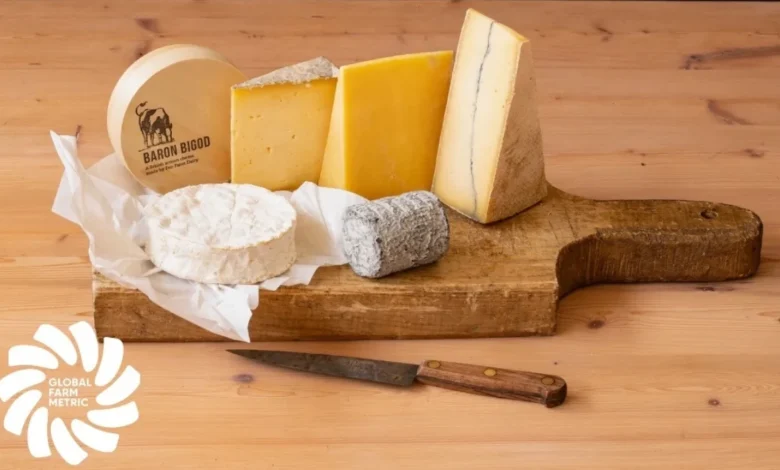
For decades, the artisanal cheese industry has been defined by the pursuit of flavor, but a landmark trial conducted by Neal’s Yard Dairy (NYD) in partnership with the Sustainable Food Trust (SFT) has shifted the focus toward the complex ecological and social architecture of food production. By implementing the Global Farm Metric (GFM) framework, the renowned London-based cheesemonger has initiated a rigorous, multi-dimensional assessment of its supply chain, moving beyond traditional, singular sustainability metrics like carbon output to embrace a holistic view of farm health.
The project represents a significant evolution in how retailers communicate the provenance of food to a discerning public. By analyzing twelve distinct categories—including biodiversity, soil health, community impact, and economic resilience—the trial aims to replace simplified eco-labels with a nuanced understanding of agricultural integrity.
The Genesis of the Global Farm Metric Partnership
The collaboration between Neal’s Yard Dairy and the Sustainable Food Trust was born from years of informal dialogue. Patrick Holden, founder of the Sustainable Food Trust and a long-time collaborator with NYD, worked closely with the dairy’s team to translate the philosophy of his own Welsh farm into a scalable, industry-wide tool. The GFM was designed as a "whole-farm" assessment, intended to address the limitations of existing sustainability benchmarks that often ignore the interconnectedness of biological and social systems.
The trial, which commenced in early 2025, invited every farmhouse cheesemaker in the NYD network—specifically those who manage their own livestock—to undergo the GFM assessment. Twelve producers participated, committing months of labor to data collection and reporting. The project was further bolstered by the expertise of Dr. Sara Hall, a researcher from the University of Bristol and a former cheesemonger, whose PhD work provided the analytical scaffolding necessary to interpret the diverse data sets.
Chronology of the Assessment Trial
The project followed a structured timeline designed to ensure accuracy and foster producer engagement:
- Early 2025: Official invitation issued to all independent, farm-based cheesemakers within the Neal’s Yard Dairy supply chain.
- Spring/Summer 2025: Participating farmers engaged in the data-gathering phase, documenting everything from resource management to public goods delivery.
- Autumn 2025: Data synthesis period, where the GFM team and Dr. Sara Hall worked to compare the trial results against a control group of 71 mixed-farming systems and a specific cohort of 22 dairy farms.
- Winter 2025/2026: Analysis of the results led to the conclusion that while benchmarking is possible, ranking is counterproductive.
- Summer 2026: Launch of the Global Farm Metric Cheese Selection, a curated retail range highlighting the participating producers, available in shops and online.
Decoding the Data: Complexity over Competition
One of the most profound findings of the trial was the inherent difficulty in creating a "league table" of sustainability. Agriculture, by nature, is site-specific. A high-altitude farm in the Scottish Highlands faces entirely different ecological pressures than a lowland operation in Somerset. The GFM data demonstrated that comparing these systems directly often obscured the operational nuances that define "good" farming.
"Complexity is not a bug; it is the feature," noted a spokesperson for the project team. The data revealed that many participating farms outperformed the broader comparative cohorts in key areas such as biodiversity conservation and social governance. However, the researchers emphasized that these numerical advantages should not be interpreted as a definitive ranking. Instead, they represent a snapshot of a farm’s current trajectory. The project identified that a farm actively investing in improving its water management is just as vital as one that has already achieved a high steady-state score.
Comparative Performance Indicators
While the project steered away from competitive rankings, the data provided valuable insights into the performance of the participating artisan dairies compared to the broader agricultural sector. In categories such as "Public Goods Delivery"—which measures the provision of environmental benefits like flood mitigation and landscape preservation—the NYD-supplied farms consistently trended higher than the general dairy industry average.
This correlation suggests that the small-scale, independent model of cheesemaking is inherently more aligned with sustainable land stewardship. The economic resilience of these farms, often bolstered by direct-to-consumer sales and shorter supply chains, also appeared as a recurring theme in the data, providing a buffer against the volatility of global commodity markets.
Shifting the Consumer Narrative
A core component of the initiative involved surveying both staff and customers to understand how this data could be translated into retail practice. The research indicated that while flavor remains the primary driver of purchase, there is a growing segment of the market that prioritizes "values-based" shopping.
However, the challenge remains in communicating this without resorting to oversimplification. "Reducing the health of a farm to a single score is an injustice to the complexity of the landscape," observed researchers involved in the trial. Consequently, NYD has opted to use the GFM logo as a "signpost" rather than a definitive score. This approach encourages customers to engage with the stories of the producers, using digital filters on the NYD website to explore the specific farming systems behind their favorite cheeses.
Broader Implications for the Agricultural Industry
The implications of this trial extend well beyond the dairy aisle. As food systems face increasing pressure to address climate change and biodiversity loss, the GFM project provides a roadmap for other sectors of the food industry. By emphasizing data-driven, yet context-aware, assessment, the model offers a template for how retailers can exert positive influence on their supply chains without imposing a "one-size-fits-all" mandate that risks alienating smaller producers.
Furthermore, the trial highlights the administrative burden placed on farmers. Moving forward, both Neal’s Yard Dairy and the Sustainable Food Trust are exploring a "tiered" approach to data collection. By identifying a handful of high-impact, genuinely meaningful indicators, they aim to streamline the process for farmers, ensuring that sustainability assessments remain a tool for empowerment rather than a bureaucratic hurdle.
Future Outlook and Industry Impact
As the project enters its next phase, the focus will shift toward long-term monitoring. The success of the trial has already spurred interest among other artisan food retailers seeking to implement similar frameworks. By demonstrating that independent, small-scale producers are willing and able to engage with sophisticated sustainability metrics, the project has provided a proof-of-concept that could shift the standard for transparency in the food industry.
For Neal’s Yard Dairy, the journey is ongoing. The upcoming September "Cheese of the Month" campaign will feature further analysis of participating farms, continuing the conversation with their customer base. While the project has not provided a single, perfect answer to the question of what constitutes a "sustainable" farm, it has provided something arguably more valuable: a framework for an honest, ongoing dialogue between the consumer, the cheesemonger, and the land itself.
The marriage of artisanal expertise and rigorous, holistic metrics marks a turning point. It suggests that in the future, the quality of a product will be measured not just by its flavor profile, but by the integrity of the ecosystem from which it emerged. Through this initiative, the participants have signaled that the future of agriculture lies in acknowledging complexity, embracing transparency, and celebrating the long-term commitment of those who work the land.
Related posts: