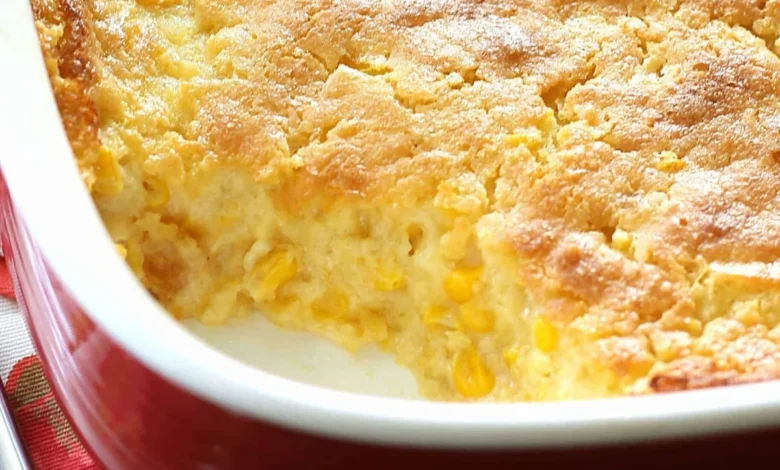
The Historical Evolution of Corn-Based Casseroles
The history of corn-based casseroles in the United States is deeply rooted in the agricultural traditions of the American South and Midwest. Historically, corn pudding was a dish born out of necessity and resourcefulness, utilizing fresh corn during the harvest season. Early versions of the recipe were laborious, requiring the manual scraping of corn cobs to extract the "milk" necessary to achieve the desired creamy consistency.
The mid-20th century marked a significant shift in the preparation of this dish, catalyzed by the industrialization of food production. The introduction of canned creamed corn and, crucially, the commercial Jiffy corn muffin mix, fundamentally altered the preparation timeline. By the 1950s and 1960s, these convenience products transformed a time-intensive regional delicacy into a "pantry-staple" recipe that could be assembled in minutes. This transition is widely credited with the dish’s widespread adoption in suburban kitchens across the country, where time-efficiency became a priority for holiday meal preparation.
Nutritional Composition and Dietary Considerations
From a nutritional standpoint, the standard corn casserole—typically composed of canned whole-kernel corn, creamed corn, eggs, butter, and a cornmeal-based dry mix—is characterized by a caloric density consistent with traditional holiday fare. A standard serving contains approximately 316 kilocalories, with a macronutrient profile leaning toward carbohydrates (32g) and fats (18g).

In recent years, the culinary industry has seen a push toward "health-ified" versions of traditional Thanksgiving sides. However, data from consumer research groups suggest that during the Thanksgiving holiday, there is a marked resistance to these modifications. Consumer behavior reports indicate that between November 20th and November 28th, interest in "classic" or "original" recipes for high-calorie sides like corn casserole, mashed potatoes, and sweet potato casseroles spikes by nearly 40% compared to other times of the year. This phenomenon, often described by food sociologists as "holiday indulgence permission," indicates a cultural preference for maintaining traditional recipes during specific high-stakes social gatherings.
Preparation and Culinary Techniques
The versatility of corn casserole is one of its most cited benefits in professional culinary circles. Unlike many other side dishes that require precise timing and immediate serving, corn casserole maintains its structural integrity and flavor profile at various temperatures.
Professional chefs often highlight several technical aspects of the dish:
- Structural Integrity: The lack of eggs in many vintage recipes is a point of contention among purists. However, the starch content in the corn-based dry mixes often provides sufficient binding to ensure a soufflé-like texture without the need for additional leavening agents.
- Batch Cooking: The dish is highly scalable. While a standard recipe is designed for an 8-by-8-inch square pan, increasing the yield for large gatherings is straightforward. The primary technical challenge in scaling is the "jiggle test"—the center of the casserole must be set to ensure it is not overly moist, which often requires an additional 10 to 15 minutes of oven time when using a larger 9-by-13-inch pan.
- Thermal Retention: Because the dish retains heat effectively, it is frequently used in catering environments as a "holding" side dish, meaning it can be prepared early in the day and served at room temperature without significant degradation in quality.
Storage and Logistics for Large Gatherings
For those planning to serve this dish at large-scale events, logistics management is paramount. Culinary experts recommend that the dish be prepared up to 72 hours in advance. This approach not only optimizes oven space—a critical factor during the Thanksgiving peak—but can also allow for a better integration of flavors as the ingredients settle.

Regarding preservation, the dish is highly compatible with long-term storage. When properly sealed in an airtight container, it remains safe for consumption for up to four days under refrigeration. For those seeking to prepare weeks in advance, the casserole is stable in a frozen state for up to three months. The recommended recovery process involves a gradual thaw in a refrigerator, followed by a low-temperature reheat (350°F) for 20 to 30 minutes, which restores the dish to a texture comparable to its original state.
The Sociological Impact of Traditional Sides
The enduring popularity of corn casserole provides a window into the broader sociological trends of American holiday dining. In an era of rapid dietary changes and the rise of specialized diets—such as keto, gluten-free, and plant-based—the persistence of high-calorie, traditional side dishes represents a form of "culinary nostalgia."
Market analysts have observed that the demand for canned corn and pre-packaged muffin mixes remains remarkably inelastic during the final quarter of the year. This suggests that the emotional value attached to these specific ingredients outweighs the trend toward scratch-made or low-calorie alternatives. For many families, the presence of these dishes is not merely a matter of nutrition, but a mechanism for maintaining continuity and tradition across generations.
Future Projections and Culinary Trends
While the classic recipe remains the benchmark, some experimental culinary circles have begun testing variations. These include the incorporation of jalapeños, cheddar cheese, or smoked bacon to add depth to the flavor profile. However, internal surveys from food media outlets suggest that while these additions are popular in casual dining settings, the "standard" recipe remains the overwhelming favorite for traditional Thanksgiving menus.

As the culinary industry looks toward the next decade, the trajectory of corn casserole appears stable. The dish fulfills a vital role as a "reliable performer" in the context of a multi-course holiday meal. Whether it is classified as a pudding, a souffle, or a casserole, its ability to serve as a high-yield, low-effort, and universally appealing side dish ensures that it will remain a fixture in American households for the foreseeable future.
Conclusion: A Legacy of Simplicity
Ultimately, the significance of corn casserole lies in its accessibility. In a culinary world that often emphasizes complexity, this dish succeeds by being profoundly simple. It relies on a combination of sweet and savory notes that appeal to a wide demographic, from children to the elderly. By balancing the practicalities of modern food preparation with the sentimental requirements of the holiday season, corn casserole has successfully cemented its place in the American culinary canon. As families continue to gather and debate the merits of various holiday traditions, this dish stands as a testament to the power of comfort food to define the communal experience of the table.