
Four Ingredient Gluten Free Italian Coconut Cookies

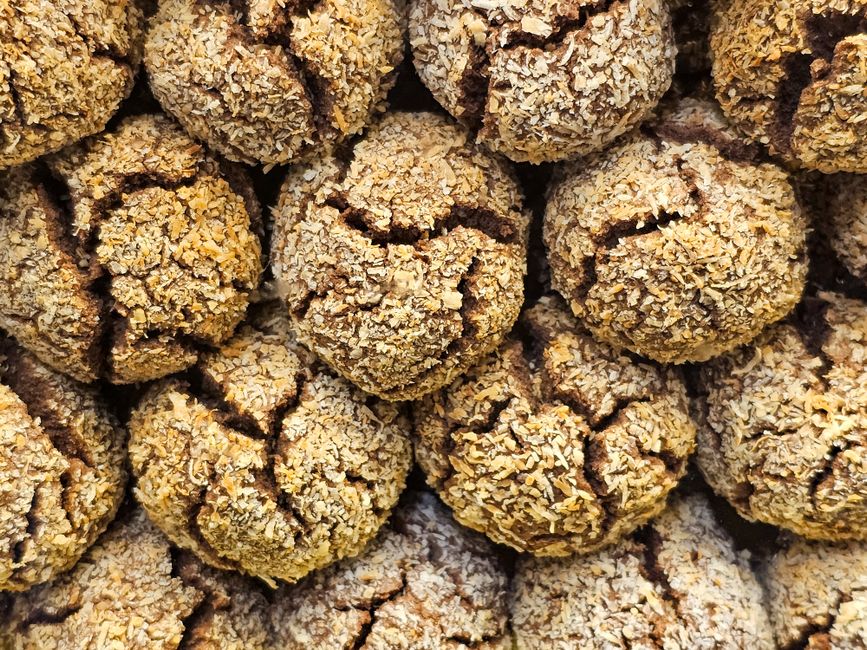
Four Ingredient Gluten Free Italian Coconut Cookies: An Effortless Delight
These Four Ingredient Gluten Free Italian Coconut Cookies represent a pinnacle of simplicity and indulgence, offering a taste of classic Italian baking with a delightful tropical twist. The magic lies in their minimalistic ingredient list, allowing the inherent flavors of coconut and almond to shine through. These cookies are not merely a dessert; they are a testament to how few, high-quality ingredients can create a profoundly satisfying treat. Their naturally gluten-free nature makes them an ideal choice for those with celiac disease or gluten sensitivities, ensuring that everyone can partake in this exquisite experience. The texture is a symphony of crisp edges giving way to a wonderfully chewy interior, a direct result of the perfect balance achieved with just four key components.
The foundation of these remarkable cookies rests upon the inherent properties of shredded coconut. Opting for unsweetened, finely shredded coconut is paramount. This choice allows for a more controlled sweetness, preventing the cookies from becoming overly cloying. The fine shred size contributes to a more cohesive dough and a delicate crumb structure, ensuring that each bite is uniformly delightful. The coconut not only provides its signature flavor and aroma but also acts as a crucial binder and textural element in the absence of gluten-containing flours. Its natural oils contribute to the cookies’ moistness and rich mouthfeel, a characteristic often difficult to achieve in gluten-free baking. When selecting your shredded coconut, pay attention to its freshness; stale coconut can impart a slightly off flavor, detracting from the pristine taste profile you are aiming for. The coarser, larger flakes of coconut, while visually appealing, can create a more challenging texture for this particular recipe, leading to a less uniform cookie. Therefore, a finely shredded variety is unequivocally the best choice for achieving the desired outcome. This single ingredient forms the backbone of the cookie, providing both structure and flavor, making its quality a non-negotiable aspect of this recipe’s success.
The second indispensable ingredient is almond flour. This flour, derived from finely ground almonds, serves a dual purpose in these cookies. Firstly, it provides the necessary structure that gluten typically offers in traditional baking. The proteins and fats present in almond flour create a tender crumb and contribute to the overall body of the cookie. Secondly, almond flour amplifies the nutty undertones already present in the coconut, creating a harmonious flavor profile that is both sophisticated and comforting. It is crucial to use blanched almond flour, meaning the almonds have been deseeded and their skins removed. This ensures a smoother texture and a more refined flavor, preventing any bitter notes that might arise from the almond skins. The fineness of the grind is also important; a super-fine almond flour will integrate more seamlessly into the dough, resulting in a more uniform cookie without gritty pockets. If you are able to grind your own almonds, ensure they are blanched and then ground to a fine flour consistency. Over-grinding can lead to almond butter, which would significantly alter the cookie’s texture and outcome. The inherent richness of almond flour complements the sweetness of the other ingredients, creating a balanced and deeply satisfying cookie. Its ability to absorb moisture effectively helps in creating that sought-after chewy texture that distinguishes these gluten-free delights from their potentially dry counterparts.
The sweetener is the third elemental component, and for these Italian Coconut Cookies, granulated sugar is the ideal choice. Its clean, neutral sweetness allows the distinct flavors of coconut and almond to take center stage without competition. Granulated sugar plays a vital role in the cookie’s texture beyond just sweetness. It contributes to the crispness of the edges and the overall chewiness of the interior. During the baking process, sugar caramelizes, contributing to the golden-brown hue and adding a subtle depth of flavor. The correct ratio of sugar to the other ingredients is essential for achieving the desired texture and preventing the cookies from spreading too much or becoming too hard. While alternatives like coconut sugar or maple syrup might seem appealing for their perceived health benefits, they can significantly alter the cookie’s flavor profile and texture due to their inherent moisture content and distinct tastes. For this specific four-ingredient recipe, where simplicity and classic Italian flavor are key, granulated sugar is the undisputed champion. It provides the predictable sweetness and textural contribution that makes these cookies so reliably delicious. Its ability to dissolve easily ensures a smooth dough, and its role in creating those coveted crisp edges is unparalleled.
The final, yet equally important, ingredient that binds these delightful cookies together is the egg. A large egg acts as the primary binder, holding the shredded coconut and almond flour in a cohesive dough. The proteins in the egg coagulate during baking, providing structure and contributing to the cookie’s chewy texture. The yolk of the egg also contributes richness and moisture, preventing the cookies from becoming dry and crumbly. The use of a whole egg is crucial; separating the yolk and white can lead to an unbalanced recipe, potentially resulting in cookies that are either too dry or too greasy. The egg’s natural emulsifying properties help to distribute the fats evenly throughout the dough, leading to a more consistent bake. When incorporating the egg, ensure it is at room temperature. This allows for better emulsification with the other ingredients, creating a smoother and more homogenous batter. A cold egg can cause the fats to seize, leading to a less desirable texture. The simple addition of a single egg transforms a collection of dry ingredients into a pliable dough ready for baking, demonstrating the power of this fundamental ingredient in creating perfect gluten-free cookies.
The Alchemy of Four Ingredients: Crafting the Cookies
The process of creating these Four Ingredient Gluten Free Italian Coconut Cookies is remarkably straightforward, emphasizing the elegance of minimal effort for maximum reward. Begin by preheating your oven to a moderate temperature, typically around 350°F (175°C). This ensures that the cookies begin to bake and set immediately upon entering the oven, promoting even cooking and preventing excessive spreading. Next, prepare a baking sheet by lining it with parchment paper. Parchment paper is invaluable as it prevents the cookies from sticking, ensuring easy removal and clean-up, and also contributes to a more even bake by creating a slight barrier between the cookie and the hot metal of the baking sheet.
In a medium-sized mixing bowl, combine the finely shredded unsweetened coconut and the blanched almond flour. Whisk these dry ingredients together thoroughly. This initial step is crucial for ensuring that the almond flour is evenly distributed throughout the coconut, creating a uniform base for the cookie dough. Uneven distribution can lead to pockets of either dense almond or loose coconut, impacting the final texture and flavor.
Create a well in the center of the dry ingredients. Add the granulated sugar and the room-temperature egg to this well. Now, begin to gently mix the ingredients together, starting from the center and gradually incorporating the dry ingredients from the sides. A spatula or a wooden spoon is ideal for this stage. Continue mixing until a cohesive dough begins to form. It is important not to overmix the dough at this stage. Overmixing can develop any residual gluten (if using flour that isn’t strictly gluten-free or if there’s cross-contamination) or can break down the almond flour too much, leading to tougher cookies. The dough should be moist and slightly sticky, but firm enough to hold its shape when rolled. If the dough appears too dry, you can add a very small amount of milk (dairy or non-dairy, about a teaspoon at a time) until it reaches the desired consistency. Conversely, if the dough is too wet, add a small amount of additional almond flour or shredded coconut, a tablespoon at a time. The aim is a pliable dough that can be easily shaped.
Once the dough has reached the desired consistency, it’s time to shape the cookies. You can either roll small portions of the dough into balls using your hands, or use a small cookie scoop for uniform size. Aim for balls that are about 1 to 1.5 inches in diameter. As you shape them, gently flatten them slightly on the prepared baking sheet. This will help them bake more evenly and achieve that desirable crisp edge. Leave about 1 to 2 inches of space between each cookie on the baking sheet to allow for slight spreading during baking.
Place the baking sheet into the preheated oven. Bake for approximately 10-15 minutes, or until the edges of the cookies are lightly golden brown and the centers appear set. The exact baking time will vary depending on your oven and the size of your cookies, so keep a close eye on them. It’s better to underbake slightly than to overbake, as the cookies will continue to firm up as they cool. For a chewier cookie, aim for the shorter end of the baking time. For a crispier cookie, bake for a few minutes longer.
Once baked, remove the baking sheet from the oven. Allow the cookies to cool on the baking sheet for a few minutes before carefully transferring them to a wire rack to cool completely. This allows them to set further and prevents them from breaking when you move them. The aroma that fills your kitchen during this cooling process is a testament to the simple, yet profound, deliciousness of these four-ingredient wonders.
The SEO Advantage: Keywords and Content Optimization
For individuals searching for delectable, easy-to-prepare, and diet-specific baked goods, the keywords "Four Ingredient Gluten Free Italian Coconut Cookies" are highly effective. This primary keyword phrase directly addresses the core of the recipe and its key attributes. To further enhance search engine visibility, consider related long-tail keywords such as "easy gluten-free coconut cookies," "simple Italian dessert recipes," "nut-free coconut cookies" (if omitting almond flour for a nut-free variation), "chewy gluten-free cookies," "dairy-free coconut cookies" (if using dairy-free milk if needed for dough consistency), and "quick gluten-free baking."
Integrating these keywords naturally throughout the article is crucial. For instance, the title itself is the most potent keyword placement. Subsequent mentions in subheadings, introductory paragraphs, and within the descriptive text will signal relevance to search engines. Describing the cookies as "effortless," "simple," "easy," and "quick" also aligns with common search queries for recipes. Highlighting the "gluten-free" aspect is paramount, catering to a significant search audience. The mention of "Italian" in the context of a dessert evokes a specific culinary tradition, attracting users interested in authentic flavors.
The comprehensive nature of this article, detailing the ingredients, their roles, the precise method of preparation, and tips for optimal results, provides valuable content. Search engines favor detailed and informative articles that thoroughly answer a user’s query. Explaining the "why" behind each ingredient’s function, such as the role of almond flour in providing structure or sugar in contributing to crispness, adds depth and authority. This level of detail not only benefits readers but also signals to search engines that the content is comprehensive and addresses user intent effectively.
Furthermore, discussing variations or potential substitutions (even if the core recipe is four ingredients) can expand the keyword reach. For instance, mentioning that unsweetened coconut is preferred over sweetened allows for a keyword opportunity like "control sweetness in gluten-free baking." The emphasis on "blanched" almond flour can lead to searches related to almond flour preparation. By providing actionable advice and clear instructions, the article becomes a valuable resource, increasing dwell time and user engagement, both of which are positive ranking factors for SEO. The use of clear, descriptive language helps users understand the benefits and appeal of the cookies, encouraging them to click and read further, ultimately contributing to the article’s search engine performance.
Nutritional Considerations and Dietary Adaptations
While these Four Ingredient Gluten Free Italian Coconut Cookies are celebrated for their simplicity, it’s beneficial to consider their nutritional profile and potential dietary adaptations for a wider audience. The primary nutritional contributions come from the coconut and almond flour. Shredded coconut, while high in saturated fat, also provides dietary fiber, manganese, and copper. Almond flour is a good source of vitamin E, magnesium, and healthy monounsaturated fats. The sugar, of course, contributes to the carbohydrate content and caloric density.
For individuals managing blood sugar levels, the granulated sugar is a key consideration. While direct substitution in a four-ingredient recipe can be challenging without altering the texture significantly, for those prioritizing lower sugar options, exploring sugar-free granulated sweeteners like erythritol or stevia blends might be an avenue for experimentation. However, it is crucial to note that these substitutions will likely affect the final texture and moisture content of the cookies. The caramelization process that sugar undergoes is integral to the cookie’s golden hue and characteristic crisp-chewy balance.
The recipe is inherently dairy-free, provided no additional dairy-based milk is used if dough consistency adjustments are needed. This makes it suitable for individuals with lactose intolerance or dairy allergies. The gluten-free nature is, of course, a significant advantage for those with celiac disease or gluten sensitivities. However, it is imperative to ensure that all ingredients, particularly the almond flour and shredded coconut, are certified gluten-free to prevent cross-contamination, which is a critical concern for individuals with celiac disease.
For those seeking a nut-free alternative, a significant modification would be required. Replacing the almond flour with a gluten-free seed flour like sunflower seed flour or a gluten-free grain-based flour such as rice flour or oat flour (certified gluten-free) would be necessary. However, this would fundamentally alter the flavor profile and texture, moving away from the intended Italian coconut cookie. Such a substitution would necessitate further recipe adjustments, likely involving additional binders or fats to compensate for the loss of almond flour’s properties. Therefore, while the core recipe is four ingredients, it is precisely those four ingredients that define its unique character. Any significant deviation would result in a different cookie altogether, necessitating a re-evaluation of its description and keyword strategy. The current formulation stands as a testament to the power of coconut and almond in creating a naturally gluten-free and intensely satisfying treat.
The storage of these cookies is also a practical consideration. Once completely cooled, they can be stored in an airtight container at room temperature for up to 3-4 days. Their naturally low moisture content (compared to cakes or pastries with added liquids) contributes to their relatively good shelf life. For longer storage, they can be frozen. Place them in a single layer on a baking sheet in the freezer until solid, then transfer them to a freezer-safe bag or container. Properly stored, they can maintain their quality for up to 2-3 months. Thaw them at room temperature before enjoying. The robust flavor and texture are surprisingly resilient, making them an excellent choice for make-ahead baking.


