Chinese Sweet and Sour Fish (糖醋鱼) Reinvents Traditional Holiday Feasting for the Modern Home Kitchen

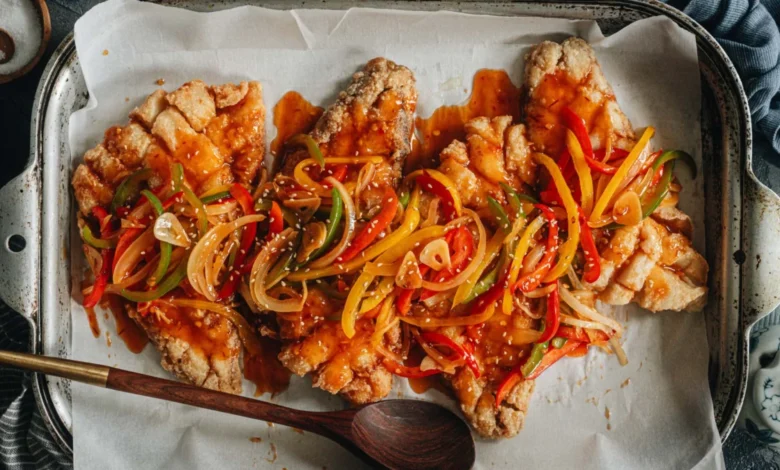
The culinary landscape of the Lunar New Year is steeped in symbolism, where every dish served at the reunion dinner carries a specific wish for the year ahead. Among the most culturally significant is the fish course, a mandatory centerpiece driven by a linguistic nuance: the Mandarin word for fish (yú, 鱼) is a homophone for surplus or abundance (yú, 余). Traditionally, serving a whole river fish signifies entering the new year with financial and spiritual surplus. However, the classic preparation—in which a whole fish is filleted, meticulously scored, folded into a decorative blossom shape, deep-fried, and draped in sauce—presents considerable logistical hurdles for home cooks navigating standard residential kitchens.
Addressing this modern culinary challenge, contemporary recipe developers and cultural home cooks have increasingly championed streamlined adaptations that preserve the symbolic integrity and visual grandeur of the historical dish without requiring commercial kitchen infrastructure or live-market sourcing.
Evolution of the Holiday Centerpiece: From Wet Markets to Home Kitchens
Historically, the preparation of the New Year fish began at early-morning wet markets across China, where consumers selected live river fish to guarantee optimal freshness and texture. Following migration trends to Western metropolitan areas such as Austin and New York, home cooks frequently encounter structural barriers in sourcing live fish tailored for traditional Chinese banquet preparations.
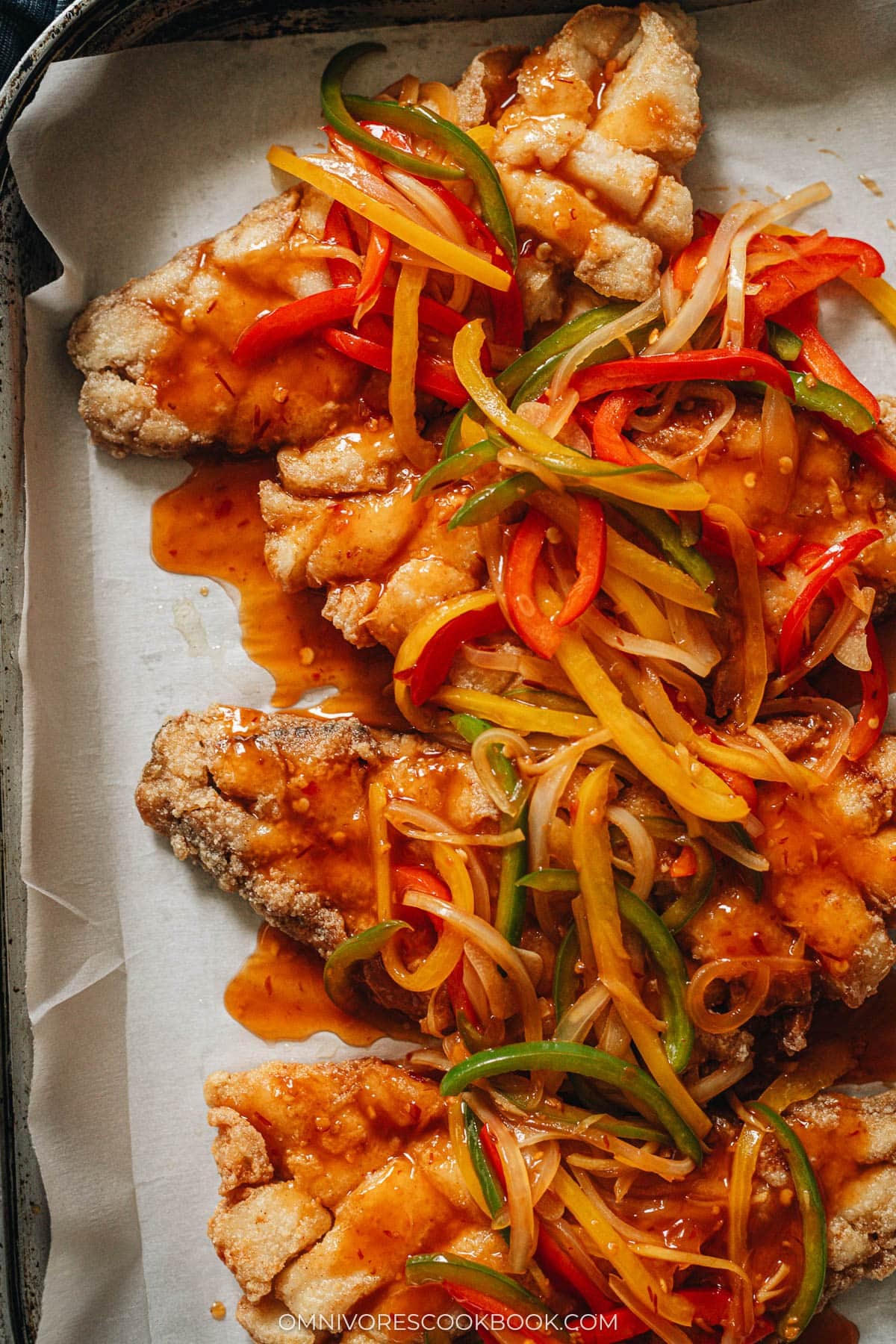
This scarcity catalyzed a significant shift in diaspora cooking methodologies over the past two decades. Rather than abandoning the tradition, culinary historians and cookbook authors have pioneered scaled-down iterations utilizing accessible white fish fillets. This evolution maintains the essential textural contrasts—a crackling exterior protecting tender, flaky flesh—while democratizing a dish that was once labor-intensive and technically intimidating.
Culinary Architecture: Anatomy of the Modern Sweet and Sour Fillet
The contemporary preparation relies on a deliberate two-stage cooking method designed to maximize efficiency and textural integrity, reducing total preparation time to approximately 35 to 40 minutes.
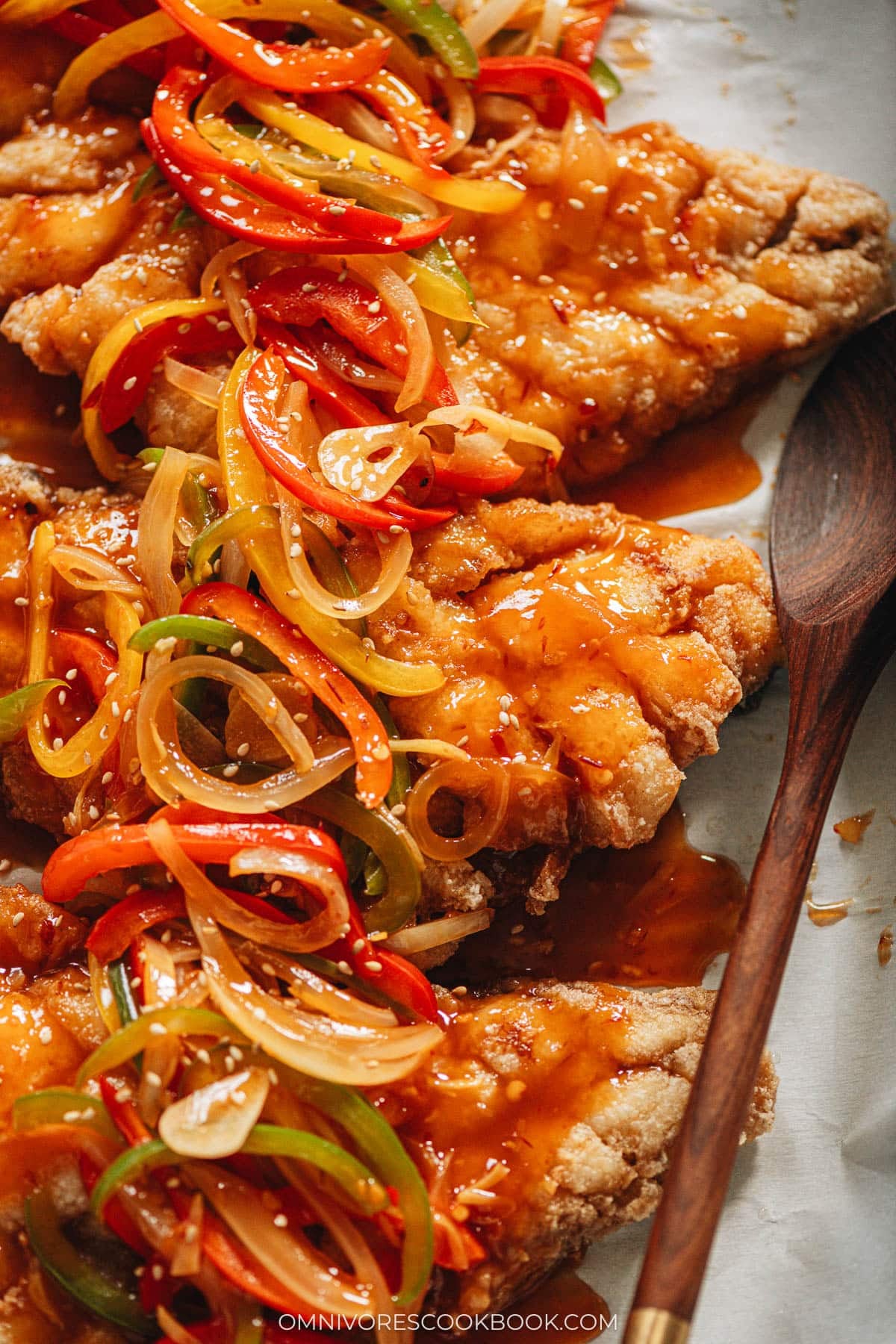
The structural foundation begins with the selection of firm, moderately fatty white fish. Unlike delicate varieties that disintegrate under high heat, sturdy white fish withstands the rigors of high-temperature cooking while retaining internal moisture.
The Coating and Frying Process
Unlike traditional deep-frying methods that require vast quantities of oil, modern adaptations frequently utilize a shallow-frying technique. A wire rack is established over a draining tray to maintain crispness post-fry.
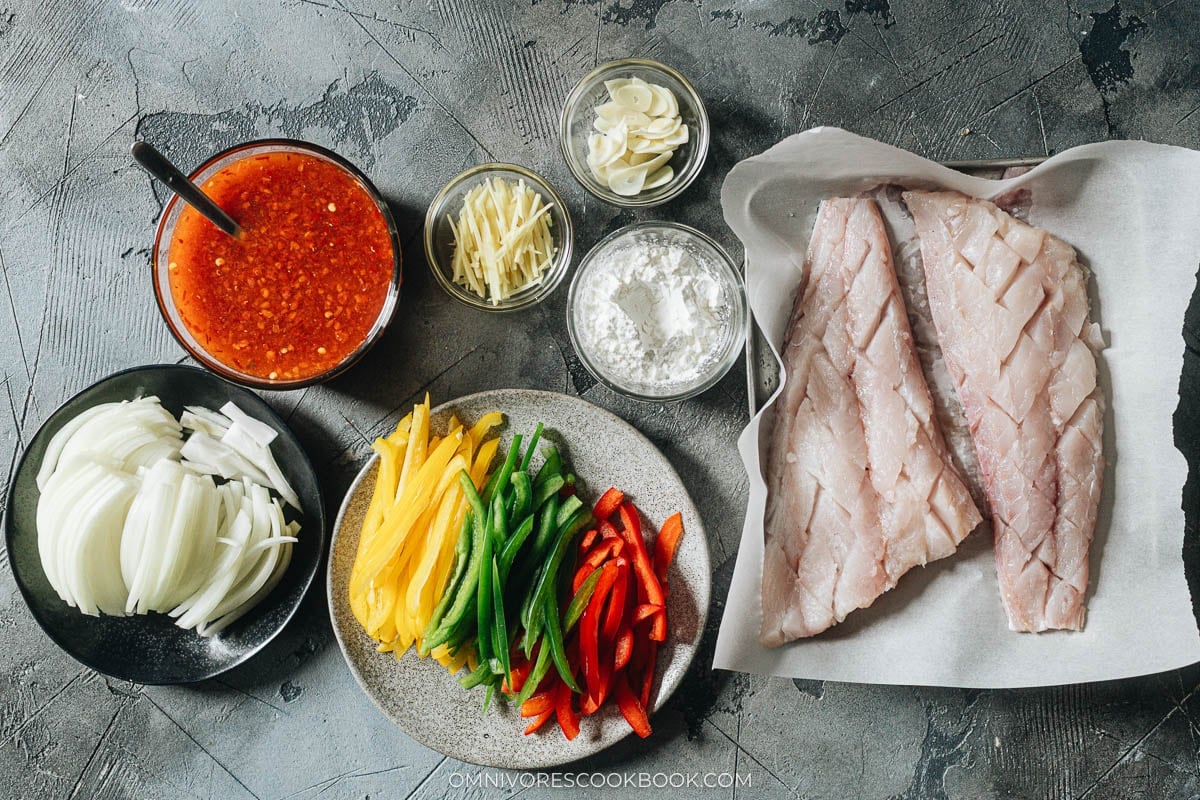
- Scoring: Fillets undergo precise crosshatch scoring at intervals of approximately 2.5 centimeters. For skin-on varieties, cuts extend down to the skin without piercing it; for skinless cuts, incisions penetrate approximately two-thirds of the depth to ensure structural cohesion.
- Dredging: The scored fish is pressed into a seasoned dry mixture comprising cornstarch, salt, and white pepper. Culinary science notes that cornstarch yields a lighter, more delicate, and shatteringly crisp crust compared to wheat flour. The starch settles into the scored crevices, creating an intricate texture upon contact with heat.
- Thermal Management: Cooking oil is heated in a shallow pan to 375°F (190°C). The fish is introduced flesh-side down, developing a golden crust over three to four minutes before a single precise flip.
The Aromatic and Flavor Profile
The accompanying sauce acts as the flavor nexus, balancing fundamental taste profiles characteristic of traditional coastal and regional Chinese cuisines.
- Acid and Sweetness: Rice vinegar and granulated sugar establish the foundational sweet-and-sour dichotomy.
- Depth and Umami: Shaoxing rice wine and traditional soy sauce impart complex fermented undertones.
- Aromatics: Finely minced ginger and garlic are bloomed in oil, followed by sweet onions and crisp bell peppers. Rather than cooking the vegetables to softness, modern culinary standards dictate a brief flash-heat application to retain vibrant coloration and a crisp texture.
- The Glaze: A slurry of cornstarch and water is incorporated into the simmering liquid, transforming the reduction into a glossy, translucent glaze that adheres uniformly to the crispy fish crust.
Nutritional Profile and Dietary Adaptability
Modern nutritional analysis of the dish reflects a balanced macronutrient distribution per standard serving, making it suitable for diverse dietary protocols. A single serving of the prepared sweet and sour mandarin fish generally yields the following estimated nutritional data:

- Calories: 501 kcal
- Protein: 45 g
- Carbohydrates: 30.1 g
- Total Fat: 16.7 g
- Saturated Fat: 2.7 g
- Sodium: 941 mg
- Dietary Fiber: 0.8 g
- Sugars: 18.6 g
Furthermore, because the recipe relies on cornstarch rather than wheat-based thickeners or breadcrumbs, the baseline preparation is inherently gluten-free adaptable, provided that certified gluten-free soy sauce or tamari is substituted in the sauce formulation.
Integration into Holiday Menus and Banquet Planning
In formal Chinese banquet structuring, the sweet and sour fish is rarely consumed in isolation. Culinary event planners recommend integrating the dish into a multi-course menu designed around structural and flavor contrast.

Typically served over plain steamed white rice to absorb excess aromatics, the dish is paired with fiber-rich green vegetables, such as Chinese broccoli (gai lan) dressed in oyster sauce, which cuts through the richness of the fried protein. To maintain a balanced culinary tempo during hosting events, experienced hosts often pair the fish with a make-ahead savory protein—such as braised chicken with mushrooms—and a warming, acidic soup, such as traditional hot and sour soup, ensuring varied textures and preparation workflows.
Technical Troubleshooting and Best Practices
Culinary professionals emphasize several critical execution steps to ensure optimal results:
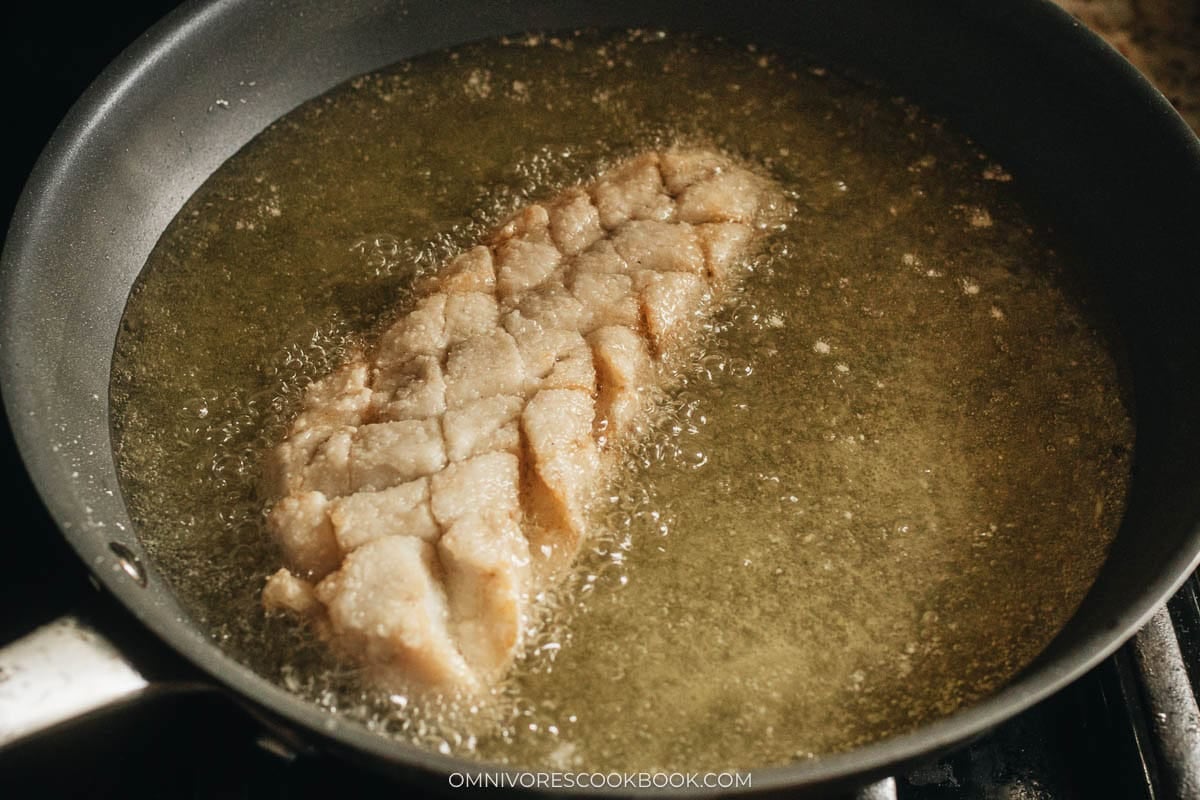
- Temperature Control: Introducing fish into oil that has not reached 375°F results in moisture leaching into the cornstarch, creating a pasty, unpalatable coating.
- Timing of Dredging: Dredging must occur immediately prior to frying. Allowing coated raw fish to rest causes the natural moisture of the flesh to hydrate the starch prematurely, destroying the crisp crust.
- Sauce Reheating Limits: Pre-made sauces should be warmed gently before service. Subjecting the cornstarch-thickened sauce to a rolling boil post-thickening breaks down the starch bonds, causing the glaze to liquefy.
- Storage Limitations: Due to the delicate nature of fried crusts exposed to moisture-rich sauces, the dish is optimized for immediate consumption. Leftovers refrigerated for up to 24 hours require high-heat oven crisping rather than microwave reheating to prevent structural degradation.
Through these methodical adaptations, the ancient symbolism of the Lunar New Year fish remains accessible, vibrant, and relevant to contemporary global dining rooms.