The Chemistry of the Perfect Cup: A Scientific Deep Dive into Specialty Coffee Extraction and Brewing Variables

The pursuit of the ideal cup of coffee has evolved significantly over the past decade, shifting from a rudimentary morning caffeine routine into a precise culinary science. Driven by the explosive growth of the "third wave" coffee movement—particularly prominent across Scandinavia—home brewers and professionals alike are increasingly turning to laboratory-grade methodologies to decode the variables that influence extraction, flavor profiles, and overall cup quality.
While the journey from a Coffea arabica shrub to a finished beverage involves countless agricultural and processing variables outside the consumer’s control, the final extraction phase remains squarely in the hands of the brewer. Recent advancements in culinary science have illuminated the critical parameters that dictate success in the kitchen, bridging the gap between chemical engineering and daily brewing routines.

The Evolution of Home Brewing and Analytical Methods
Historically, coffee preparation relied heavily on intuition, traditional recipes, and qualitative assessments. However, the convergence of specialty coffee culture and accessible analytical tools has transformed how enthusiasts evaluate extractions. The implementation of systematic tasting regimens—such as holiday blind-tasting advent calendars featuring single-origin beans—has highlighted the profound impact that bean origin, processing methods, and grind consistency have on flavor differentiation.
This newfound appreciation for precision has exposed common pitfalls in traditional brewing, notably the challenges of achieving reproducible pour-over extraction. To address these inconsistencies, the coffee community has adopted empirical measurements traditionally reserved for food science laboratories. By examining fundamental metrics such as brew ratios, total dissolved solids, and particle size distributions, brewers can transition from guesswork to controlled experimentation.
Core Extraction Parameters: Brew Ratio and Strength
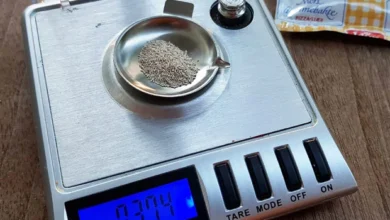
At the foundation of any precise coffee recipe is the Brew Ratio (BR), defined mathematically as the mass of water relative to the mass of dry coffee grounds. Serving a function analogous to the Baker’s percentage in baking, a standard starting ratio of 60 grams of coffee per 1,000 grams of water yields a BR of 16.7. Standard black coffee extractions typically operate within a BR range of 15 to 25, allowing brewers to effortlessly scale recipes up or down while maintaining consistency.
Closely tied to the brew ratio is Total Dissolved Solids (TDS), which measures the strength of the beverage by quantifying the concentration of extracted matter transferred from the grounds into the water. A standard cup of black coffee typically exhibits a TDS range of 1.2% to 1.5%, meaning the beverage consists of more than 98% water.
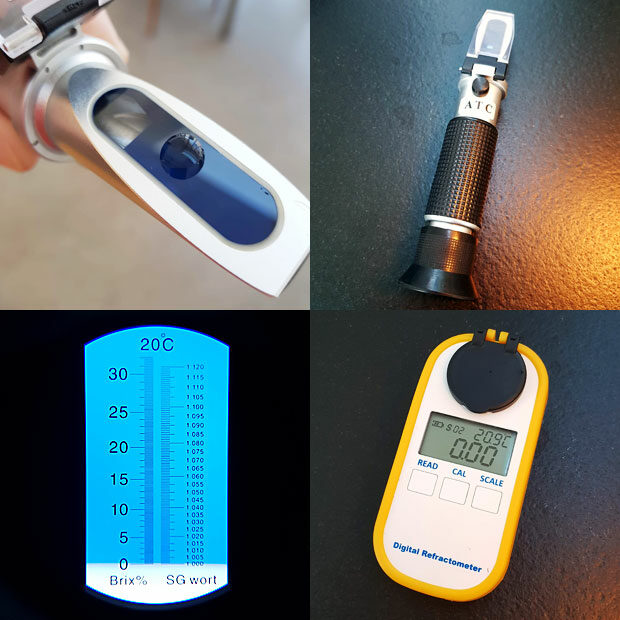
Measuring TDS has traditionally required complex laboratory equipment, but the adoption of handheld optical refractometers has democratized the process. By measuring the refraction angle of light passing through a cooled, hot-filtered coffee sample, users can determine the Brix scale value—which converts directly to TDS via a standard multiplication factor. This data enables brewers to immediately identify whether a beverage is over-concentrated, preventing the common sensory confusion between genuine strength and undesirable bitterness or astringency.
Calculating Extraction Yields: Immersion Versus Percolation
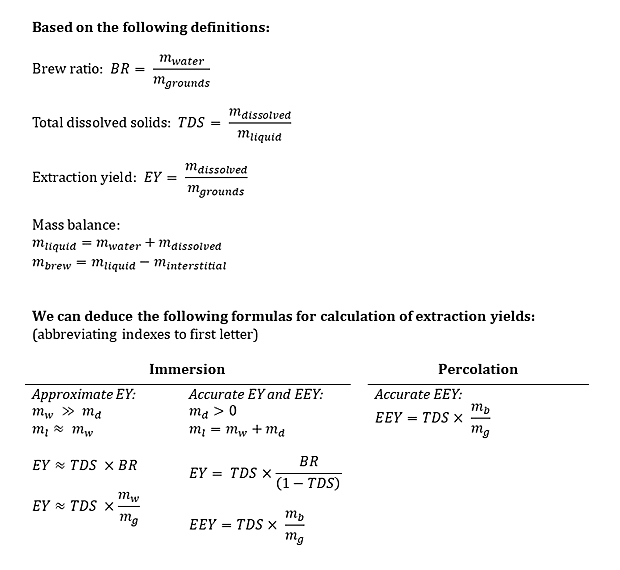
Once TDS is established, enthusiasts calculate the Extraction Yield (EY)—the percentage of the original dry coffee mass that has successfully dissolved into the liquid. However, calculating EY requires distinguishing between immersion brewing methods (such as a French Press or Aeropress) and percolation methods (such as pour-over drip cones).
In immersion brewing, the entire liquid mass shares an equal probability of extraction and final consumption. Conversely, percolation brews involve continuous liquid flow where interstitial water trapped between coffee grounds arrives too late to enter the final cup. This distinction has led researchers to differentiate between standard Extraction Yield (EY) and Effective Extraction Yield (EEY).
Mathematical modeling demonstrates that percolation methods excel at delivering dissolved solids efficiently to the cup, whereas immersion methods extract a higher total mass from the grounds. This variance—often amounting to fractions of a gram in total dissolved solids—fundamentally alters the chemical composition of the beverage, explaining why immersion and percolation coffees present distinct flavor profiles even when utilizing identical beans and brew ratios.
The Critical Role of Grind Size and Particle Distribution
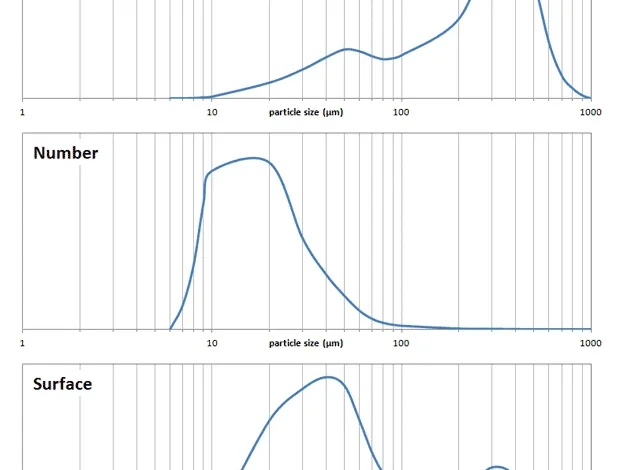
Beyond liquid measurements, the physical preparation of the coffee bean exerts a profound influence on extraction efficiency. When a roasted bean is crushed, it shatters into a heterogeneous mixture of large particles and microscopic fragments known as "fines" (typically defined as particles smaller than 100 micrometers).
Particle Size Distribution (PSD) can be visualized through volume, surface area, or particle count. While volume distribution is the industry standard, surface area distribution offers a more accurate representation of extraction dynamics. Research indicates that more than half of total coffee extraction occurs on the surface of particles smaller than 100 micrometers. Furthermore, studies suggest that water only extracts the outer 100-micrometer depth of larger coffee particles, leaving their internal cores largely untouched.
Consequently, grinder selection is paramount. Traditional blade grinders produce excessive fines and inconsistent particle sizes, leading to uneven extractions and potential filter clogging. High-end conical and flat burr grinders provide superior control, though achieving a narrow particle size distribution remains a central engineering challenge in grinder design.
Environmental and Chemical Variables: Water, Temperature, and Filtration
Beyond the physical mechanics of grinding and brewing, secondary environmental factors dictate the final sensory experience:
- Water Composition: Water mineral content plays a crucial role in extraction efficiency. Just as in beer brewing and artisanal tea preparation, utilizing water tailored with specific calcium, magnesium, and bicarbonate concentrations can unlock nuanced fruit and floral notes that soft or heavily chlorinated tap water might obscure.
- Temperature: Thermal energy dictates both the solubility and diffusion rates of chemical compounds. While high temperatures near 100°C maximize extraction yields, alternative methods like cold brewing rely on extended extraction times at refrigerated temperatures to produce distinct flavor profiles characterized by altered perceptions of acidity and bitterness.
- Filtration Materials: The choice of filter medium directly impacts mouthfeel and clarity. Paper filters are highly effective at retaining microscopic fines and lipid oils, yielding a clean cup. Conversely, metal or cloth filters allow oils and trace particulates to pass through, enhancing body and texture at the expense of cup clarity.
Implications for the Future of Home Brewing
The integration of scientific metrics into everyday coffee preparation signifies a mature shift in culinary consumerism. By systematically addressing variables in a prioritized sequence—starting with brew ratios and TDS, followed by grind uniformity, bean freshness, water chemistry, and filtration—enthusiasts can systematically troubleshoot extraction flaws.
As ongoing research from academic institutions and specialty coffee pioneers continues to publish relevant data regarding fluid dynamics, cellulose swelling in paper filters, and oxidation rates, the boundary between laboratory science and kitchen craft will continue to blur. Ultimately, this empirical approach empowers consumers to elevate their daily coffee ritual from an arbitrary morning routine into an exact, repeatable science.