The Physics and Chemistry of Coffee Extraction: Deconstructing the Pour-Over and Immersion Brewing Methods

The global specialty coffee industry has long treated brewing as both an exact science and an intuitive art form. At the heart of this discipline lies the fundamental chemistry of extraction—the process by which water dissolves specific soluble compounds from roasted and ground coffee beans. While raw coffee beans contain hundreds of distinct chemical compounds spanning multiple orders of magnitude in concentration, the primary objective of any brewing method is selective extraction. Achieving an optimal cup requires striking a delicate balance between extraction rates, water temperature, particle size distribution, and equipment geometry.
Understanding the Thermodynamic and Chemical Realities of Extraction
Roast coffee is not a uniform or "perfect" substance from a chemical perspective. Different flavor compounds, ranging from volatile aromatics to heavier, bitter organic acids and melanoidins, possess unique solubility levels and extraction rates. If all compounds dissolved at an identical rate, the resulting beverage would offer no room for variation or culinary creativity.
To accurately mirror the total soluble profile of a coffee bean, one would theoretically need to grind the coffee to an ultra-fine powder and steep it for an extended duration, or boil it directly, mirroring traditional unfiltered Turkish preparations. Such methods can yield extraction rates approaching 30 percent, resulting in an exceptionally strong beverage. However, maximum extraction does not equate to optimal flavor. Professional baristas and food scientists instead aim for a selective, uneven extraction. By intentionally withholding certain undesirable, bitter compounds while highlighting desirable fruit, floral, and caramelized notes, brewers produce a balanced cup.
Historically, coffee enthusiasts have relied on two primary methodologies to achieve this balance: percolation (pour-over methods) and immersion brewing. While percolation involves water continuously flowing through a bed of coffee via gravity, immersion relies on steeping the grounds entirely in water before separation. Each method introduces a vast matrix of physical and thermodynamic variables that dictate the final sensory experience in the cup.
The Hidden Complexity of Pour-Over Brewing
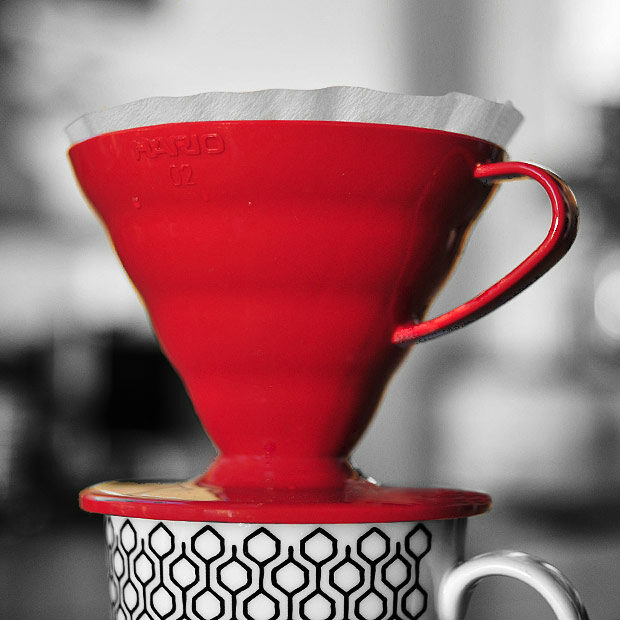
Pour-over brewing appears deceptively simple: hot water is poured over a bed of ground coffee, passing through a paper, cloth, or metal filter by means of gravity. Yet, fluid dynamics and thermodynamics reveal a surprisingly complex ecosystem of interdependent variables.
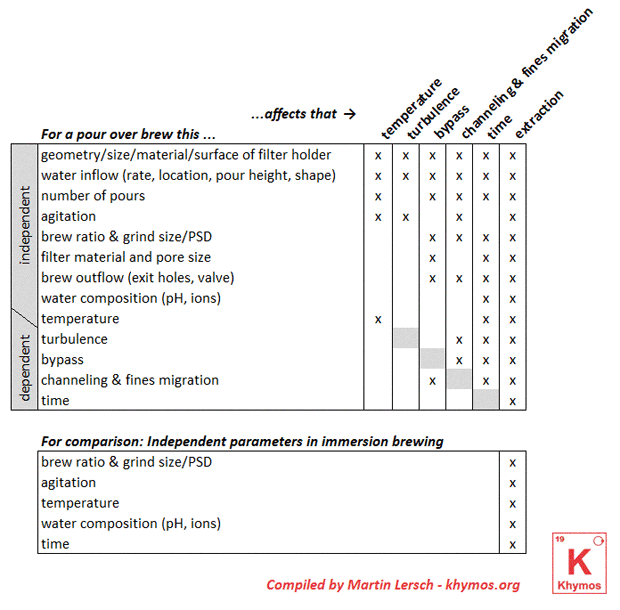
Independent variables—those directly controlled by the user—include brew ratio, grind size, particle size distribution, water composition, pouring temperature, and the choice of filter material. However, these choices trigger a cascade of dependent variables. For instance, particle size distribution directly impacts total surface area and flow resistance. Finer coffee particles pack more densely, slowing down the flow rate and increasing contact time, which theoretically enhances extraction yield.
However, this increased density introduces a major operational challenge: channeling. Water naturally takes the path of least resistance—a fluid dynamic principle often summarized by the adage that "water is lazy." When fine particles clog a filter or create dense barriers, standing water above the coffee bed tends to bypass the central coffee column entirely, sliding down the sides of the filter holder. This phenomenon, known as bypass, dilutes the coffee and results in uneven extraction, where certain grounds are over-extracted while others remain under-extracted.
Engineering the Vessel: An Evolution of Dripper Design
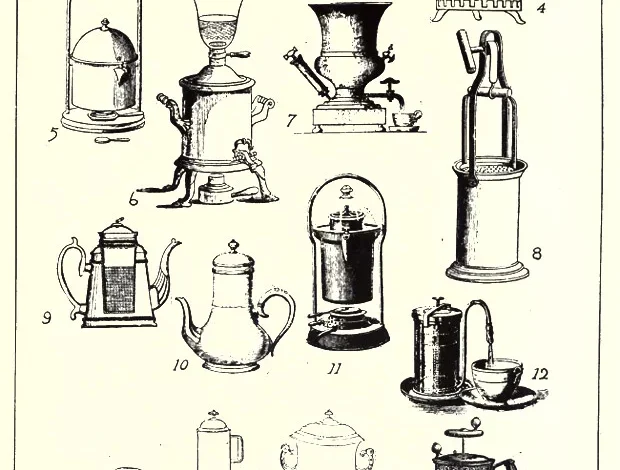
To combat the inherent unpredictability of bypass, channeling, and heat loss, inventors and engineers have spent over a century refining the architecture of pour-over filter holders. A comprehensive review of coffee brewing hardware reveals that minor design alterations serve distinct thermodynamic and hydrodynamic purposes.
Material and Thermal Mass
Temperature stability is critical during extraction. Highly conductive materials like bare metal quickly sap thermal energy from the brewing water unless insulated by a double-walled vacuum design (such as the Stagg X/XF dripper) or possessing massive thermal weight. Conversely, materials like polypropylene plastic and ceramic offer low heat conductivity, excellent durability, and minimal heat loss. While glass provides aesthetic appeal, its fragility during frequent handling makes it less practical for commercial environments.
Geometry and Bed Depth
Filter holders generally fall into three geometric categories: cone-shaped (such as the Hario V60), trapezoid-shaped (such as traditional Melitta drippers), and flat-bottomed (such as the Kalita Wave). Cone-shaped drippers produce a tapered, deep coffee bed that promotes extended water contact, whereas flat-bottomed configurations encourage a uniform, horizontal flow. However, flat beds can still experience edge-bypass if water flows too rapidly along the perimeter.
Surface Texture and Inner Walls
Smooth internal walls, such as those found in the classic Chemex brewer, allow wet filter paper to create an airtight seal against the glass. While this eliminates side-bypass entirely, it heavily restricts outflow velocity. To counteract this, modern drippers incorporate internal ribs, flutes, or raised patterns that lift the filter paper away from the wall, allowing air circulation and controlled liquid drainage.
Inflow and Outflow Control
Traditional manual pouring can disrupt the coffee bed, leading to accidental channeling. Innovations such as goose-neck kettles, or specialized water-distribution shower screens like the Melodrip and Gabi Dripmaster, break the water stream into gentle droplets, ensuring an even, non-disruptive saturation of the coffee bed. On the outflow end, modern devices like the Hario Switch or Clever Dripper incorporate integrated stop-valves. By sealing the exit hole during the initial phase, these hybrid devices allow brewers to combine immersion steeping with a final percolation draw-down, offering unprecedented control over contact time independent of grind size.
Comparative Analysis of Popular Pour-Over and Immersion Brewing Equipment
| FILTER HOLDER | MATERIAL | INSULATION | SIDE SHAPE | STRUCTURE | FILTER TYPE | BOTTOM DESIGN | BYPASS | INFLOW CONTROL | OUTFLOW CONTROL |
|---|---|---|---|---|---|---|---|---|---|
| Aeropress | Plastic | Material | Straight | None | Plain | Flat (97 holes) | No | No | Pressure |
| April Pour Over | Ceramic | Material | Tapered | Ridge | Folded | Flat (Open) | Yes | No | None |
| Bonavita Immersion | Ceramic | Material | Tapered | Ridge | Plain | Trapezoid (1 hole) | Yes | No | Stop Valve |
| Chemex | Glass | Material | Tapered | None | Plain | Cone (Open) | No | No | None |
| Clever Dripper | Plastic | Material | Tapered | Ridge | Plain | Trapezoid (1 hole) | Yes | No | Stop Valve |
| Hario V60 | Plastic/Ceramic | Material | Tapered | Ridge | Plain | Cone (Open) | Yes | No | None |
| Kalita Wave | Metal/Glass/Ceramic | Material | Tapered | None | Folded | Flat (3 holes) | Yes | No | None |
| Stagg X/XF | Metal | Vacuum | Tapered | None | Folded | Flat (10 holes) | Yes | No | None |
| Tricolate | Plastic | Material | Straight | None | Plain | Flat (51 holes) | No | Yes | None |
The Case for Robustness: Immersion Brewing as an Alternative
Given the infinite variables and potential for human error inherent in pour-over extraction, many researchers and professionals advocate for immersion brewing methods, such as the French Press, standard full-immersion steeping, or the immersion phase of a hybrid brewer.
From a chemical engineering standpoint, immersion brewing is significantly more robust and repeatable. By combining all the water and coffee grounds at once for a predetermined steeping duration, the system naturally approaches an equilibrium state. Total Dissolved Solids (TDS) and Extraction Yield (EY) increase steadily over time before eventually plateauing. Because extraction stabilizes naturally, variations in pouring technique have minimal impact on the final cup. Furthermore, immersion techniques can utilize coarser grind sizes and lower brewing temperatures, inherently suppressing the extraction of harsh, bitter compounds.
However, immersion brewing is not without trade-offs. Traditional devices like the French Press rely on open wire-mesh filters, allowing microscopic coffee particles—known as "fines"—and flavorful coffee oils to pass into the final cup. While these suspended solids impart heavy body and tactile richness, they can also leave a chalky sediment at the bottom of the vessel and introduce minor bitterness if over-extracted. Conversely, utilizing a paper filter within an immersion setup, such as an inverted Aeropress technique, yields a cleaner, more transparent cup profile while sacrificing some of the heavy body characteristic of metal-filtered brews.
Broader Implications for Coffee Science and Industry
The persistent tension between the high control of percolation and the high repeatability of immersion highlights a broader challenge within the coffee community: the prevalence of preparation myths and irreproducible recipes. Because many consumer coffee recipes fail to account for variables such as ambient humidity, water mineral composition, precise particle size distribution, and pouring turbulence, two individuals following identical instructions will frequently produce vastly different beverages.
As specialty coffee continues to mature as a culinary science, industry researchers are increasingly focusing on standardized metrics, advanced water profiling, and precision equipment design. Whether through the development of zero-bypass flat-bed drippers, flow-restricting shower screens, or hybrid valve-controlled brewers, the overarching goal remains singular: demystifying the complex physics of extraction to consistently deliver an exceptional cup of coffee.