The 250th Anniversary of Amedeo Avogadro Inspires the Launch of a Parametric Waffle Generator

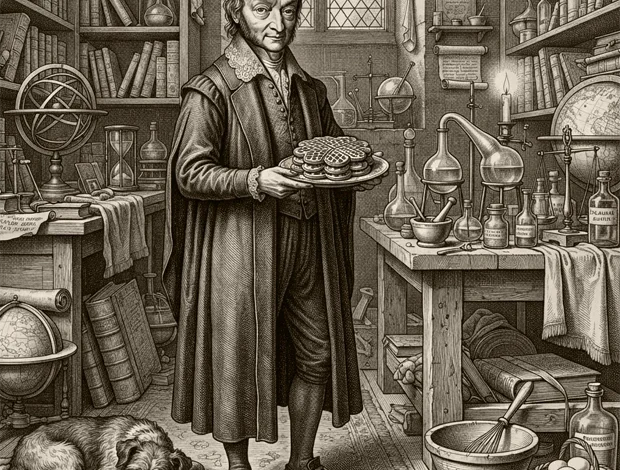
The intersection of molecular chemistry and culinary arts has reached a whimsical yet mathematically rigorous milestone with the launch of Avogadro, a parametric waffle recipe generator developed by the food science and molecular gastronomy platform Khymos. Unveiled on August 9, 2026, to coincide with the 250th anniversary of the birth of physicist and chemist Amedeo Avogadro, the digital tool allows users to dynamically compute custom waffle batters based on specific ingredient selections and property sliders. Rather than relying on a static database of pre-existing recipes, the application calculates formulations on the spot in grams, scaled directly to the number of eggs designated by the user.
The launch represents the culmination of a conceptual project that began more than a decade ago, evolving from early design mockups and spreadsheet models into a fully realized web application. Designed to explore the boundaries of traditional baking, the generator spans an astronomical number of theoretical control settings, bridging historical scientific constants with everyday domestic cooking.
Chronology and Development: From 2014 Mockups to 2026 Reality
The conceptual origins of the Avogadro waffle generator trace back to 2014, when the creator first sketched out interface concepts and built a rudimentary Excel model to test the feasibility of parametric recipe generation. At the time, the project stalled due to technical constraints and competing priorities, remaining dormant for years.
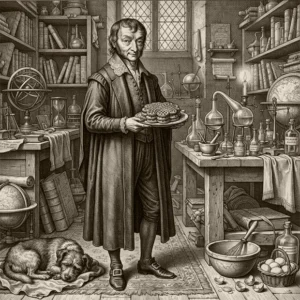
The project was revitalized to honor the 250th birth anniversary of Amedeo Avogadro, born in Turin, Italy, on August 9, 1776. Avogadro is best known for his foundational hypothesis formulated in 1811, which proposed that equal volumes of all gases, at the same temperature and pressure, contain the same number of molecules. This concept led to the establishment of Avogadro’s number ($6.02214076 times 10^23$), a fundamental physical constant defining the number of constituent particles, such as atoms or molecules, in a mole.
Drawing inspiration from this cornerstone of chemistry, the developer structured the waffle generator to mirror the scale of Avogadro’s constant. By combining various ingredient picks—including liquids, dairy, fats, eggs, starches, and sweeteners—alongside eight property sliders governing sweetness, richness, and tanginess, the application yields approximately $10^27$ distinct control settings. This theoretical matrix encompasses roughly 1,660 moles’ worth of unique waffle batters, cementing the thematic link between the historical chemist and the culinary calculator.
How the Parametric Generator Works
Unlike conventional recipe websites that serve fixed instructions retrieved from a database, Avogadro operates entirely on algorithmic computation. Users navigate between a simplified "Standard Mode" and an advanced "Expert Mode."

Standard Mode offers a curated selection of ingredients and a streamlined set of sliders designed to guarantee a workable batter. Expert Mode unlocks the full array of ingredients, all eight property sliders, and specialized presets, enabling users to venture into experimental culinary territory.
As parameters are adjusted, the application dynamically updates the ingredient quantities in grams. A visual indicator, styled after a heart-shaped waffle, provides immediate analytical feedback. This indicator serves a dual purpose: it verifies whether the generated batter possesses the structural integrity to cook successfully, and it measures how closely the composition aligns with traditional, real-world waffle recipes compiled from a corpus of approximately 1,000 predominantly Norwegian and Scandinavian sources.
The developer notes that while traditional recipes frequently relied on tacit knowledge—such as instructions to "add flour until the batter has the right consistency"—the generator attempts to codify these unwritten culinary laws. However, the system acknowledges that not all theoretical settings translate into viable baked goods. Rounding algorithms, the omission of trace ingredients, and extreme slider configurations can occasionally produce unusable mixtures, which are flagged by the interface’s quality indicator.
Supporting Data and Mathematical Scope
To understand the mathematical scale of the Avogadro generator, one must examine the permutation of its control variables. The total configuration space reaches approximately $10^27$ possible states.
While this number is vast, food scientists and developers emphasize an important caveat: a high volume of control settings does not equate to an identical number of meaningfully distinct recipes. Many parameter variations resolve to identical batter compositions due to rounding thresholds and ingredient pruning. Furthermore, a significant fraction of the theoretical matrix yields batters that fall outside the bounds of practical physics and chemistry.
Despite these limitations, the combinatorial space ensures that users can routinely generate novel formulations that have never been documented in any published cookbook. The underlying dataset draws from a deep analysis of historical Scandinavian baking traditions, establishing baseline parameters for what constitutes a functional waffle batter versus a non-functional mixture.
Expert Analysis and Implications for Culinary Science
The release of Avogadro highlights a growing trend in computational gastronomy: the application of parametric modeling to everyday cooking. By treating baking as a system of variable inputs rather than a rigid set of instructions, tools like Avogadro allow culinary enthusiasts and professionals to deconstruct the chemistry of food.

Historically, recipe development has relied on empirical trial and error or generational transmission of techniques. Parametric tools introduce a quantitative framework, enabling bakers to understand the precise functional role of each component—such as the emulsifying properties of egg proteins, the gelatinization of starches, and the tenderizing effects of fats.
Furthermore, the project raises philosophical questions about the definition of culinary categories. By asking what makes a batter a waffle batter and at what point it transitions into something else, the tool encourages a deeper engagement with food physics. The realization that several commercially successful, well-loved waffle mixes sit far outside traditional flavor profiles demonstrates that consumer preferences often embrace fringe compositions that defy historical norms.
Community Engagement and Future Outlook
Rather than presenting the software as a finished, infallible product, the developer has framed Avogadro as an open-ended experiment that invites public participation. Because testing $10^27$ individual batters is a physical impossibility, the application relies on crowdsourced feedback from its user base.
Bakers who encounter absurd formulations, algorithmic miscalculations, or surprisingly successful culinary creations are encouraged to share their findings with the platform. By submitting specific URLs generated by the tool, users can contribute to the ongoing refinement of the model’s underlying logic.
As celebrations for Amedeo Avogadro’s quarter-millennial anniversary take place globally, the launch of the waffle generator offers a unique bridge between abstract scientific constants and domestic kitchen experimentation. Whether users utilize the tool to replicate classic Scandinavian heart waffles or to venture into uncharted culinary territory, the project successfully marries the precision of chemistry with the creativity of baking.