The Gastronomic Mole: Khymos Launches Avogadro, a Parametric Waffle Generator, on the 250th Anniversary of Amedeo Avogadro

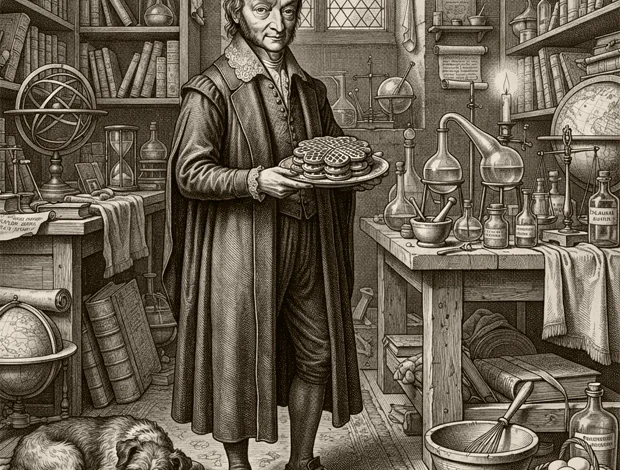
The intersection of molecular gastronomy and theoretical chemistry has yielded an unexpected culinary instrument. On August 9, 2026, marking the 250th anniversary of the birth of physicist and chemist Amedeo Avogadro, the food science platform Khymos officially launched Avogadro, a parametric waffle recipe generator. This digital tool applies mathematical modeling to the culinary arts, allowing users to construct unique waffle batters by manipulating ingredient categories and sliding property scales rather than relying on static, pre-recorded recipe databases.
The unveiling of the application represents the culmination of a project that began over a decade ago. It translates abstract chemical ratios into tangible kitchen measurements, providing a bridge between traditional Scandinavian baking techniques and modern computational food science.
Main Facts of the Avogadro Waffle Generator
Unlike conventional recipe websites that store thousands of static text files, Avogadro operates entirely on algorithmic computation. Users select baseline ingredients—spanning liquids, dairy, fats, eggs, starches, and sweeteners—and adjust a series of interactive sliders that govern flavor and texture profiles such as sweetness, richness, and tanginess.
Once parameters are established, the application computes a precise batter recipe in grams, automatically scaled to the number of eggs designated by the user. A central feature of the interface is the "waffle heart quality indicator," a diagnostic graphic that provides instant visual feedback. This indicator evaluates whether a given combination of ingredients will produce a chemically and physically viable batter, while also mapping how closely the generated composition mirrors historical or commercial waffle standards.
The application features two distinct user interfaces: a Standard Mode, designed for casual bakers with a streamlined ingredient list and simplified sliders, and an Expert Mode, tailored for advanced culinary experimentation. Expert Mode grants access to the full spectrum of ingredients, eight independent control sliders, and specialized presets capable of generating unconventional culinary combinations.
Chronology of Development: From 2014 Mockups to 2026 Launch
The conceptual groundwork for Avogadro dates back to 2014, when the creator first conceived of a parametric approach to baking batters. Early development involved rudimentary design mockups and a basic spreadsheet model to test whether fluid dynamics and ingredient ratios could be successfully quantified.

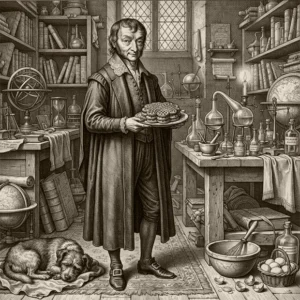
For nearly twelve years, the project remained dormant, categorized as an unfulfilled culinary experiment. The resurgence and final deployment of the tool were timed specifically to coincide with the bicentennial semi-septcentennial—the 250th birthday—of Amedeo Avogadro, born in Turin, Italy, on August 9, 1776.
The transition from a 2014 Excel model to a fully interactive web application involved solving complex UI challenges. Early design concepts, such as circular interactive fields, eventually evolved into the platform’s current dynamic plotting and real-time adjustment architecture. As users manipulate sliders on mobile or desktop interfaces, the recipe metrics update instantaneously, reflecting the immediate computational response of the underlying model.
Supporting Data and Mathematical Scale
The naming convention of the application is rooted in fundamental chemistry. Amedeo Avogadro is globally renowned for Avogadro’s constant ($6.02214076 times 10^23$), which defines the number of constituent particles, such as atoms or molecules, contained in a mole.
Avogadro leverages this numerical scale metaphorically. By calculating all possible permutations of ingredient selections and slider positions, the digital tool spans approximately $10^27$ distinct control settings. This theoretical capacity means the generator encompasses roughly $1,660$ moles’ worth of unique waffle batter variations.
However, developers have issued practical caveats regarding this staggering number. While the system permits $10^27$ control settings, mathematical rounding, the pruning of trace ingredients, and the physical limitations of batter chemistry mean that many distinct settings resolve to identical final recipes. Furthermore, extreme slider configurations routinely land outside workable culinary parameters—a boundary clearly flagged by the absence of lobes in the application’s quality indicator.
Contextualizing the Corpus: What Makes a Waffle?
The inspiration for the project stems from an extensive archival collection of approximately 1,000 traditional waffle recipes, predominantly sourced from Norway and Scandinavia. Historically, many older recipes omitted precise measurements for dry ingredients, instead instructing bakers to "add flour until the batter has the right consistency."
This reliance on tacit, generational knowledge highlights a fundamental question in food science: What precise chemical thresholds transform a random mixture of liquids and starches into a functional waffle batter, and at what point does it cease to function as one? Avogadro attempts to codify this historically intuitive knowledge into reproducible, algorithmic parameters.

While commercial mixes often occupy surprising positions on the periphery of the quality indicator, proving that "fringe doesn’t mean bad," the tool invites users to explore uncharted culinary territory. The vast majority of generated permutations represent recipes that have likely never been physically baked or recorded in human history.
Official Responses and Community Engagement
Given the sheer scale of the generator’s output—$10^27$ potential settings—the platform’s creators acknowledge that exhaustive physical testing of every batter is impossible. Consequently, the project relies heavily on crowdsourced user feedback to refine its underlying algorithms.
Culinary scientists and home bakers interacting with the platform are encouraged to report edge cases where the model produces dysfunctional batters or handles ingredient interactions poorly. Rather than seeking uncritical praise, the project leads have signaled that constructive critique regarding algorithmic anomalies holds the highest value for future system optimization. Users discovering successful, novel recipes are invited to share them publicly, complete with direct URLs to the generated configurations.
Broader Impact and Implications for Culinary Technology
The launch of Avogadro highlights a broader trend within contemporary gastronomy: the digitalization and parametric modeling of traditional cooking techniques. By moving away from static cookbooks and toward dynamic, formula-based recipe generation, tools like Avogadro democratize food science.
The application demonstrates that baking—often perceived as an exact science requiring rigid adherence to fixed proportions—can also be approached as a flexible, spatial continuum. By adjusting sliders for richness, sweetness, and structural integrity, home cooks engage directly with the variables of emulsion, starch gelatinization, and protein coagulation without needing advanced laboratory equipment.
As communities celebrate the 250th anniversary of Avogadro’s birth through academic reflections on molecular theory, the culinary world has found a fitting, creative tribute. By marrying the concept of the mole to the humble waffle iron, the project successfully bridges historical scientific legacy with modern digital interactivity, inviting individuals worldwide to design, test, and bake the mathematical equations of breakfast.