Yukhoe Kimbap: The Culinary Evolution of a Traditional Korean Delicacy

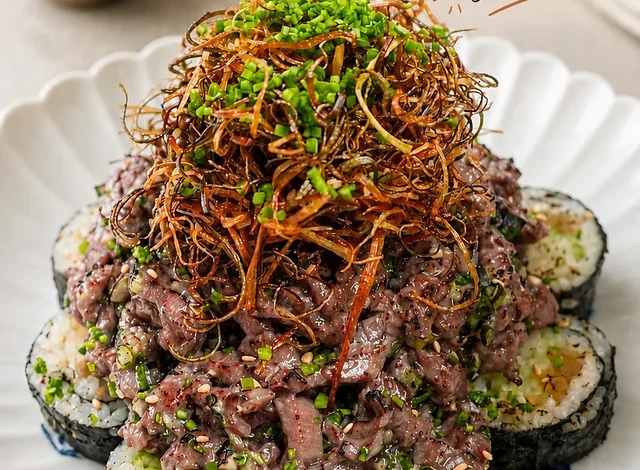
The emergence of Yukhoe Kimbap marks a significant intersection between traditional Korean raw beef preparation and the modern convenience of the kimbap roll. Historically, yukhoe—a dish consisting of finely julienned lean beef seasoned with sesame oil, soy sauce, garlic, and sugar—has been a staple of Korean festive cuisine, particularly in regions like Jeonju. By transforming this dish into a portable, handheld format, culinary innovators are effectively bridging the gap between high-end beef tartare and casual street food, reflecting a broader trend of fusion gastronomy that prioritizes both sensory texture and aesthetic presentation.

Historical Context and Culinary Foundations
Yukhoe has deep roots in Korean history, dating back to the Joseon Dynasty. It was originally a dish associated with royal courts and the landed gentry, who had consistent access to fresh, high-quality beef. The practice of consuming raw beef was historically influenced by the Buddhist culture of the era, which largely discouraged the slaughter of cattle; however, regional variations eventually codified the dish into the national consciousness. In contemporary times, the dish is characterized by its strict reliance on the freshness of the meat, typically utilizing cuts such as top round or eye of round, which are low in fat and connective tissue.

Kimbap, by comparison, serves as a pillar of modern Korean convenience. While often compared to Japanese maki, kimbap is distinct in its seasoning; the rice is traditionally tossed with sesame oil rather than vinegar, and the fillings are predominantly cooked or pickled. The synthesis of these two dishes—placing a raw, seasoned beef topping atop a foundation of seasoned rice and pickled vegetables—creates a complex interplay of temperatures and textures that is rare in traditional kimbap preparations.

Technical Preparation and Safety Protocols
The successful execution of Yukhoe Kimbap relies on a rigid, multi-stage preparation process. Chefs and home cooks alike must adhere to strict sanitary standards when handling raw protein. The beef, typically sourced from the top round or tenderloin, must be chilled to a near-frozen state before slicing. This technique, often referred to as "tempering," allows for precise, uniform julienne cuts, which are essential for maintaining the tender mouthfeel characteristic of the dish.

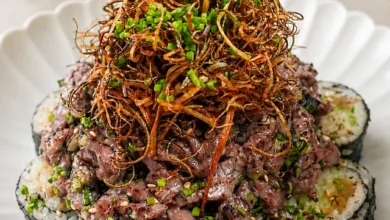
The assembly process is a testament to structural balance. The base roll consists of roasted seaweed (nori) layered with rice seasoned with toasted sesame oil and seeds. The internal fillings—typically comprised of crisp Korean pear, cucumber, and pickled radish (danmuji)—provide a necessary acidic and sweet counterpoint to the richness of the beef. The inclusion of fried green onions as a garnish serves a functional purpose, adding a savory, brittle crunch that prevents the dish from feeling overly soft or one-dimensional.

According to professional culinary guidelines, the seasoning of the beef should occur immediately prior to serving to prevent the breakdown of the meat fibers by the salt and acid in the marinade. This adherence to timing is what distinguishes a high-quality tartare-style presentation from an inferior, water-logged preparation.

Market Trends and Consumer Adoption
The rise of "specialty kimbap" reflects a shift in consumer demand toward more elevated, ingredient-focused fast food. Data from the food service industry suggests that consumers are increasingly seeking dishes that offer "experiential value." By combining the accessible format of a seaweed roll with the perceived luxury of beef tartare, chefs have successfully repositioned kimbap from a utilitarian snack to a centerpiece for social dining.

Industry analysts note that this evolution is also being driven by the "premiumization" of Korean street food. As global interest in Korean cuisine continues to climb, dishes that were once restricted to traditional restaurants are being adapted for home kitchens and casual dining concepts. This trend is further supported by the increased availability of high-quality, sashimi-grade beef in international markets, which has historically been the primary barrier to preparing authentic yukhoe outside of Korea.

Analytical Perspective on Flavor Profiles
From a gastronomic perspective, the success of Yukhoe Kimbap is rooted in the balance of the "five tastes." The lean beef provides umami, while the soy-based sauce introduces salt. The Korean pear is critical for its fructose-heavy sweetness, which cuts through the density of the meat. The pickled components—whether traditional danmuji or the more complex ulwae jubak-jangajji (pickled oriental melon)—add the necessary acidity to cleanse the palate.

The addition of a torch-seared finish—a modern innovation applied by some practitioners—adds a layer of pyrolytic flavor, or "smokiness," that is entirely absent in the traditional raw format. While purists may argue that heat compromises the integrity of the tartare, proponents suggest that the brief application of fire enhances the savory notes of the beef fat, creating a "charred" experience that appeals to a broader demographic.

Chronology of Preparation for Optimal Quality
For those attempting this dish at home or in a professional setting, the following workflow is recommended to ensure food safety and structural integrity:

- Preparation Phase (T-minus 24 hours): Sourcing of the beef and procurement of high-quality pickled vegetables.
- Mise en Place (1 hour prior): Julienne the vegetables and prepare the green onion oil. Frying the onions should be done until they reach a golden-brown hue, ensuring they remain crispy.
- Assembly Phase (15 minutes prior): The kimbap rolls are constructed, tightly bound, and sliced into uniform pieces.
- Final Seasoning (Immediate): The beef is seasoned with the prepared sauce, garlic, and green onion, then placed immediately onto the rolls.
- Service: The dish is served within minutes to maintain the contrast between the cold, raw beef and the seasoned rice.
Broader Implications for Global Cuisine
The popularity of Yukhoe Kimbap serves as a case study in how cultural fusion can revitalize traditional dishes. By deconstructing the kimbap roll and using it as a canvas for high-protein, raw-preparation ingredients, the culinary world has found a new way to showcase the versatility of Korean flavor profiles.

Furthermore, the emphasis on local and high-quality ingredients underscores a growing awareness regarding supply chain transparency. Because the beef is consumed raw, the consumer is forced to engage with the provenance of the meat, shifting the focus from mass-produced food items to craft-based, ingredient-centric dining. As this trend continues to gain traction, it is likely that we will see further experimentation with traditional Korean techniques applied to modern, globalized formats, cementing the status of Korean cuisine as a dynamic and ever-evolving field of study.

Conclusion
Yukhoe Kimbap stands as a sophisticated adaptation of historical culinary traditions, successfully navigating the complexities of raw meat preparation and the structural demands of the kimbap roll. Through the strategic use of textures—ranging from the crispness of the pear to the crunch of the fried scallion—it offers a multi-layered sensory experience that honors the legacy of Korean beef preparation while embracing the demands of contemporary dining. Whether served as a high-end appetizer or an elevated home meal, it remains a testament to the enduring appeal of the balance between the fresh, the sweet, and the savory.