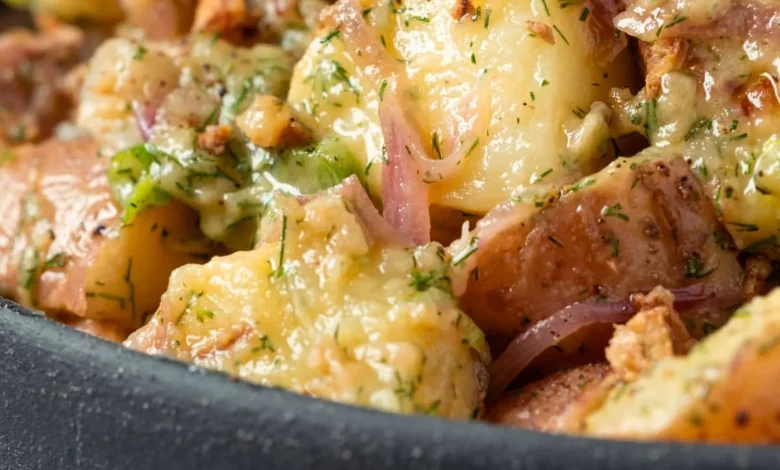
This vegan German potato salad offers a rich, tangy, and flavorful experience, reimagining a beloved classic with plant-based ingredients. Crafted with a vibrant vinaigrette, fresh dill, and smoky seasonings, it stands as a testament to how traditional dishes can be innovatively adapted to cater to diverse dietary preferences without compromising on taste or satisfaction. This recipe, originating from the culinary traditions of Germany, eschews the mayonnaise commonly found in its American counterpart, opting instead for a lighter, more nuanced dressing that allows the inherent flavors of the potatoes and accompanying ingredients to shine. The dish is typically served warm, contributing to its hearty and comforting profile, making it an ideal accompaniment for a variety of meals, particularly during cooler months or when a substantial side is desired. Its ease of preparation further enhances its appeal, promising a delightful culinary experience that often leads to requests for second and even third helpings.
A Culinary Heritage Reimagined
German potato salad, known in its homeland as Kartoffelsalat, boasts a rich history that predates the widespread use of mayonnaise. Traditionally, it features boiled potatoes dressed in a warm vinegar-based dressing, often enhanced with sautéed onions and bacon. The vegan adaptation meticulously preserves the essence of this traditional preparation while consciously excluding animal products. This version highlights a vinaigrette dressing, providing a bright tanginess that perfectly complements the earthy potatoes. The inclusion of sautéed onions introduces a subtle sweetness and depth, while fresh dill adds a herbaceous freshness. The addition of smoky sea salt is a key element, mimicking the savory notes often derived from bacon in non-vegan recipes, and lending a distinct umami character that elevates the overall flavor profile.

The deliberate choice to serve this salad warm is a significant departure from many cold potato salads. This approach not only enhances the texture of the potatoes, making them softer and more receptive to the dressing, but also contributes to a more comforting and satisfying eating experience. This characteristic makes it a versatile dish, suitable for a wide array of occasions, from casual family gatherings to more formal dinner parties. Its ability to be enjoyed either warm or at room temperature further adds to its practicality, allowing hosts to prepare it in advance without sacrificing its appeal.

The Art of Flavor Balancing
The appeal of this vegan German potato salad lies in its masterful balance of flavors and textures. The foundation of the dish is, of course, the potato. When boiled correctly, potatoes offer a creamy, starchy base that readily absorbs the flavors of the dressing. The vinaigrette, typically composed of ingredients like apple cider vinegar, olive oil, and a touch of sweetener (such as maple syrup in this vegan version), provides the essential tanginess and acidity. This acidity is crucial for cutting through the richness of the potatoes and creating a bright, refreshing taste.

The sautéed onions, when cooked until tender and slightly caramelized, contribute a gentle sweetness and a foundational savory note. This process transforms the sharp bite of raw onion into a more mellow, almost buttery flavor that integrates seamlessly into the salad. Fresh dill, a herb deeply associated with German and Central European cuisine, introduces an aromatic and slightly anise-like flavor that is both distinctive and complementary. It adds a layer of freshness that brightens the entire dish.

The smoky sea salt is perhaps the most innovative element in this vegan rendition. It serves a dual purpose: providing essential seasoning and imparting a subtle smokiness that evokes the savory depth often associated with traditional German potato salad ingredients like bacon. This careful selection of ingredients ensures that the salad is not merely a substitute but a culinary creation in its own right, offering a complex and deeply satisfying flavor profile.

Culinary Versatility and Preparation
The preparation of this vegan German potato salad is designed to be straightforward, making it an accessible recipe for home cooks of all skill levels. The process typically involves boiling potatoes until tender, then preparing the dressing separately. Sautéing onions and combining them with other dressing ingredients, such as vinegar, oil, and sweetener, creates a flavorful base. Once the potatoes are cooked and often sliced or quartered, they are gently tossed with the warm dressing, allowing the flavors to meld. The addition of fresh dill and smoky seasonings at the end of the cooking process ensures their vibrancy and aroma are preserved.

This salad’s versatility extends to its serving suggestions. It pairs exceptionally well with a variety of main courses. For instance, it can be served alongside vegan sausages, grilled tofu steaks, or hearty lentil loaves, providing a balanced and satisfying meal. Its substantial nature also allows it to be enjoyed as a main course in itself, particularly for those seeking a lighter, plant-based meal. The ability to serve it warm or at room temperature adds to its convenience, making it suitable for potlucks, picnics, and barbecues where it can be prepared in advance and enjoyed at leisure.

Make-Ahead and Storage Considerations
A significant advantage of this vegan German potato salad is its excellent make-ahead potential. Like many potato-based dishes, its flavors tend to deepen and meld beautifully when allowed to sit. Preparing the salad the night before serving is highly recommended, as this allows the dressing to fully permeate the potatoes, resulting in an even more cohesive and delicious outcome. When ready to serve, the salad can be brought to room temperature or gently reheated in a microwave or on the stovetop. This flexibility ensures that it can be seamlessly incorporated into meal planning, reducing last-minute cooking stress.

Regarding storage, leftovers of this vegan German potato salad are known to keep exceptionally well. When stored in an airtight container in the refrigerator, it can remain fresh and flavorful for approximately four to five days. This extended shelf life makes it an ideal candidate for meal prepping, providing a convenient and healthy side dish option throughout the week. The enduring quality of the salad underscores its practical appeal for busy individuals and families looking for delicious, make-ahead meal components.

A Look at Nutritional Value and Potential
The nutritional profile of this vegan German potato salad offers a compelling case for its inclusion in a balanced diet. Potatoes are a good source of complex carbohydrates, providing sustained energy. They also contain essential vitamins and minerals, including Vitamin C, Vitamin B6, potassium, and dietary fiber. The use of olive oil in the vinaigrette contributes healthy monounsaturated fats, known for their cardiovascular benefits. Fresh dill is not only a flavor enhancer but also offers a range of vitamins and antioxidants.

In terms of broader implications, the growing popularity of plant-based cuisine, as evidenced by recipes like this vegan German potato salad, reflects a significant shift in dietary trends. This shift is driven by a confluence of factors, including increasing awareness of health benefits associated with plant-based diets, environmental concerns regarding animal agriculture, and ethical considerations. The success of such adaptations demonstrates that traditional culinary boundaries can be respectfully navigated, leading to innovative and inclusive food options. The market for plant-based alternatives continues to expand, with consumers actively seeking out delicious and satisfying options that align with their values. This trend is supported by data indicating consistent growth in the global plant-based food market, with projections pointing towards continued expansion in the coming years. The ability of classic dishes to be transformed into appealing vegan versions plays a crucial role in making plant-based eating more accessible and enjoyable for a wider audience.