At Nocturne in Denver Brandyn Shank is reviving the Arsenic and Old Lace an old Hollywood relic.

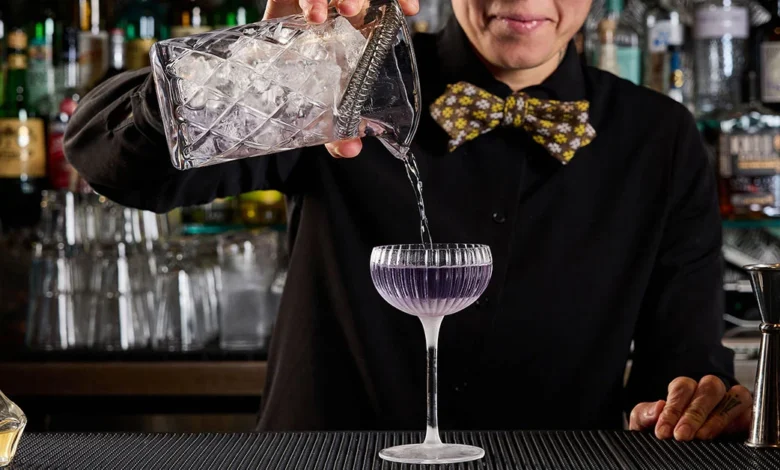
While the modern cocktail enthusiast might easily recognize the botanicals of a Martini or the citrus-forward profile of a Last Word, the Arsenic and Old Lace has long languished in the footnotes of mixology history. At Nocturne, a jazz-focused culinary destination in Denver’s RiNo Art District, beverage director Brandyn Shank is working to change that. By reintroducing this 1940s-era Martini variation, Shank is not merely serving a drink; he is resurrecting a piece of mid-century cultural history that bridges the gap between the golden age of Broadway and the modern craft cocktail movement.
The Arsenic and Old Lace is a cocktail defined by its contradictions. It is visually striking, possessing a subtle purple hue that suggests a sugary sweetness, yet its flavor profile is aggressively sophisticated—floral, bright, and underpinned by the herbal complexity of gin and absinthe. For Shank, the drink serves as a perfect liquid representative of the swing and big band era, a time when cocktails were as much about theatricality and wit as they were about the spirits themselves.
The Cinematic and Literary Genesis of a Black Comedy Classic
The cocktail’s namesake is as storied as its ingredients. The Arsenic and Old Lace takes its title from Joseph Kesselring’s 1939 play, a black comedy that became a massive success on Broadway. The narrative centers on the Brewster sisters, two seemingly sweet elderly women who have developed a habit of poisoning lonely old bachelors with elderberry wine laced with arsenic, strychnine, and "just a pinch of cyanide." The play’s popularity led to a 1944 film adaptation directed by Frank Capra and starring Cary Grant, which further cemented the title in the American zeitgeist.
The transition from stage and screen to the cocktail glass was facilitated by Crosby Gaige, a prominent Broadway producer and a noted epicure of the mid-20th century. Gaige first published the recipe in his 1944 book, Cocktail Guide and Ladies’ Companion. Given Gaige’s background in the theater, the naming of the drink was a savvy marketing move, aligning the cocktail with one of the most popular intellectual properties of the day.
In the context of the 1940s, naming drinks after cultural icons was a common practice. However, the Arsenic and Old Lace stood out because its ingredients—specifically crème de violette and absinthe—mirrored the "unseen evil" of the play’s plot. The violet liqueur provides the "old lace" aesthetic, while the absinthe, long associated with hallucination and danger (the "Green Fairy"), provides the "arsenic" edge.
Deconstructing the Recipe: From 1944 to Modern Denver
The original 1944 specifications for the Arsenic and Old Lace were reflective of the heavy-handed pouring styles of the era. Gaige’s recipe called for three parts dry gin to one part absinthe, with three dashes each of dry vermouth and crème de violette. By modern standards, a full part of absinthe would overwhelm the palate, turning the drink into a medicinal assault rather than a balanced aperitif.
At Nocturne, Shank and his team, including former bartender James Sporer, spent considerable time refining these ratios to suit contemporary tastes. The resulting "Nocturne Build" follows a more traditional Martini structure:
- 2 ounces of Citadelle Gin
- ¾ ounce of Dolin Dry Vermouth
- ¼ ounce of Rothman & Winter Crème de Violette
- A rinse of Leopold Brothers Absinthe Verte
- A dash of orange bitters
- A lemon twist for garnish
This modification preserves the spirit-forward nature of the original while allowing the individual botanicals to breathe. The addition of orange bitters is a nod to the late 19th-century Martini recipes, such as the Marguerite or the Turf Cocktail, which often utilized bitters to bridge the gap between the gin’s juniper and the vermouth’s wine base.
The Chemistry of Ingredients: Selection and Impact
The success of a cocktail as delicate as the Arsenic and Old Lace depends entirely on the quality and profile of its components. Shank’s choice of Citadelle Gin Original 88 is a strategic one. Produced in France using a progressive infusion process, Citadelle offers a highly floral nose that complements the crème de violette. Its palate features 19 different botanicals, including Moroccan coriander, Spanish almonds, and French juniper, which provide a robust backbone that isn’t lost when mixed with potent liqueurs.
The choice of vermouth also plays a critical role. Dolin Dry, a staple from Chambéry, France, is utilized for its clean, light profile. Unlike some heavier Italian dry vermouths, Dolin does not compete with the floral notes of the violette; instead, it provides the "velvety" structure that Shank identifies as a hallmark of the cocktail.
Perhaps the most sensitive ingredient is the crème de violette. For decades, this liqueur was nearly impossible to find in the United States, leading to the near-extinction of drinks like the Aviation and the Arsenic and Old Lace. The 2007 re-importation of Rothman & Winter Orchard Violet, produced from Queen Charlotte and March violets in the Austrian Alps, fueled the modern cocktail revival. Shank prefers this brand because it avoids the "soapy" or artificial flavor profiles found in lesser violet liqueurs, offering a genuine floral elegance without excessive sugar.
Finally, the absinthe component represents a local connection. Nocturne utilizes Absinthe Verte from Leopold Brothers, a celebrated Denver distillery. While traditional absinthe is made with a grape-brandy base, Leopold Brothers uses a Chilean pisco base, distilled with grande wormwood, anise, and fennel. This local touch reinforces Nocturne’s commitment to the Denver craft community while maintaining the historical integrity of the drink.
Chronology of a Revival: The Jazz History Flight
The reintroduction of the Arsenic and Old Lace is not an isolated event but part of a broader educational initiative at Nocturne. The bar features a "Jazz History Flight," a curated tasting experience that guides guests through different eras of the genre via liquid counterparts.
- The Sazerac: Representing the New Orleans roots of jazz.
- The Arsenic and Old Lace: Representing the 1940s Swing and Big Band era, characterized by sophistication and theatricality.
- Between the Sheets: A sidecar variation representing the post-Prohibition era of the 1930s.
- The Cosmopolitan: Representing the late 20th-century resurgence of cocktail culture and the modern jazz era.
By placing the Arsenic and Old Lace in this context, Shank allows guests to understand the drink not just as a beverage, but as a historical artifact. The reaction from patrons has been one of "pleasant trepidation." Absinthe still carries a lingering stigma for many consumers, but the rinse method used at Nocturne provides the aromatic benefits of the spirit without the overwhelming anise flavor that some find off-putting.
Implications for the Modern Beverage Industry
The revival of the Arsenic and Old Lace at Nocturne reflects a larger trend within the global beverage industry: the "archaeological" approach to mixology. As consumers become more educated and adventurous, bartenders are increasingly looking to obscure texts from the 19th and early 20th centuries to find "new" flavors.
This trend has significant economic and cultural implications. It drives demand for niche products like crème de violette and high-end vermouths, supporting artisanal producers. Culturally, it preserves the stories and social customs of previous generations. In a city like Denver, which has seen a rapid transformation of its culinary landscape over the last decade, venues like Nocturne use these historical drinks to provide a sense of permanence and tradition.
Furthermore, the Arsenic and Old Lace highlights the importance of "vibe" in the modern hospitality industry. Shank notes that the cocktail is designed to transport the guest. In a room filled with live jazz, low lighting, and the hum of conversation, the drink acts as a sensory bridge to the 1940s. "Wouldn’t you want one of these in your hand?" Shank asks, pointing to the transportive power of a well-made, historically accurate cocktail.
Analysis of the Cocktail’s Future
While the Arsenic and Old Lace may never achieve the ubiquity of the Negroni or the Old Fashioned, its presence on menus like Nocturne’s ensures it will not return to obscurity. Its complexity makes it a "bartender’s choice" favorite—a reliable recommendation for the Martini drinker looking for something more adventurous.
The drink’s success also underscores the evolution of the "floral" category in spirits. For years, floral drinks were dismissed as overly feminine or cloying. However, through the use of dry gins, herbal vermouths, and bitter accents like absinthe, Shank and his contemporaries have redefined the floral cocktail as a sophisticated, spirit-forward option.
As Nocturne continues to host live performances and celebrate the legacy of jazz, the Arsenic and Old Lace remains a staple of its identity. It is a reminder that even in an industry obsessed with the next big trend, there is profound value in looking backward to find inspiration. In the hands of Brandyn Shank, this old Hollywood relic is no longer a forgotten poison; it is a vibrant, elegant, and essential part of the Denver night.