Unlocking the Secrets of Longevity: Five Essential Staples of the Authentic Mediterranean Diet

The modern global landscape of nutrition is frequently dominated by restrictive fads, high-protein novelties, and rapidly shifting dietary dogmas that promise quick results at the expense of culinary pleasure. Yet, sustained scientific inquiry and generations of public health data continue to point toward a remarkably consistent standard of well-being: the traditional Mediterranean diet. Far from a temporary weight-loss regimen, this paradigm of eating represents a holistic lifestyle rooted in the agricultural traditions of the Mediterranean basin, particularly Greece, Southern Italy, and Spain. Rather than focusing on elimination, the core philosophy champions abundance, emphasizing nutrient-dense whole foods that have sustained coastal populations for centuries.
To understand the practical application of this lifestyle, one must examine the daily pantry and refrigerator of those raised within its cultural epicenter. Drawing from more than two decades of nutritional science, clinical practice, and cultural immersion, registered dietitian and wellness author Elena Paravantes highlights five indispensable pillars of the authentic Mediterranean kitchen. These foods not only define the traditional dietary pattern but also offer profound biochemical benefits that modern nutritional science continues to validate.
The Historical Evolution and Scientific Validation of the Mediterranean Diet
The global recognition of the Mediterranean diet is not a recent marketing phenomenon; it is the result of decades of rigorous epidemiological research. The journey began in earnest during the mid-20th century with the landmark Seven Countries Study, led by American physiologist Ancel Keys. The study meticulously tracked the dietary habits and cardiovascular health of populations in the United States, Japan, Italy, Greece, the Netherlands, Finland, and Yugoslavia.
The findings were striking: populations inhabiting the Mediterranean basin exhibited significantly lower rates of coronary heart disease and chronic illness compared to their counterparts in Northern Europe and the United States, despite diets that were often rich in total fats. Subsequent decades of research have consistently corroborated these findings, leading health organizations worldwide to classify the Mediterranean dietary pattern as a gold standard for disease prevention, longevity, and metabolic health.
Unlike modern diets that rely on processed meal replacements or synthetic supplements, the Mediterranean approach relies entirely on whole, minimally processed ingredients. The diet’s protective effects stem from a synergistic combination of monounsaturated fats, complex carbohydrates, high-fiber plant foods, and a vast array of bioactive polyphenols and antioxidants. Furthermore, the cultural framework surrounding the diet—emphasizing communal dining, seasonal eating, and mindful consumption—plays an integral role in reducing chronic stress and promoting long-term adherence.
1. Whole Grains: The Foundation of Satiety and Metabolic Health
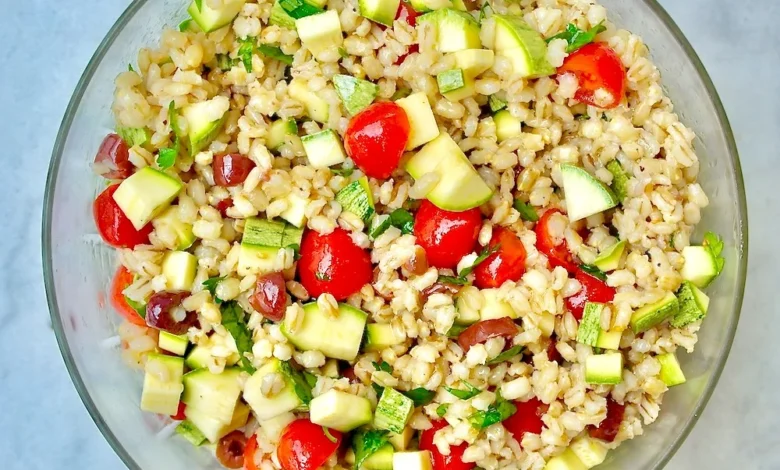
In contemporary Western diets, grains are frequently vilified or reduced to heavily processed, refined white flour products stripped of their natural nutritional value. In stark contrast, traditional Mediterranean kitchens have always relied on unrefined whole grains. Depending on the specific micro-region, tables feature a diverse array of grains including barley, bulgur, farro, spelt, and whole-grain breads.
From a nutritional standpoint, whole grains retain all three original components of the kernel: the fiber-rich bran, the nutrient-dense germ, and the starchy endosperm. This structural integrity ensures a slower digestion rate, which prevents rapid glycemic spikes and promotes sustained satiety. Furthermore, whole grains supply essential B vitamins, iron, magnesium, and trace minerals.
In the traditional culinary framework, grains are rarely consumed in isolation. Instead, they serve as a comforting, texturally rich base for an abundance of seasonal vegetables, legumes, fresh herbs, and extra virgin olive oil. This strategic food pairing transforms simple agricultural yields into nutritionally complete, satisfying meals that regulate appetite and support optimal gastrointestinal function.
2. Oregano: A Culinary Herb with Potent Bioactive Properties
While herbs are frequently dismissed as mere culinary afterthoughts or decorative garnishes in modern Western cooking, they occupy a central role in Mediterranean gastronomy. Among these, Greek oregano stands out as a fundamental flavor architect of the region. Characterized by its robust aroma and pungent flavor profile, dried Greek oregano has the unique capacity to elevate remarkably simple ingredients—such as ripe tomatoes, root vegetables, legumes, and grilled fish—into deeply satisfying dishes.
Beyond its sensory contributions, oregano is a nutritional powerhouse. Scientific analyses have demonstrated that oregano possesses exceptionally high concentrations of antioxidant compounds, particularly carvacrol and thymol, which exhibit antimicrobial and anti-inflammatory properties.
From a practical public health perspective, the heavy reliance on herbs and spices solves a major dietary dilemma: how to make healthy food taste genuinely exceptional without resorting to heavy, calorie-dense cream sauces, excessive sodium, or complex culinary techniques. By harnessing the natural potency of oregano and other Mediterranean herbs, home cooks can achieve complex, deeply satisfying flavor profiles using minimal ingredients.
3. Authentic Greek Yogurt: Beyond the High-Protein Trend
In recent years, the global marketplace has witnessed an explosion of interest in high-protein dairy products, with Greek yogurt seizing a dominant market share. However, in Greece and across the wider Mediterranean, thick, strained yogurt has never been marketed as a specialized functional food or fitness supplement. It has simply been an everyday dietary staple for generations.
Traditional Greek yogurt is crafted by straining the whey from fermented milk, resulting in a dense, creamy texture that requires no chemical thickeners or artificial additives. It is traditionally enjoyed in its pure form, drizzled with local honey, paired with fresh seasonal fruit, or utilized as the essential creamy base for savory preparations like tzatziki—a traditional garlic and cucumber dip.
Nutritionally, authentic Greek yogurt provides a rich matrix of high-quality complete proteins, bioavailable calcium, and phosphorus. Furthermore, varieties containing live and active bacterial cultures deliver beneficial probiotics that support a diverse and resilient gut microbiome. This balanced nutritional profile contributes to bone density, muscle maintenance, and digestive health without the need for artificial fortification.
4. Extra Virgin Olive Oil: The Non-Negotiable Cornerstone
It is impossible to discuss the Mediterranean diet without addressing its absolute foundational element: extra virgin olive oil. In regions such as Greece—where per capita consumption of olive oil remains the highest in the world—this liquid gold is integrated into every facet of culinary life. It is used extensively for sautéing and roasting, drizzled generously over crisp salads, absorbed by crusty rustic bread, folded into bitter wild greens, and even incorporated into traditional baked goods and desserts.
Crucially, experts emphasize that a low-fat Mediterranean diet is a contradiction in terms. Extra virgin olive oil is composed primarily of oleic acid, a heart-healthy monounsaturated fatty acid associated with reduced markers of systemic inflammation and improved lipid profiles. More importantly, unrefined extra virgin olive oil is exceptionally rich in potent polyphenols and antioxidants, such as oleocanthal, which exert protective effects against oxidative stress and cellular damage.
Beyond its biochemical advantages, olive oil serves a vital psychological and culinary function: it makes nutrient-dense, plant-based foods exceptionally pleasurable. By transforming bitter vegetables and earthy legumes into delectable culinary experiences, olive oil ensures long-term dietary compliance and enjoyment.
5. Seasonal Vegetables: The Vibrant Heart of the Plate
Vegetables form the undeniable visual and nutritional centerpiece of the Mediterranean table. Tomatoes, zucchini, eggplants, bell peppers, leafy greens, onions, and cruciferous vegetables are utilized in strict accordance with seasonal availability. Rather than adhering to elaborate, complicated culinary preparations, traditional Mediterranean cooking honors the inherent qualities of the produce.
Vegetables are frequently roasted simply with extra virgin olive oil and oregano, simmered slowly in rich tomato broths, or stuffed with a fragrant mixture of rice, fresh herbs, and aromatics. This minimalist approach preserves vital micronutrients while maximizing flavor.
From a physiological perspective, a vegetable-rich diet floods the body with dietary fiber, essential vitamins, minerals, and thousands of distinct phytochemicals. These compounds work synergistically to lower systemic inflammation, protect cardiovascular health, and support metabolic equilibrium.
Broader Implications and Public Health Impact
The enduring relevance of the Mediterranean dietary pattern offers a vital blueprint for modern global health initiatives. As chronic lifestyle diseases—including type 2 diabetes, cardiovascular disorders, and obesity—continue to burden healthcare systems worldwide, the turn toward whole-food, plant-forward eating models has never been more urgent.
Public health analysts note that the true genius of the Mediterranean diet lies not in rigid caloric restriction or mathematical tracking, but in cultural sustainability. By prioritizing joyful communal dining, seasonal resourcefulness, and flavorful whole foods over processed convenience items, individuals can achieve sustainable wellness. Ultimately, embracing the staples of the Mediterranean kitchen is not merely a dietary choice, but an investment in a balanced, highly enjoyable, and scientifically validated standard of long-term health.