Conquering Wat Phu Tok: Thailand’s Most Daring Architectural and Spiritual Ascent in Bueng Kan Province

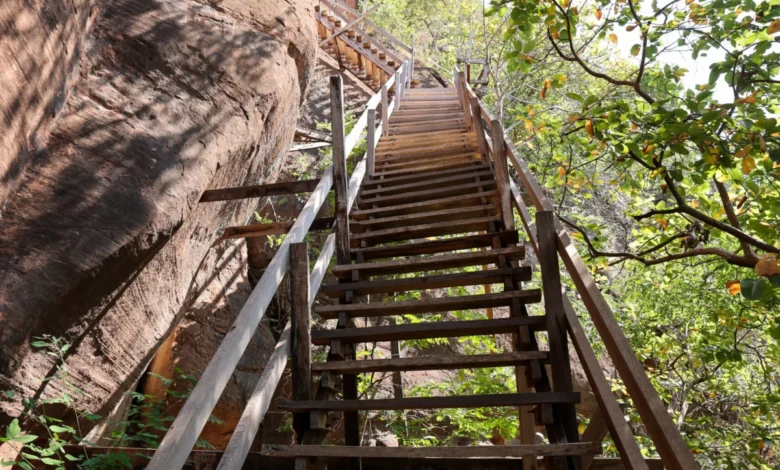
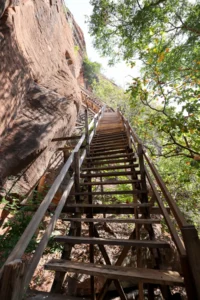
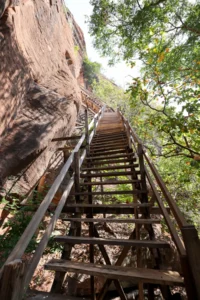
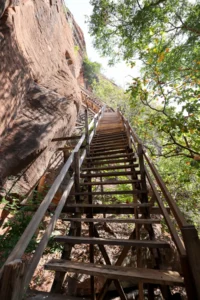
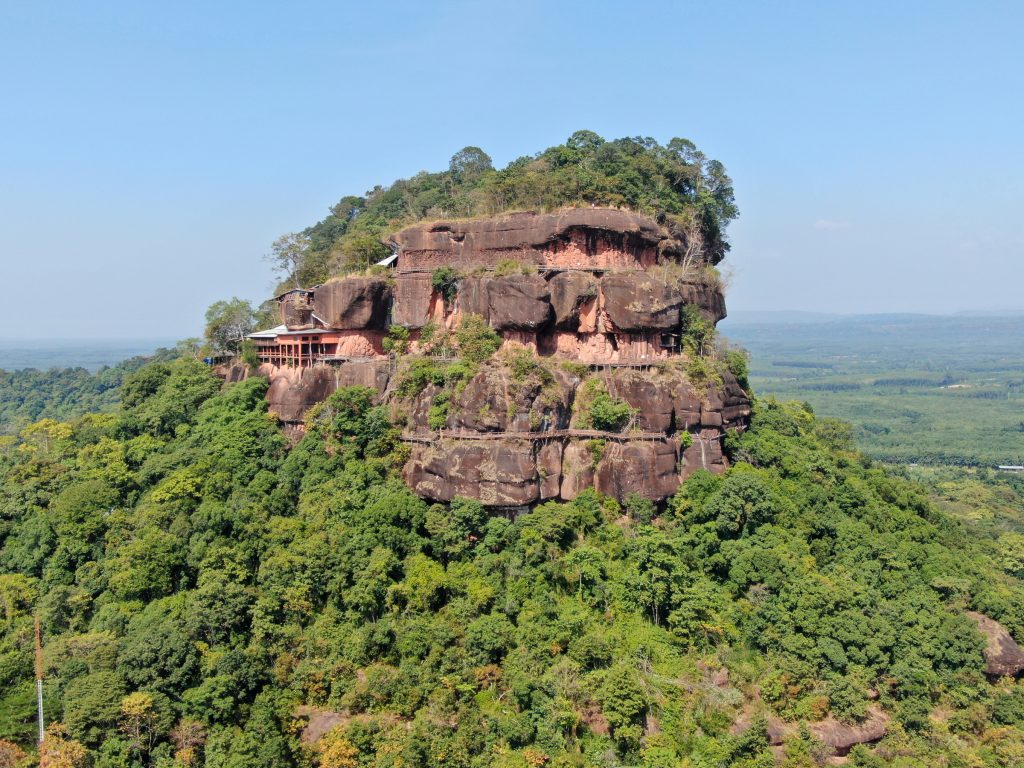
Rising sharply from the flat agricultural plains of northeastern Thailand’s remote Isan region, the isolated monolith of Wat Phu Tok stands as one of the kingdom’s most extraordinary architectural and spiritual achievements. Officially designated as Wat Jetiyakhiri, this striking 359-meter-high sandstone formation is located in Bueng Kan province, an area celebrated for its undisturbed natural landscapes, vast open horizons, and minimal commercial tourism. Translating locally from the Isan dialect as the "lonely mountain," Phu Tok commands attention through its sheer verticality and remote setting, frequently drawing comparisons to a scaled-down version of Sri Lanka’s ancient Sigiriya rock fortress. However, what truly distinguishes the site is not merely its geological singularity, but the intricate, hand-built network of wooden scaffolding, suspended walkways, and vertical ladders that cling to its sheer cliffs, offering visitors a harrowing yet profoundly meditative journey through seven distinct tiers designed to mirror the stages of Buddhist enlightenment.
Historical Origins and Construction of the Sacred Mountain
The history of Wat Phu Tok is deeply intertwined with the ascetic traditions of Thai forest Buddhism. Due to its rugged terrain, dense surrounding vegetation, and historical reputation as a natural habitat for diverse and potentially dangerous wildlife—most notably venomous snakes—the mountain was long regarded as an inhospitable wilderness. Paradoxically, these very characteristics made it an ideal sanctuary for monks seeking solitude, seclusion, and an environment conducive to deep meditation.

The transformation of the monolithic rock into a functional monastic site was spearheaded by the revered meditation master Phra Ajahn Juan Kulachettho (commonly known as Luang Pu Juan). Recognizing the spiritual potential of the isolated peak, the monk initiated a monumental construction project that began in the late 20th century. Relying entirely on manual labor, local craftsmen and monastic disciples constructed a complex system of wooden stairs, cantilevered walkways, and ladders anchored directly into the vertical cliff faces. This arduous engineering feat was intentionally structured into seven levels, symbolizing the seven steps of spiritual liberation in Buddhist cosmology, allowing practitioners to physically ascend from earthly concerns toward higher states of consciousness.
Although Luang Pu Juan tragically perished in a commercial aviation accident in 1980, his legacy endures. The monastic community and local authorities have continued to maintain the wooden infrastructure, ensuring that Wat Phu Tok remains both an active place of worship and a destination for intrepid travelers and spiritual pilgrims alike.

Navigating the Ascent: A Level-by-Level Breakdown
Accessing Wat Phu Tok requires physical stamina, steady footing, and a tolerance for heights. Situated approximately a 30-minute drive from Bueng Kan city, the temple complex begins at the base with a sprawling park, a serene lake, and a traditional assembly hall. From this ground-level arrival point, the marked trail leads directly to the base of the mountain, where the terrain quickly transitions from earthen paths to wooden staircases.

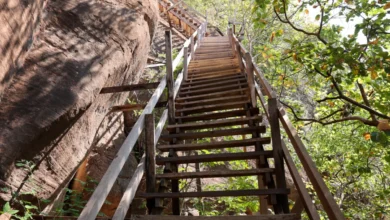
The lower tiers of the ascent feature relatively gentle wooden steps and minor inclinations, serving as an approachable introduction before the path steepens significantly. As climbers progress, the staircases transform into near-vertical ladders secured to the rock face. While the structural integrity of the wooden planks is routinely inspected and maintained, the sensation of the wood flexing slightly underfoot, combined with the expanding drop below, introduces a psychological element of challenge.
Levels One through Four: The Threshold of Meditation

The initial tiers of Wat Phu Tok serve primarily as transitional zones. Visitors navigating the first four levels encounter modest shrines, resting points, and quiet alcoves historically utilized by resident monks for walking meditation. The vegetation remains dense here, and the pathways are largely shielded by the surrounding forest canopy, offering limited panoramic views but establishing an atmosphere of profound tranquility.
Level Five: The Central Hub of Worship

Upon reaching the fifth level, the spatial dynamics of the mountain shift dramatically. This tier provides expansive ground-level terrain rather than narrow cliffside walkways, making it the geographical and administrative center of the monastic complex. The fifth level houses the mountain’s largest ordination hall (ubosot), alongside numerous subsidiary shrines, residential quarters for monks, and gathering spaces.
A notable architectural feature branching off the fifth level is a detour leading to a detached rock temple situated on an ancillary spur of the mountain. Accessible via a suspended rock walkway and a narrow wooden bridge, this secluded shrine exemplifies the ingenuity of the site’s builders, integrating sacred architecture directly into the natural contours of the sandstone.

Level Six: The Suspended Cliffside Circuit
The sixth level represents the architectural climax of Wat Phu Tok and its most famous attraction. Approximately half of the sixth level’s circumference consists of wooden plank walkways anchored horizontally into vertical rock cliffs, suspended hundreds of feet above the forest floor.

Walking the cantilevered perimeter of the sixth level offers an adrenaline-inducing experience characterized by unobstructed, panoramic views of the Mekong River basin, the expansive green canopy of Bueng Kan province, and neighboring agricultural valleys. While safety handrails are present and maintenance standards are rigorous, navigating this section requires absolute concentration. The combination of open drops, sweeping mountain breezes, and the visual scale of the landscape generates a thrilling environment for visitors, though it remains a formidable obstacle for individuals experiencing vertigo.
Level Seven: The Summit and Ecological Considerations

The final tier, the seventh level, marks the absolute summit of the mountain. Accessible via steep, challenging ladder sections from the sixth tier, the top of Phu Tok contrasts sharply with the architectural complexity of the levels below. The summit features no structural shrines or cantilevered walkways; instead, it is a rugged, forested plateau.
Local monastic authorities and park rangers advise caution regarding the final ascent due to the historically high concentration of venomous snakes inhabiting the upper canopy and crevices of the mountain. Consequently, tourism officials characterize the seventh level as an area to be visited strictly at one’s own risk, noting that the primary architectural and visual rewards of Wat Phu Tok are concentrated on the fifth and sixth tiers.

Socioeconomic Impact and Tourism Development in Bueng Kan
The ongoing preservation and global visibility of Wat Phu Tok carry significant implications for the socioeconomic landscape of Bueng Kan province. Established as Thailand’s 77th province in 2011 after separating from Nong Khai, Bueng Kan has historically remained outside the primary itineraries of mass international tourism, which traditionally concentrate on central Thailand, major southern beach destinations, and northern cultural hubs like Chiang Mai.

Regional development planners view niche cultural and adventure attractions like Wat Phu Tok as vital components for sustainable tourism diversification. By drawing domestic and international travelers interested in eco-tourism, spiritual retreats, and off-the-beaten-path exploration, the site generates auxiliary economic activity for local hospitality providers, small-scale transport operators, and regional vendors in Bueng Kan city.
At the same time, regional authorities and temple administrators face ongoing logistical challenges in balancing increased visitor numbers with the preservation of the delicate mountain ecosystem and the safety requirements of aging wooden infrastructure. Routine safety audits, seasonal closures during severe weather events, and strict adherence to monastic etiquette remain critical priorities to ensure that Wat Phu Tok preserves its dual identity as an active sanctuary of Buddhist practice and a premier architectural landmark of northeastern Thailand.