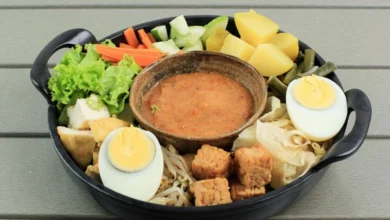
Gado-gado can be a calorie trap if consumed with excessive peanut sauce despite its reputation as a healthy vegetable-based meal.

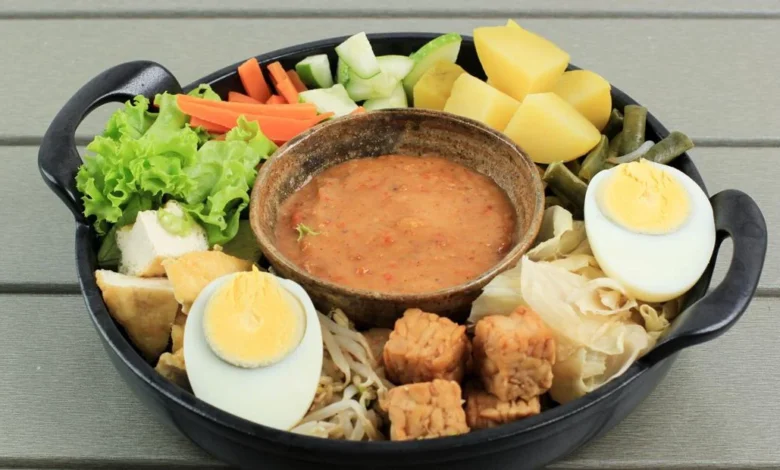
Jakarta — For many health-conscious individuals and those striving to manage their weight, gado-gado—a traditional Indonesian salad consisting of blanched vegetables, tempeh, tofu, and hard-boiled eggs—is frequently categorized as an ideal dietary choice. Its composition, primarily rooted in plant-based fibers, suggests a nutrient-dense profile that aligns with standard nutritional guidelines for weight loss and digestive health. However, recent insights from medical professionals have raised questions regarding whether this beloved dish maintains its health status once the caloric density of its accompanying condiments is factored into the equation.
The debate centers on the preparation methods of the quintessential peanut sauce, which often serves as the flavor profile defining the dish. While vegetables are inherently low in calories and high in micronutrients, the addition of processed, sugar-laden, and oil-heavy peanut sauce can fundamentally alter the nutritional outcome of the meal.
Expert Medical Perspective on Nutritional Density
During a recent health awareness broadcast hosted by DetikHealth on Thursday, September 24, 2026, clinical nutrition specialist Dr. Igus Ulfa Yaze, SpGK, provided an analytical breakdown of the dish’s nutritional impact. Dr. Yaze acknowledged that, in its raw form, gado-gado is an exemplary source of fiber, which is critical for satiety and metabolic regulation.
"Gado-gado is undeniably a high-fiber, healthy food," Dr. Yaze stated. "Incorporating peanut sauce is perfectly acceptable, provided the portions remain controlled. The dilemma arises when the quantity of the sauce exceeds recommended caloric thresholds, essentially transforming a nutrient-dense bowl into a caloric surplus."
The core concern highlighted by Dr. Yaze involves a widespread culinary habit: the over-application of sauce. In many urban environments, vendors and consumers alike favor a generous, liquid-like consistency of peanut sauce that coats the plate entirely. This practice is identified as a ‘hidden trap’ for weight-conscious consumers. Because peanuts are naturally high in healthy fats and calories, and commercial sauces are frequently bolstered with palm sugar or coconut sugar to balance the savory flavor, the caloric load can escalate rapidly.
"Some individuals consume gado-gado where the sauce is so abundant it essentially turns into a soup. When you factor in that the peanuts are ground with significant amounts of sugar, the total caloric intake can become comparable to a heavy meal, such as Nasi Padang," Dr. Yaze explained.
Chronology and Context of Dietary Misconceptions
The rise of gado-gado as a health food staple has been a steady trend in the Indonesian culinary landscape over the last decade. As public awareness regarding the risks of ultra-processed foods has grown, consumers have shifted toward traditional, vegetable-forward dishes. This shift in consumer behavior is documented in recent health surveys, which show a 15% increase in the consumption of local traditional salads among urban professionals in Jakarta between 2020 and 2025.
However, the medical community has observed a parallel trend: individuals attempting to lose weight through these dietary changes often hit a plateau. This phenomenon has prompted nutritionists to investigate ‘stealth calories’—components of meals that consumers mistakenly assume are negligible. Peanut-based dressings, coconut milk-based curries, and deep-fried accompaniments (such as kerupuk or fried shallots) are the primary subjects of this scrutiny.
The discourse reached a peak during the late 2026 health discussions, as nutritionists sought to correct the narrative that ‘vegetable-based’ is synonymous with ‘low calorie.’ The objective of these expert sessions is to educate the public on the necessity of ingredient transparency and portion awareness, even when consuming traditional, whole-food-based dishes.
Analyzing the Caloric Discrepancy
To understand the implications, one must look at the caloric density of the components. A standard portion of steamed vegetables (spinach, long beans, bean sprouts, and cabbage) provides approximately 50 to 80 calories. The addition of tofu and tempeh adds roughly 100 to 150 calories. When served in moderation, the sauce might add another 100 calories. However, when the sauce is applied in excessive amounts—as is common in many street-side stalls—the added fats and sugars can push the total calorie count of a single plate of gado-gado to between 500 and 700 calories.
This caloric profile rivals that of a standard mixed rice plate (nasi campur) or a serving of fried noodles (mie goreng). If an individual consumes this dish daily as a weight-loss strategy while assuming it to be a low-calorie meal, they may inadvertently be maintaining or even increasing their caloric intake, leading to the aforementioned weight-loss plateaus.
Official Recommendations for Balanced Consumption
Dr. Yaze and other clinical nutritionists suggest a series of practical modifications to ensure that the nutritional benefits of gado-gado are not negated by its dressing. These recommendations include:
- Sauce Control (The ‘Side’ Method): Rather than allowing the vendor to pour the sauce over the vegetables, consumers are advised to request the sauce on the side. This allows the consumer to dip the vegetables, significantly reducing the volume of sauce consumed.
- Ingredient Transparency: Be mindful of the sugar content. Traditional recipes often require a significant amount of palm sugar to achieve the desired balance. Requesting a reduced-sugar version or choosing stalls that use minimal additives can mitigate the caloric impact.
- Monitor Accompanying Carbohydrates: Gado-gado is often served with lontong (compressed rice cakes). Since rice cakes are a concentrated source of carbohydrates, individuals monitoring their glucose levels or calorie intake should consider limiting or omitting the lontong portion.
- Nutrient Balance: Ensure the dish includes high-protein sources like boiled eggs, tofu, or tempeh to maintain muscle mass, while keeping the fat-heavy elements like fried crackers (kerupuk) to a minimum.
Broader Implications for Public Health
The situation with gado-gado serves as a microcosm for the broader challenges of public health nutrition in Southeast Asia. As societies transition toward processed food environments, the misclassification of ‘traditional’ foods as inherently ‘healthy’ can lead to poor dietary choices.
Nutrition experts emphasize that there is no such thing as a "guilt-free" food if portion sizes are ignored. The professional consensus is that gado-gado remains a superior choice compared to high-sodium, ultra-processed snacks, but it requires mindful consumption. Public health initiatives, such as the one spearheaded by the recent TikTok broadcast, are vital for correcting these misconceptions. By providing factual, science-backed guidance, experts hope to empower consumers to make decisions that prioritize nutrient density over caloric density.
In summary, the health benefits of gado-gado are substantial, provided the diner maintains awareness of the hidden caloric components in the dressing. For those actively managing their weight, the message is clear: prioritize the vegetables, enjoy the peanut sauce in moderation, and be cognizant of the total intake. Through small, informed adjustments, this traditional favorite can continue to play a foundational role in a balanced and healthy diet.