Navigating Tides and Terrain: How PNM Mekaar Officer Fipi Novita Sari Empowers Micro-Entrepreneurs in Remote Sebatik Island

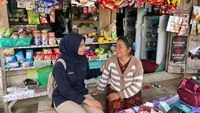
The geographical barriers of Indonesia’s outermost regions often present formidable challenges to economic inclusion, yet dedicated field workers continue to bridge the gap between financial institutions and remote communities. Fipi Novita Sari, an Account Officer (AO) for PT Permodalan Nasional Madani (PNM) Mekaar, exemplifies this commitment through her daily operations across the sea and land routes of Sebatik Island, located in the Nunukan Regency of North Kalimantan. Assigned to this frontier territory for three months, Novi—as she is affectionately known—has had to navigate erratic maritime weather, treacherous coastal paths, and winding, hilly terrain dominated by sprawling palm oil plantations. Beyond the physical rigors of her commute, her mission centers on a profound socioeconomic objective: delivering essential financing and structured mentorship to grassroots entrepreneurs, particularly women striving to elevate their livelihoods through seaweed cultivation and traditional marine trades.
The operational reality in Sebatik Island demands resilience and adaptability. Novi’s routine often involves crossing turbulent waters via small motorized boats, where sudden heavy downpours and high waves create high-risk environments. Once ashore, she traverses unpaved, winding roads that snake through dense plantations, managing tight schedules amidst heavy commercial vehicular traffic. Despite these hurdles, her dedication remains steadfast. Currently, Novi oversees approximately 18 client groups, encompassing nearly 100 individual borrowers. Her responsibilities span the entire lifecycle of micro-financing: from onboarding and educating prospective clients on the structural mechanics of Mekaar loans to ensuring timely loan disbursement and monitoring business development.
At the heart of Novi’s fieldwork is the transformation of local industries, spearheaded by women who form the backbone of Sebatik’s coastal economy. The majority of her clients are engaged in seaweed farming, a critical agricultural sector in North Kalimantan. Financing acquired through PNM Mekaar provides these women with immediate working capital, enabling them to procure essential production inputs such as high-tensile cultivation ropes. Beyond seaweed, Novi’s portfolio includes households specializing in other marine harvests, such as shrimp and tudai clams. These enterprises frequently operate as family-driven ventures, where male family members harvest marine resources from adjacent islands, while female entrepreneurs process, market, and sell the catch to secure household incomes.
A Particularly Transformative Shift in Local Labor Dynamics
One of the most profound developments observed by Novi during her tenure in Sebatik is the evolution of local employment structures, specifically concerning female laborers known locally as "Mak Betang." Traditionally, these women worked strictly as wage laborers tasked with manual duties such as tying seaweed strands or managing drying facilities. However, access to micro-credit and financial literacy training provided by PNM has catalyzed an entrepreneurial awakening. Empowered by independent capital, a significant number of former Mak Betang workers have successfully transitioned into independent business owners, establishing their own seaweed cultivation plots and small-scale trading posts.
This grassroots empowerment generates a multiplier effect within the regional economy. As these micro-enterprises expand, their operational capacities increase, necessitating additional labor. Consequently, newly established businesses begin hiring community members, effectively creating localized employment opportunities. Furthermore, the economic footprint of Sebatik’s seaweed sector extends far beyond local shores, integrating into a broader national and international supply chain. Harvested raw materials from Nunukan are routinely transported to processing hubs in Sulawesi, where industrial facilities refine the seaweed into derivative products. A portion of this processed output eventually enters export markets, while other portions return to the domestic market in value-added consumer formats, such as traditional seaweed crackers (amplang).
Institutional Framework: The Strategic Role of the Ultra Micro Holding
Novi’s frontline efforts on Sebatik Island operate within the broader strategic framework of Indonesia’s Ultra Micro (UMi) Holding. Formed to accelerate financial inclusion for society’s most vulnerable economic strata, the UMi Holding brings together three state-owned financial giants: PT Bank Rakyat Indonesia (Persero) Tbk (BRI) as the parent entity, alongside PT Pegadaian and PT Permodalan Nasional Madani (PNM). This integrated ecosystem is meticulously engineered to provide seamless, scalable financial services—ranging from group-based lending and pawn broking to comprehensive business coaching—tailored specifically for micro and ultra-micro entrepreneurs across the archipelago.
The genesis of the Ultra Micro Holding traces back to structural efforts by the Indonesian government to consolidate state resources, reduce overlapping financial outreach, and lower the cost of funds for small-scale enterprises. Officially established through a state-capital injection and rights issue completed in September 2021, the holding was designed to target the estimated 30 million ultra-micro entrepreneurs in Indonesia who previously lacked formal banking access, relying instead on informal, high-interest lenders. By combining BRI’s extensive banking network, Pegadaian’s collateral-based financing models, and PNM’s group-lending and community-based mentoring methodology (exemplified by the Mekaar program), the holding created a robust, multi-tiered financial pipeline.
Impressive Outreach and Measurable Socioeconomic Metrics
The operational scale achieved by the Ultra Micro Holding reflects its deep penetration into Indonesia’s economic fabric. Recent corporate data highlights the expansive reach of the integrated ecosystem, which has successfully serviced approximately 33.6 million active loan borrowers to date. This lending portfolio is underpinned by a massive micro-savings base exceeding 166.3 million accounts, signaling a significant shift toward formalized financial literacy and asset accumulation among lower-income demographics.
Corporate leadership at BRI has consistently emphasized that the success of the UMi Holding transcends mere balance sheet expansion, measuring its true efficacy through tangible improvements in community welfare and economic self-sufficiency. Dhanny, Corporate Secretary of BRI, underscored the critical role played by field officers like Novi in translating institutional vision into localized reality.
"Kisah Novi di Sebatik menjadi salah satu gambaran bagaimana manfaat tersebut hadir hingga ke pelosok daerah. Di tengah medan yang menantang, Novi terus menjangkau dan mendampingi nasabah agar dapat mengembangkan usaha, termasuk para pelaku usaha rumput laut," stated Dhanny, highlighting how frontline personnel serve as vital conduits for economic empowerment in remote geographies.
Personal Dedication and Professional Growth on the Frontlines
For Fipi Novita Sari, whose professional journey with PNM commenced on October 28, 2024, the assignment in Sebatik represents both a professional test and a platform for personal development. Having served in various capacities across Nunukan Regency prior to and following her Sebatik deployment, Novi views her role as an Account Officer as a unique opportunity to engage directly with diverse communities while mastering the operational intricacies of a major financial institution.
"Selain itu, pekerjaan ini membuat saya bisa bertemu dan berinteraksi dengan banyak orang. Saya juga bisa mengembangkan diri di PNM dan belajar bagaimana proses pembiayaan di salah satu perusahaan besar," reflected Novi, echoing the sentiments of thousands of Mekaar officers stationed across Indonesia’s most challenging terrains.
Analytical Implications for Regional Economic Development
From an economic standpoint, the integration of remote island economies like Sebatik into the national financial grid yields profound developmental implications. Micro-credit programs targeted at women have consistently demonstrated high repayment rates and superior social return on investment, as female entrepreneurs typically reinvest profits directly into family nutrition, education, and business expansion. By addressing the capital constraints of seaweed farmers and marine traders, institutions like PNM Mekaar mitigate the liquidity bottlenecks that traditionally stifle rural productivity.
However, challenges remain. The sustainability of remote micro-enterprises in border regions is intrinsically tied to infrastructure development—particularly maritime logistics, cold-chain storage facilities, and stable energy supplies. While financial inclusion provides the vital spark of working capital, long-term economic resilience requires coordinated investments in transport infrastructure to reduce logistical friction between outer islands and industrial processing centers in major islands like Sulawesi and Java.
Conclusion: A Blueprint for Inclusive Growth
The narrative of Fipi Novita Sari and the seaweed farmers of Sebatik Island encapsulates the transformative potential of grassroots financial empowerment in Indonesia. By confronting geographical adversities and delivering structured capital alongside empathetic mentorship, field officers operationalize the core mandate of the Ultra Micro Holding. As the collective outreach of BRI, Pegadaian, and PNM continues to expand—surpassing tens of millions of active beneficiaries—stories from the country’s outermost borders reaffirm that inclusive economic growth is achievable when institutional capital is paired with dedicated human capital on the ground. Through persistent field engagement, individuals like Novi not only foster local enterprise but also weave the remote peripheries of the nation into a resilient, interconnected national economy.