
Queen Máxima Concludes Pivotal Indonesia Visit as UNSGSA, Championing Financial Inclusion and Sustainable Development Initiatives

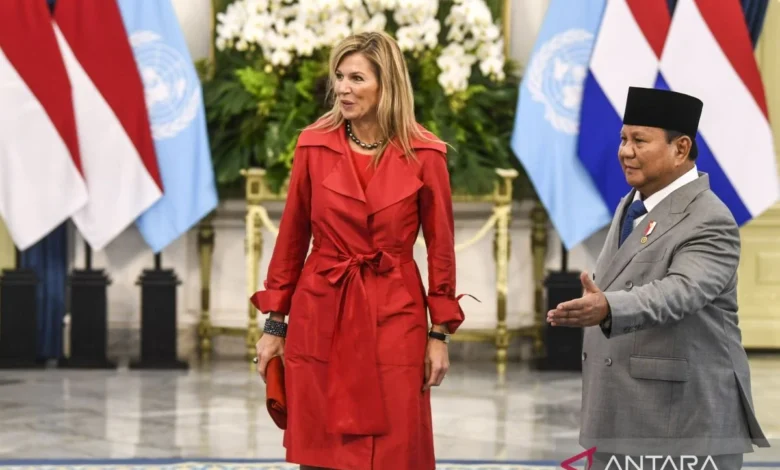
Jakarta (ANTARA) – Her Majesty Queen Máxima of the Netherlands recently concluded a significant working visit to Indonesia, spanning from Monday, November 24, to Thursday, November 27, 2025. Her presence in the archipelago was not in her capacity as the Dutch monarch, but rather as the United Nations Secretary-General’s Special Advocate (UNSGSA) for Inclusive Finance for Development, a role she has passionately championed since 2009. This distinction underscores the core mission of her visit: to advance financial inclusion and promote the financial health and resilience of communities across Indonesia.
The four-day itinerary was meticulously planned to encompass a series of strategic meetings and on-the-ground activities directly related to inclusive finance and public financial well-being. From the bustling capital of Jakarta to the culturally rich cities of Central Java and the industrial heartland of West Java, Queen Máxima engaged with a diverse array of stakeholders, including government officials, financial regulators, development organizations, private sector leaders, and most importantly, the beneficiaries of financial inclusion initiatives. This engagement highlights a global commitment to leveraging financial services as a powerful tool for poverty reduction, economic empowerment, and sustainable development, aligning closely with several of the United Nations Sustainable Development Goals (SDGs).
This visit marked Queen Máxima’s fifth trip to Indonesia, underscoring the enduring importance of the country in the global financial inclusion landscape. Her previous visits as UNSGSA occurred in 2012, 2016, and 2018, each building upon prior engagements and assessing progress. In her capacity as Queen of the Netherlands, she previously accompanied King Willem-Alexander during a state visit in 2020, demonstrating a multi-faceted relationship between the two nations. Born on May 17, 1971, Queen Máxima married King Willem-Alexander in 2002 in Amsterdam, the Netherlands, embarking on a life dedicated to public service, both domestically and internationally. Her consistent engagement with Indonesia reflects the nation’s pivotal role as a G20 economy and a country making significant strides in expanding access to financial services for its vast and diverse population.
The Mandate of the UNSGSA: A Global Pursuit of Financial Health
Queen Máxima’s role as UNSGSA is critical in advocating for financial systems that work for everyone, especially the poor and vulnerable. Established in 2009, the UNSGSA office works to galvanize global efforts to increase access to affordable, useful, and safe financial products and services. This includes savings, credit, insurance, and payments. The core belief is that financial inclusion is not an end in itself but a means to achieve broader development objectives, such as poverty eradication, gender equality, food security, and improved health and education. By enabling individuals and small businesses to manage their money more effectively, invest in their futures, and protect themselves against financial shocks, financial inclusion contributes directly to greater economic resilience and well-being.
Indonesia, with its expansive archipelago, diverse population, and significant proportion of informal workers, presents both immense challenges and opportunities for financial inclusion. According to data from the Financial Services Authority (OJK) and Bank Indonesia (BI), while financial inclusion rates have steadily increased over the past decade, a substantial portion of the population, particularly in remote areas and among certain demographic groups, remains underserved or excluded from formal financial systems. The government has set ambitious targets, aiming for an 85% financial inclusion rate by 2024, emphasizing digital financial services, microfinance, and financial literacy as key drivers. Queen Máxima’s visits serve as a crucial platform to review progress, identify remaining gaps, and foster international partnerships to accelerate these efforts.
A Detailed Chronology of the Strategic Engagements
The three-day working agenda, specifically from Tuesday, November 25, to Thursday, November 27, was structured to provide a comprehensive overview of Indonesia’s financial inclusion landscape, from grassroots initiatives to high-level policy discussions.
Tuesday, November 25: Focus on Grassroots Empowerment and MSME Development
Queen Máxima commenced her visit by traveling to Central Java, where her first stop was a garment factory in Sragen Regency. This visit aimed to understand the financial health of factory workers, many of whom are part of the informal or semi-formal economy, and explore how access to digital wage payments, micro-savings, and basic insurance products can enhance their economic stability. Discussions likely centered on the benefits of formalizing financial transactions for workers, providing them with a financial identity, and integrating them into broader financial ecosystems. The garment sector, often characterized by large workforces and supply chain complexities, offers fertile ground for implementing scalable financial inclusion solutions that can impact thousands of lives.
Following her engagement in Sragen, Queen Máxima proceeded to Solo, a city renowned for its rich cultural heritage and vibrant batik industry. Here, she visited Kampung Batik Laweyan, a historic batik village where traditional artisans and small businesses thrive. The focus of this segment was to delve into the financial health of micro, small, and medium enterprises (MSMEs), which form the backbone of Indonesia’s economy. These enterprises often face significant barriers in accessing formal credit, managing cash flow, and adopting digital payment solutions. Queen Máxima engaged with local entrepreneurs, many of whom are women, to discuss their experiences in utilizing financial products and services, highlighting the critical role of accessible and appropriate financial tools for business growth and sustainability.
A pivotal event in Solo was Queen Máxima’s participation in the Women’s World Banking forum held at Pura Mangkunegaran. This event brought together young individuals, university students, and entrepreneurs, primarily women, to share their insights and challenges regarding financial product and service usage. Women’s World Banking is a global non-profit organization dedicated to designing and investing in financial solutions for women, recognizing their immense potential as economic agents. The discussions likely emphasized the importance of gender-responsive financial products, financial literacy programs tailored for women, and overcoming societal barriers to women’s economic empowerment. Engaging with the youth also highlighted the need for early financial education and digital literacy to prepare the next generation for an increasingly complex financial world.
Wednesday, November 26: Bridging Development, Finance, and Sustainable Living
The second day of the visit, Wednesday, November 26, saw Queen Máxima back in Jakarta, engaging with key development and financial institutions. Her morning began with a roundtable discussion at the local United Nations office, involving various development organizations operating in Indonesia. This meeting served as a crucial platform for coordinating efforts, sharing best practices, and identifying synergies in promoting financial inclusion, particularly in areas like digital transformation, climate finance, and humanitarian aid. Collaborations with agencies such as UNDP, UNICEF, and UNCDF are vital in ensuring a holistic approach to development challenges, with financial inclusion often serving as an underlying enabler.
Subsequently, Queen Máxima visited the International Finance Corporation (IFC), a member of the World Bank Group. The discussions with IFC representatives focused on the development of innovative financing mechanisms that contribute to economic growth and financial health, particularly in emerging markets. Topics likely included sustainable finance, green bonds, blended finance instruments, and the role of the private sector in driving inclusive growth. The IFC’s mandate to foster private sector investment in developing countries makes it a crucial partner in scaling up financial inclusion initiatives and promoting responsible financial practices.
A significant highlight of Wednesday’s agenda was Queen Máxima’s visit to the Gran Harmoni Cibitung subsidized housing complex in Bekasi Regency, West Java. This complex is notable for providing low-emission housing solutions for low- and middle-income communities, addressing Indonesia’s persistent housing deficit. The visit included a direct interaction with residents, where Queen Máxima toured a home and conversed with representatives of first-time homebuyers, understanding their journey to homeownership. This engagement underscored the profound impact of affordable housing on financial stability and overall well-being.
During her visit to Gran Harmoni Cibitung, Queen Máxima also observed an innovative program implemented by Bank Tabungan Negara (BTN), one of Indonesia’s leading state-owned banks, which allows residents to use sorted waste (sampah) as a form of payment for their home installments. This "bank sampah" (waste bank) initiative is a pioneering example of how environmental sustainability can be integrated with financial inclusion, offering a unique payment mechanism while promoting responsible waste management. She also witnessed the process of signing purchase agreements for dozens of prospective homeowners, symbolizing the realization of dreams for many Indonesian families. This particular initiative garnered significant attention and was applauded by Queen Máxima for its creativity and dual benefits, linking financial access with ecological responsibility. The housing sector in Indonesia faces a substantial backlog, with millions of families still needing adequate housing. Initiatives like Gran Harmoni Cibitung, especially with innovative payment schemes, are critical for addressing this national challenge.
Later on Wednesday afternoon, Queen Máxima visited Deloitte Indonesia, a global professional services firm. Her discussions with employers centered on strategies for enhancing the financial health of their employees and clients. This engagement highlighted the growing recognition within the corporate sector of the importance of employee financial well-being, which can lead to increased productivity, reduced stress, and greater loyalty. Topics likely included financial literacy programs in the workplace, access to affordable credit, and retirement planning, demonstrating how the private sector can play a proactive role in fostering a financially resilient workforce.
Thursday, November 27: High-Level Policy Dialogue and Future Directions
The final day of Queen Máxima’s visit, Thursday, November 27, was dedicated to high-level policy discussions and a culminating meeting with the President of Indonesia.
The day began with Queen Máxima’s participation in a critical financial literacy agenda alongside key Indonesian financial authorities: the Otoritas Jasa Keuangan (OJK – Financial Services Authority), Bank Indonesia (BI – Central Bank), and the Ministry of Finance (Kemenkeu). These institutions are at the forefront of designing and implementing Indonesia’s national financial inclusion strategy. Discussions likely covered progress on national financial literacy campaigns, consumer protection frameworks, and the regulatory sandbox for fintech innovations, all crucial for ensuring that increased access to financial services is accompanied by informed decision-making and robust oversight. The collaboration between these bodies is essential for creating a stable, inclusive, and competitive financial ecosystem.
The visit culminated with a meeting between Queen Máxima and President Prabowo Subianto at the Merdeka Palace in Jakarta. This high-level engagement provided an opportunity for Queen Máxima to convey her findings, observations, and impressions from her extensive tour across Indonesia. The discussions, which included a private meeting and a luncheon, focused on the achievements and remaining challenges in Indonesia’s financial inclusion journey. It is anticipated that Queen Máxima shared recommendations based on global best practices and highlighted areas for continued cooperation, particularly in leveraging digital technologies for financial inclusion, promoting sustainable finance, and empowering women and MSMEs. President Subianto, in turn, was expected to reiterate Indonesia’s commitment to its financial inclusion targets and express appreciation for the UNSGSA’s consistent advocacy and support. Such meetings serve to strengthen bilateral ties and reinforce shared development goals on an international stage.
Broader Implications and Future Outlook
Queen Máxima’s fifth visit to Indonesia as UNSGSA underscores the country’s strategic importance in the global drive for financial inclusion. The diverse range of engagements, from factory floors to presidential palaces, highlights a multi-layered approach to addressing financial health. The visit is expected to have several significant implications:
- Reinforced Commitment to Financial Inclusion: The high-profile visit will likely energize Indonesia’s ongoing efforts to expand financial access, particularly for underserved populations. It provides renewed impetus for government agencies, financial institutions, and development partners to accelerate the implementation of the National Strategy for Financial Inclusion.
- Showcasing Innovative Models: The "bank sampah" initiative at Gran Harmoni Cibitung, along with discussions on digital financial services and sustainable housing, provides valuable case studies that can be replicated or adapted elsewhere. Indonesia’s innovative approaches can serve as models for other developing nations facing similar challenges.
- Strengthening International Partnerships: The visit strengthens the collaboration between Indonesia and the United Nations, as well as with the Netherlands. It facilitates the exchange of expertise, knowledge, and best practices, potentially leading to new technical assistance programs or investment opportunities.
- Advocacy for Specific Gaps: Queen Máxima’s direct engagement with women, youth, and MSMEs brings specific attention to the financial needs of these crucial demographic groups, potentially influencing policy adjustments to better serve them.
- Long-term Economic Resilience: By championing financial health, the visit contributes to the long-term economic resilience of Indonesian households and businesses, fostering sustainable growth and reducing vulnerability to economic shocks. The emphasis on financial literacy, in particular, empowers individuals to make sound financial decisions throughout their lives.
The enduring commitment of Queen Máxima, through her role as UNSGSA, to Indonesia’s financial inclusion agenda is a testament to the country’s progress and potential. Her visits serve not only as platforms for dialogue and assessment but also as powerful endorsements of the transformative power of inclusive finance in achieving a more equitable and prosperous world. As Indonesia continues its journey towards becoming a high-income nation, ensuring that all its citizens have access to and can effectively utilize financial services will remain a cornerstone of its development strategy, with international advocates like Queen Máxima playing a crucial supporting role.


