
Iran’s Rial Faces Global Scrutiny Amidst Geopolitical Tensions and Economic Policies, Leading to the De Facto Use of the Toman in Daily Transactions

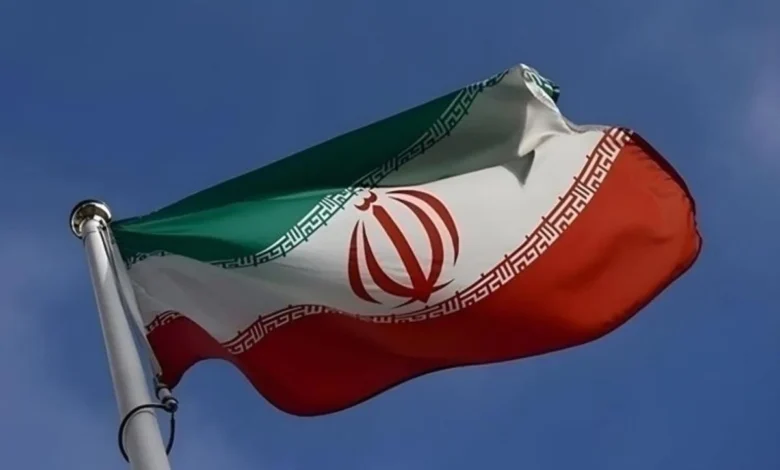
The Iranian currency has recently become a focal point of global attention, intertwined with escalating geopolitical tensions and evolving global economic policies. The United States, under President Donald Trump, has intensified its economic pressure, imposing tariffs of up to 25 percent on countries engaged in business dealings with Iran. This decisive action has reverberated through the international financial landscape, prompting a spectrum of reactions, particularly concerning Iran’s economic stability and the subsequent depreciation of its national currency. In recent assessments, the Iranian rial has reportedly reached historic lows when converted to the euro, a stark indicator of the profound economic strain the nation is enduring due to prolonged sanctions and persistent inflation.
However, a curious phenomenon emerges for those who visit Iran’s bustling traditional markets or navigate its vibrant shopping centers. The term "rial" is conspicuously absent from everyday transactional conversations. Instead, the local populace commonly employs the term "toman" when discussing the prices of goods and services. This linguistic shift is a direct consequence of the country’s extraordinarily high inflation rate. To simplify price discussions and circumvent the cumbersome use of excessively large figures, Iran has adopted an alternative accounting system known as the toman. This article delves into the intricacies of Iran’s official currency, dissecting the fundamental differences between the rial and the toman, a distinction that frequently perplexes tourists and international economic observers alike.
The Official Legal Tender: Iran’s Rial
Legally and administratively, the Iranian rial is recognized as the nation’s official currency. All banking operations, government documentation, and price listings in modern commercial establishments are denominated in rials, identified by the international currency code IRR. The rial has a long history, having been the established unit of currency in Iran for decades, serving as the foundation for the country’s monetary system. Its introduction dates back to the early 20th century, replacing the Qajar dynasty’s earlier currency. Over time, the rial has undergone various transformations and devaluations, influenced by internal economic policies and external geopolitical pressures.
Rial vs. Toman: A Practical Dichotomy in Daily Transactions
Despite the rial’s official status, its usage in the daily lives of Iranians is notably scarce. During everyday transactions, whether in bustling souks or smaller retail outlets, the term "rial" is rarely uttered. The populace has overwhelmingly gravitated towards the "toman" as their preferred unit of account. This practical adaptation stems from the need to simplify transactions in an environment of hyperinflation.
In practice, the toman offers a far more manageable numerical representation. One toman is equivalent to 10,000 rials. To put it simply, the toman can be understood as the rial with four zeros effectively removed. This system empowers individuals to quote prices without resorting to lengthy strings of digits, even though the rial officially remains the country’s currency. Historically and juridically, the rial is the legitimate currency, printed on banknotes and utilized in all financial documents. However, the relentless pressure of inflation, which has steadily eroded the rial’s purchasing power, has compelled the public to adopt a more convenient method of price denomination through the toman. The underlying calculation is straightforward: one toman is equivalent to ten old rials.
This means that if a vendor quotes a price of 60,000 tomans for an item, the actual amount to be paid is 600,000 rials. This discrepancy in nomenclature is a frequent source of confusion for foreign visitors upon their initial arrival in Iran.
A Historical Perspective on Currency Evolution
The historical trajectory of Iran’s currency system reveals a continuous adaptation to economic realities. The rial itself was established in 1932, replacing the Qajar dinar. It was initially divided into 100 dinars. However, the economic upheavals of the 20th century, including periods of war, political instability, and fluctuations in oil prices, contributed to a gradual but significant depreciation of the rial. The most substantial impact on the rial’s value in recent times has been the imposition of international sanctions, particularly those enacted by the United States, aimed at curbing Iran’s nuclear program and its regional influence. These sanctions have severely hampered Iran’s access to international financial markets, limited its export capabilities, and driven up the cost of imports, all of which have contributed to a vicious cycle of inflation and currency devaluation.
The widespread use of the toman as a unit of account is not a new phenomenon but rather a practical response that has solidified over decades of high inflation. Prior to the current iteration, there were instances where different denominations and systems were used, but the underlying principle of simplifying large numbers due to inflation has remained consistent.
Towards a Unified System: Iran’s Redenomination Plans
To address the long-standing confusion and to streamline the national financial system, the Iranian government, through the Central Bank of Iran (CBI), initiated a currency redenomination policy. This process officially began in 2020 and is slated for broader and more phased implementation between 2025 and 2026.
Under this policy, Iran is officially transitioning its primary currency unit from the rial to a new version of the toman, effectively removing four zeros from the existing denomination. With this new scheme, 10,000 old rials will be equivalent to 1 new toman. The new currency will also be subdivided into smaller denominations called "qiran," where one toman will comprise 100 qiran.
During this transitional period, older banknotes will continue to be valid and circulate alongside the new currency. The newly issued banknotes will feature smaller nominal values, accompanied by a ghost image of zeros, serving as a visual cue for the systemic change and a gradual adjustment for the public. This comprehensive redenominaton aims to modernize Iran’s financial infrastructure, facilitate international trade and investment, and alleviate the practical difficulties associated with the current high-denomination currency.
Factors Fueling the Devaluation of the Iranian Currency
The persistent weakening of the Iranian rial is a multifaceted issue driven by a confluence of internal and external factors.
Geopolitical Sanctions: The Primary External Pressure
The most significant external force impacting the Iranian rial has been the imposition of stringent international sanctions. Following the United States’ withdrawal from the Joint Comprehensive Plan of Action (JCPOA) in 2018 and the subsequent re-imposition of sanctions, Iran’s economy has faced severe headwinds. These sanctions have targeted key sectors of the economy, including oil exports, banking, and access to international finance.
- Impact on Oil Exports: Iran is a major oil producer, and sanctions have drastically reduced its ability to export oil, a primary source of foreign currency. This has led to a significant drop in foreign exchange reserves, directly impacting the rial’s value.
- Banking Restrictions: Sanctions have isolated Iranian banks from the global financial system, making it difficult for businesses to conduct international transactions, secure loans, and repatriate profits. This isolation contributes to capital flight and reduces foreign investment.
- Limited Access to Imports: The inability to conduct smooth international transactions has also hampered Iran’s ability to import essential goods, including raw materials, machinery, and even medicines, leading to increased domestic production costs and inflationary pressures.
The US administration’s policy of "maximum pressure" has been particularly effective in squeezing Iran’s economy. The threat of secondary sanctions has deterred many international companies from doing business with Iran, further constricting its economic lifelines.
Domestic Economic Challenges: Inflation and Structural Weaknesses
Beyond external pressures, Iran’s economy grapples with inherent structural weaknesses and persistent domestic challenges that exacerbate the rial’s decline.
- High Inflation Rate: Iran has been experiencing a consistently high inflation rate for years, which has been further amplified by sanctions. The CBI has struggled to contain inflation, which erodes the purchasing power of the rial and necessitates the use of larger denominations. According to the World Bank, Iran’s inflation rate has been in double digits for much of the past decade, often exceeding 20-30%.
- Government Spending and Budget Deficits: Historically, Iranian governments have faced challenges in managing public finances. Subsidies on energy and food, coupled with significant government spending, have often led to budget deficits, which are sometimes financed through printing money, further fueling inflation.
- Economic Diversification Efforts: While Iran has made efforts to diversify its economy away from oil dependence, these initiatives have been hampered by sanctions and a challenging business environment. The reliance on oil exports makes the economy vulnerable to fluctuations in global oil prices and geopolitical pressures.
- Corruption and Governance: Reports from international organizations and think tanks have often highlighted issues of corruption and inefficient governance as contributing factors to economic instability in Iran. These factors can deter investment and hinder effective economic management.
Regional Instability and Investor Confidence
The broader geopolitical landscape in the Middle East also plays a role in the Iranian economy. Tensions with regional rivals and uncertainties surrounding the JCPOA have impacted investor confidence. Foreign direct investment (FDI) has been subdued due to the perceived risks associated with the political and economic climate in Iran. This lack of investment further limits the economy’s capacity for growth and job creation, contributing to economic stagnation and currency weakness.
Implications of the Rial’s Weakness and the Toman’s Rise
The ongoing depreciation of the rial and the subsequent widespread adoption of the toman have significant implications for Iran and its international relations.
Impact on the Iranian Population
For the average Iranian citizen, the weakening rial translates directly into a reduced standard of living. The cost of imported goods, from basic foodstuffs to essential medicines, has skyrocketed. Savings held in rials have lost considerable value, impacting retirement plans and long-term financial security. The need to use the toman in daily transactions, while a practical adaptation, highlights the erosion of the rial’s stability and public trust in the national currency. This can lead to social unrest and increased public dissatisfaction with economic management.
Challenges for International Businesses and Trade
The complex currency situation presents considerable challenges for foreign businesses operating in or looking to engage with Iran. The fluctuating exchange rates, coupled with the dual system of rial and toman, create uncertainty in pricing, profit repatriation, and financial planning. Navigating these complexities requires specialized knowledge and often leads to increased transaction costs. For countries like the United States, the policy of imposing tariffs on entities doing business with Iran is intended to isolate the country further and pressure its government. However, such measures can also disrupt global supply chains and have unintended consequences for international trade.
The Redenomination as a Long-Term Strategy
The CBI’s redenomination plan, transitioning to the new toman, is a strategic move aimed at long-term economic stability and modernization. By simplifying the currency and reducing the number of zeros, Iran seeks to:
- Boost Public Confidence: A more manageable currency unit can help restore public confidence in the monetary system.
- Facilitate Transactions: The new system will simplify accounting, financial reporting, and everyday transactions for both domestic and international entities.
- Enhance International Perception: A modernized currency system can improve Iran’s image in the global financial community, potentially attracting more investment once sanctions are eased or lifted.
- Streamline Monetary Policy: A more stable and predictable currency unit can aid the CBI in implementing its monetary policy more effectively.
However, the success of this redenomination hinges on the broader economic and political environment. Without addressing the underlying causes of inflation and currency depreciation, such as the impact of sanctions and structural economic issues, the long-term effectiveness of the new toman may be limited.
Looking Ahead: Navigating a Volatile Financial Landscape
The Iranian rial’s journey through periods of intense geopolitical pressure and economic challenges underscores the intricate relationship between international relations and national economic stability. The widespread adoption of the toman in daily life is a testament to the resilience and adaptability of the Iranian people in the face of persistent economic headwinds. As Iran embarks on its currency redenomination, the success of this endeavor will be closely watched, not only by its citizens but also by the global financial community. The path forward for Iran’s currency, and indeed its economy, remains intrinsically linked to the evolving geopolitical landscape and its ability to foster sustainable domestic economic reforms. The current policies, particularly those enacted by the United States, highlight the potent impact of economic statecraft and its profound consequences on the lives of ordinary citizens and the stability of national economies.


