The Hidden Chains: How Restrictive Covenants and Corporate Strategy Create Food Deserts and Stifle Community Development


The architecture of modern American cities is shaped not only by zoning laws and municipal planning, but also by private contracts signed behind closed doors. Across the United States, low-income neighborhoods and marginalized communities grapple with limited access to affordable, fresh food. While public health researchers and urban planners frequently attribute these disparities to socioeconomic factors and market flight, a less visible legal mechanism is actively exacerbating the crisis: restrictive covenants embedded within commercial real estate deeds and lease agreements.
These legally binding clauses, deployed by major supermarket chains such as Stop & Shop, Walmart, and Albertsons, are designed to protect corporate market share by legally barring future occupants from utilizing properties for the sale of food. By tying the hands of property owners long after a grocery store has closed its doors, these provisions manufacture long-term food deserts, depress local property values, and systematically block community revitalization efforts.
The Genesis of the Issue: An On-the-Ground Discovery
The insidious nature of these legal clauses often goes unnoticed until consumers experience the resulting access barriers firsthand. Last fall, Karissa Kang, a first-year law student at Yale University, arrived in New Haven, Connecticut, facing a logistical hurdle familiar to millions of urban residents: finding a reliable, walkable source of fresh groceries. Relying on public transit and her own two feet, Kang quickly realized that her immediate neighborhood—an area characterized by a poverty rate approaching 26 percent and a food insecurity rate double the national average—relied almost exclusively on a single Stop & Shop location situated roughly half a mile from campus.
Intrigued by the stark absence of alternative supermarkets in a dense urban environment, particularly when contrasted with her hometown of Atlanta, Kang began investigating the underlying business practices governing urban retail development. Her research uncovered a well-established practice within the grocery sector: the strategic use of restrictive covenants and land-banking tactics. Rather than fostering fair competition, these methods ensure that corporate footprints remain unchallenged, even at the direct expense of local nutritional security.
Mechanics of Exclusion: How Restrictive Covenants Operate
Restrictive covenants are conditions written into property deeds or commercial leases that dictate how a parcel of land may be utilized, frequently extending indefinitely. Originating heavily in the mid-20th century as large-format brick-and-mortar supermarkets expanded their footprints, these clauses were ostensibly created to protect heavy upfront capital investments. Constructing a modern supermarket often requires thousands of square feet of commercial space, and corporations argued that they needed protection against immediate competitors setting up shop directly adjacent to their investments.
However, the application of these covenants has evolved into a formidable barrier to market entry and community development. A typical scenario unfolds when a major corporate grocer decides to vacate an underperforming or relocated store. While the company may retain the leasehold or ownership of the property, it often subleases or sells the space with a restrictive clause explicitly prohibiting the new tenant from operating a grocery store, bodega, farm stand, or any retail outlet selling food for off-premises consumption.
In 2012, Stop & Shop—owned by the Dutch conglomerate Ahold Delhaize—employed a similar tactic in Stonington, Connecticut, when it refused to sublease a vacant storefront after relocating its operations, leaving the municipality with severely limited options for the commercial space. Similar practices have been documented nationwide by retail giants, ensuring that communities are left without viable alternatives.
Beyond lease restrictions, grocery chains frequently engage in preemptive land acquisition. By purchasing adjacent or competing land parcels simply to sit on them, corporations prevent rival supermarkets from establishing a presence. In Eastham, Massachusetts, Stop & Shop purchased an 11-acre tract for $1.3 million, reportedly to block potential competitors. When the land was eventually sold back to the town for $1.6 million, the deed included a sweeping restriction barring the property from housing any form of food market, convenience store, or wholesale club.
In other instances, companies choose to leave properties entirely vacant. In Greenfield, Massachusetts, Stop & Shop paid a real estate entity for a decade to prevent the development of a property that could have potentially housed a competing supermarket.
Broader Economic and Community Impacts
The collateral damage of these corporate real estate strategies extends far beyond simple shopping inconveniences. Urban experts emphasize that vacant commercial spaces and sprawling, unused asphalt parking lots actively degrade surrounding neighborhoods.
Laurie Beyranevand, director of the Center for Agriculture and Food Systems at Vermont Law School, notes that abandoned commercial storefronts frequently depress local property values and elevate the risk of urban blight and localized crime. Furthermore, the loss of potential land use denies communities the opportunity to develop alternative infrastructure, such as health clinics, senior centers, or affordable housing.
The economic fallout is compounded by the initial arrival of big-box grocery chains. When a dominant retailer enters a community, its immense buying power allows it to undercut local, independent grocers, eventually driving them out of business. Once these mom-and-pop establishments close, the likelihood of their return is near zero.
While these corporate chains offer entry-level employment to community residents—who frequently rely on those same stores for their own food needs—the sudden closure of the store strips the neighborhood of both its primary food source and its local jobs. Combined with a restrictive covenant that prevents subsequent tenants from filling the nutritional void, the community is left in a prolonged cycle of economic and physical stagnation.
Legal Precedents and Antitrust Realities
For decades, critics have argued that restrictive covenants violate federal antitrust laws by intentionally suppressing market competition. Legal challenges have occasionally tested the validity of these provisions. Major retailers, however, have consistently defended the practice as a legitimate protection of corporate infrastructure. In 2010, a Walmart spokesperson told The Sheboygan Press that the company welcomes market competition but refuses to subsidize infrastructure for direct competitors within the same market. To date, federal courts have largely upheld this legal reasoning.
The scale of this market consolidation is substantial. According to a report by the Institute for Local Self-Reliance (ILSR), Walmart remains the largest grocer in the United States, accounting for approximately 25 percent of all domestic grocery spending. The ILSR report argues that the widespread deployment of restrictive covenants and vacant-property holding strategies highlights a systemic failure in corporate antitrust enforcement.
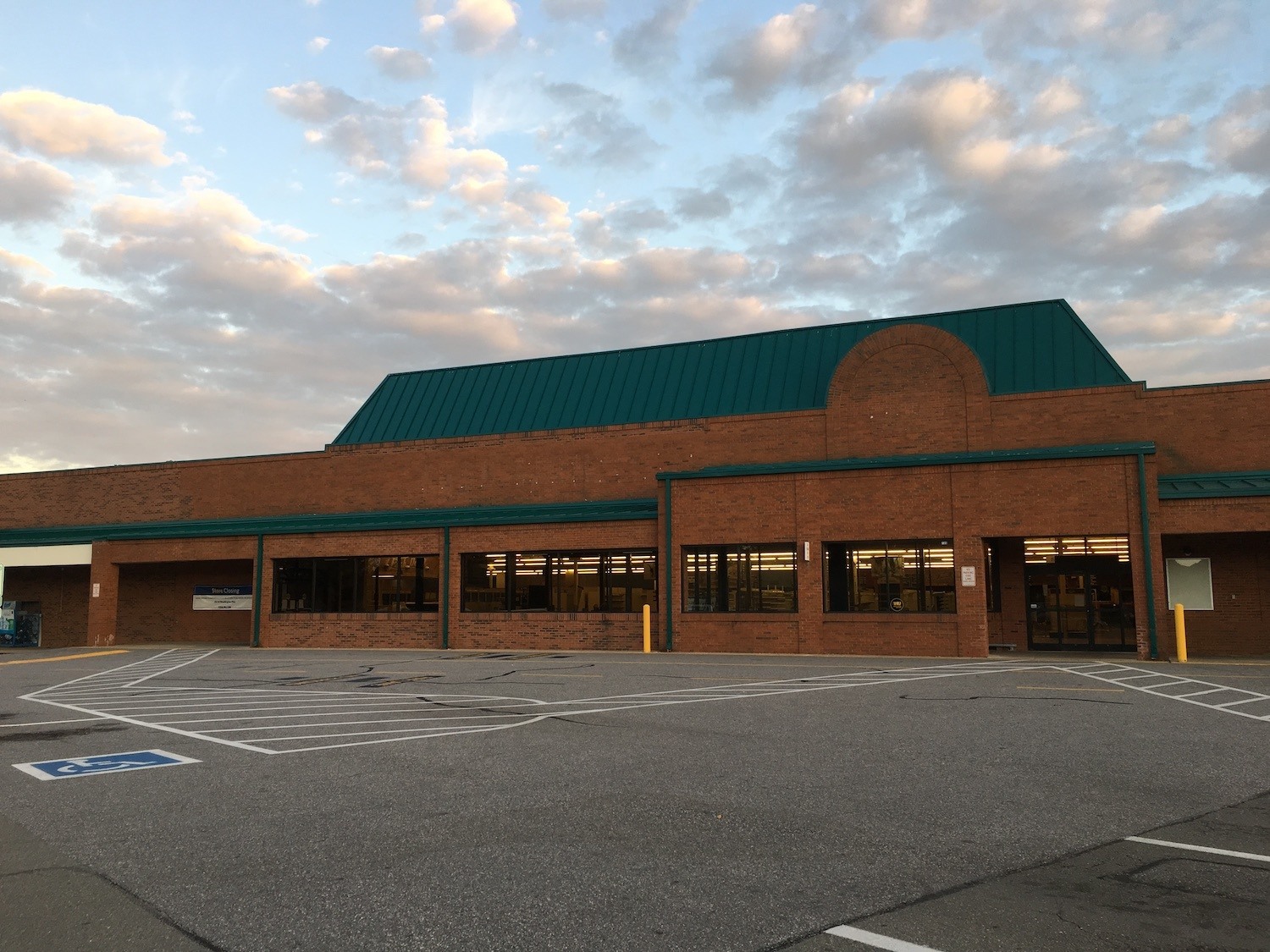
Despite the clear anti-competitive nature of these clauses, federal oversight remains limited. Legal scholars note that federal antitrust agencies, such as the Federal Trade Commission (FTC), have historically prioritized multi-billion-dollar mergers over localized real estate practices, viewing neighborhood grocery consolidation as outside their primary scope. However, advocates suggest that dormant regulatory tools, such as the Robinson-Patman Act—originally enacted to protect independent businesses from discriminatory pricing—could potentially be leveraged to challenge anti-competitive real estate practices if there were sufficient political will to do so.
Municipal Interventions and Proactive Zoning
In the absence of sweeping federal action, several local governments have taken legislative steps to protect their constituents. In 2018, Washington, D.C., became a prominent example by passing legislation explicitly prohibiting restrictive covenants in grocery leases.
However, municipal-level solutions face distinct limitations. Legal experts point out that city-level bans apply only prospectively to new contracts and cannot be applied retroactively to existing deeds. Furthermore, relying on a patchwork of local ordinances means that communities often remain unaware of a restrictive covenant until a store closes and replacement efforts fail.
To counter these structural hurdles, legal scholars advocate for proactive land-use planning. Vermont’s long-standing Act 250 serves as a potential model, requiring rigorous state-level environmental and socio-economic review processes for commercial developments exceeding specific acreage thresholds. Such measures can prevent corporations from acquiring multiple large parcels solely to suppress competition.
Additional policy proposals include granting municipalities the legal authority to seize or condemn chronically abandoned commercial properties, mandate adaptive reuse plans before a business is allowed to vacate, or impose vacant-property registration fees that discourage long-term hoarding of real estate.
Conclusion
As cities across the United States grapple with persistent food insecurity and economic inequality, the legal mechanisms governing urban retail space remain a critical yet overlooked battleground. While students like Karissa Kang navigate the immediate realities of urban food deserts in neighborhoods like Central New Haven, legal and urban policy experts continue to press for comprehensive legislative reforms. Without proactive zoning laws, retroactive legal challenges, or renewed federal antitrust scrutiny, the invisible walls built by restrictive covenants will continue to dictate who gets to eat, where they can shop, and how communities grow.
Related posts: