The Essential Guide to New Orleans Cocktails History Recipes and the Evolution of the Big Easy’s Liquid Legacy

New Orleans stands as a singular entity in the American landscape, a city where the passage of time is measured not merely by years, but by the evolution of the glass in one’s hand. As a 24-hour drinking city that seamlessly weaves the theatrical with the historical, New Orleans has served as a primary font for classic cocktail culture for more than 150 years. The city’s homegrown recipes represent a broad stylistic spectrum, ranging from the potent, stirred whiskey staples of the 19th century to the fiery, performance-based dessert drinks of the grand Creole dining rooms, and even the neon-hued, frozen favorites of the modern French Quarter. To understand New Orleans is to understand its nightlife, a culture built on the ritual of the "go-cup" and the reverence for the "cocktail hour." For those unable to traverse the cobblestones of the Vieux Carré, the following exploration of the city’s most iconic recipes offers a sensory transport to the heart of Louisiana’s liquid history.

The Foundations of the Creole Cocktail Tradition
The history of the New Orleans cocktail is inextricably linked to the city’s status as a major 19th-century port. The influx of French brandies, Caribbean rums, and Spanish liqueurs, combined with the local medicinal bitters produced by apothecaries like Antoine Amédée Peychaud, created a fertile environment for mixology long before the term was popularized.
Among the earliest "calling-card" cocktails was the Brandy Crusta. Invented in the 1850s by Joseph Santini, an Italian bartender at the City Coffee House and later the Jewel of the South, the Crusta predates the more famous Sazerac. It was a revolutionary drink for its time, introducing a sophisticated aesthetic that included a crusted sugar rim and a long, coiled lemon peel that lined the entire inside of the glass. While the drink fell into obscurity during the early 20th century, it has seen a dramatic revival in the 21st century. Modern master bartenders like Chris Hannah, who reintroduced the drink to Arnaud’s French 75 bar in 2004, have balanced the Cognac-based template to suit contemporary palates while maintaining its spirit-forward integrity.

The Sazerac, eventually designated as the official cocktail of New Orleans by the Louisiana Legislature, followed a similar path of evolution. Originally composed of Sazerac de Forge et Fils Cognac, the recipe shifted toward rye whiskey in the late 1800s as phylloxera devastated French vineyards and American taste for whiskey grew. The modern "perfected" Sazerac, as championed by figures like St. John Frizell, emphasizes the ritual of the absinthe rinse. Rather than a simple pour-and-discard method, many contemporary bars now use an atomizer to mist the glass with absinthe, ensuring the anise aroma hits the olfactory senses before the first sip of rye and Peychaud’s bitters.
The Art of the Morning Drink and the Absinthe Legacy
New Orleans’ reputation as a "day-drinking" city is perhaps best exemplified by the Absinthe Suissesse and the Ojen Cocktail. These drinks emerged during eras when the city’s population sought refreshing, often anise-flavored beverages to combat the sweltering humidity of the Deep South.

The Absinthe Suissesse, though European in origin, was adopted by New Orleans and transformed into a breakfast staple. Documented in the Depression-era volume Famous New Orleans Drinks and How to Mix ’Em, the drink is a frothy, minty concoction that often includes egg white and orgeat. Kirk Estopinal, a prominent figure in the New Orleans bar scene, notes that the drink has a profound connection to Mardi Gras, serving as a restorative "eye-opener" during the early hours of carnival parades.
Similarly, the Ojen Cocktail rose to prominence when the federal ban on absinthe left a void in the local market. Ojen, a Spanish anise liqueur with a lower proof and higher sugar content than traditional absinthe, became so popular in New Orleans that the city eventually became its primary global consumer. The cocktail is a study in simplicity: Ojen and Peychaud’s bitters swizzled over crushed ice. This drink remains a cult favorite during the Carnival season, prized for its ability to provide a cooling, aromatic experience without the overwhelming potency of higher-proof spirits.

Theatricality and the Grand Dining Room Classics
In the legendary "Grande Dame" restaurants of New Orleans, such as Antoine’s and Tujague’s, the cocktail is often part of a larger culinary performance. The Café Brûlot, first served at Antoine’s in the 1880s, is perhaps the most "incendiary" example. Inspired by the antics of the pirate Jean Lafitte—who reportedly used street-side drink-making theatrics to distract crowds while his associates picked pockets—the drink is a tableside spectacle. A mixture of brandy, kirschwasser, and clove-studded orange peels is set aflame before being extinguished with hot coffee. It remains a definitive New Orleans dessert staple, popularized on a national scale by "King Cocktail" Dale DeGroff during his tenure at New York’s Rainbow Room.
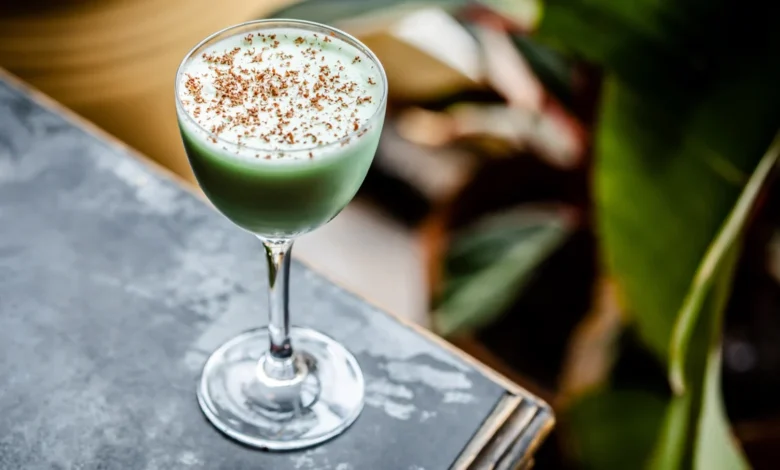
The Grasshopper, another dessert favorite, traces its lineage to Tujague’s in 1918. Created by owner Philibert Guichet for a cocktail competition in New York (where it reportedly took second place), the vibrant green mixture of crème de menthe, crème de cacao, and heavy cream has become a "guilty pleasure" classic. While often dismissed by purists, the drink’s enduring popularity lies in its nostalgic mint-chocolate flavor profile. Recent blind tastings conducted by industry experts have reaffirmed that when made with high-quality ingredients and precise ratios, the Grasshopper remains a masterclass in texture and balance.

Mid-Century Innovation and the Hurricane Mythos
The mid-20th century brought about a shift in New Orleans drinking habits, influenced by World War II and the rise of tiki culture. The Hurricane, an ubiquitous sight on Bourbon Street today, originated at Pat O’Brien’s in the 1940s. According to local lore, the drink was created as a way to exhaust a surplus of less-desirable rum that distributors forced bar owners to buy in order to gain access to limited supplies of Scotch and bourbon. While the modern version is often a cloyingly sweet mixture of bottled juice and low-quality rum, craft bartenders like Kirk Estopinal have sought to "rescue" the recipe. By using a house-made fassionola syrup (a complex blend of passion fruit, guava, and hibiscus) and a thoughtful blend of Puerto Rican and Jamaican rums, the Hurricane can be elevated from a tourist trap to a sophisticated tropical classic.
During this same era, the Hotel Monteleone’s Carousel Bar introduced the Vieux Carré. Invented by head bartender Walter Bergeron in 1938, the drink is an equal-parts homage to the city’s diverse influences, combining rye whiskey, Cognac, sweet vermouth, Bénédictine, and bitters. It is effectively a New Orleans riff on the Manhattan, offering a long, complex finish that reflects the layers of history found in the French Quarter (the "Vieux Carré") itself.

Modern Classics and the 21st Century Revival
The New Orleans cocktail canon is not a static list; it continues to grow through the contributions of contemporary bartenders. The Bywater, created by Chris Hannah in 2007, is a prime example of a "modern classic." A rum-based riff on the Brooklyn cocktail, the Bywater incorporates falernum and Averna, nodding to the Caribbean influences of the neighborhood for which it is named. The drink has since migrated from New Orleans to the menus of world-class bars in New York, London, and beyond.
The Roffignac represents another facet of modern revivalism. A Cognac highball named after Count Louis Philippe de Roffignac (the last French mayor of New Orleans), the drink nearly vanished due to a historical misunderstanding regarding its key modifier: raspberry syrup. Recent research by Neal Bodenheimer and Donato Alvarez of Dauphine’s suggested that the original recipe likely called for raspberry vinegar or a shrub. By reintroducing the acidic, bright notes of a shrub, they have successfully brought the Roffignac into the 21st century, occasionally even swapping the base for tequila to showcase the template’s versatility.

Chronology of Key New Orleans Cocktail Milestones
- 1850s: Joseph Santini creates the Brandy Crusta at the City Coffee House.
- 1880s: Café Brûlot is introduced at Antoine’s, cementing the tradition of tableside service.
- 1888: Henry C. Ramos invents the Ramos Gin Fizz, originally requiring a 12-minute shake by a line of "shaker boys."
- 1890s-1900s: The Sazerac transitions from a Cognac-based drink to a rye whiskey-based drink.
- 1918: Philibert Guichet creates the Grasshopper at Tujague’s.
- 1938: Walter Bergeron invents the Vieux Carré at the Hotel Monteleone.
- 1940s: The Hurricane is developed at Pat O’Brien’s to manage rum surpluses.
- 2007: Chris Hannah creates the Bywater, signaling a new era of New Orleans cocktail innovation.
- 2008: The Louisiana Legislature officially designates the Sazerac as the state’s official cocktail.
Economic and Cultural Implications
The cocktail culture of New Orleans is more than a historical curiosity; it is a significant driver of the city’s economy. The annual "Tales of the Cocktail" festival, founded in 2002, draws tens of thousands of industry professionals and enthusiasts to the city each July, generating an estimated economic impact of over $20 million annually. This global spotlight has ensured that New Orleans remains at the forefront of the international spirits industry.
Furthermore, the city’s unique "to-go cup" laws have fostered a democratization of the cocktail. Unlike other American metropolitan areas where high-end mixology is confined to dimly lit lounges, in New Orleans, a world-class Sazerac can be enjoyed on a street corner. This accessibility has preserved the recipes in the public consciousness, preventing them from becoming stagnant artifacts.

Conclusion: A Legacy in Every Pour
The cocktails of New Orleans are a testament to the city’s resilience and its refusal to abandon the past. Whether it is the meticulous construction of a Ramos Gin Fizz—with its architectural crown of foam—or the bracing, herbal punch of an Obituary Martini at Lafitte’s Blacksmith Shop, these drinks serve as liquid landmarks. They reflect a city that has survived prohibitions, hurricanes, and the homogenization of American culture by holding fast to its rituals. For the home bartender, mastering these recipes is not just an exercise in measurement; it is an act of preservation, ensuring that the spirit of the Big Easy continues to flow, one glass at a time.