London Climate Week 2026 Highlights the Urgent Need for Food System Transformation Amidst Extreme Heat and Economic Pressures


The capital of the United Kingdom became the global epicenter for climate discourse during London Climate Week 2026, an event that reportedly surpassed the scale of New York Climate Week in both the volume of participants and the density of its programming. As temperatures in London soared to a record-breaking 35°C, the irony of the environmental crisis was palpable. Scientists, policymakers, and industry executives found themselves discussing the mitigation of extreme heat while the city itself struggled to cope with a sweltering heatwave that led to the cancellation of several outdoor sessions. Against this backdrop of climate reality, the Sustainable Food Trust (SFT) played a pivotal role in centering food systems within the broader climate debate, arguing that the way the world produces and consumes food is both a primary driver of and a potential solution to the current ecological emergency.
The 2026 iteration of London Climate Week represented a significant shift in the global climate agenda. For the first time, food systems moved from the periphery of the discussion to the very heart of high-level panels and roundtables. Representatives from the SFT, including Trials Data Manager Bahareh Sarvi, Head of Fundraising Amy Warner, and Director of Advocacy and Communications Jessica Gunn, monitored the week’s developments, identifying critical tensions between economic affordability, environmental sustainability, and the future of agricultural investment.
The Paradox of Food Affordability and Malnutrition
One of the most significant intellectual milestones of the week was the launch of the Resilient Food System Index by The Economist. This index was designed to provide a comprehensive framework for holding global food corporations accountable for their performance across four primary pillars: availability, quality and safety, adaptability, and climate and affordability. While the inclusion of climate metrics was welcomed, the SFT and other advocacy groups raised concerns regarding the "affordability" metric, which they argue has historically been used to justify practices that lead to environmental degradation.
Data presented during the week highlighted a disturbing global trend: for the first time in human history, obesity has overtaken hunger as the primary form of malnutrition worldwide. According to UNICEF representatives at the event, both conditions are symptoms of the same broken system, disproportionately affecting impoverished populations who are forced to rely on "cheap" ultra-processed foods. These foods are affordable at the point of sale but carry immense "hidden costs" in the form of public health crises and environmental damage.
The SFT posits that the pursuit of low-cost food has created an "affordability trap." By prioritizing the lowest possible price at the checkout, the industry has externalized the costs of soil degradation, biodiversity loss, and water pollution. The trust argues that a new language of food policy is required—one that reconciles the need for accessibility with the necessity of high-quality, nutrient-dense production. The current paradigm, which equates low prices with the public good, is increasingly seen as a barrier to the systemic changes required to stabilize the climate.
The Investment Gap and the Pricing of Climate Risk
The financial sector’s role in the agricultural transition was a recurring theme throughout London Climate Week. Harry Farnsworth of Rabobank delivered a sobering assessment of the current market, stating that climate risk is still not accurately priced into agricultural commodities. Despite the visible impacts of global conflict, soil depletion, and dwindling biodiversity on crop yields, the financial models governing agriculture remain largely unchanged.
The primary challenge identified by financial experts is that the margins on traditional farming are already too thin to support a large-scale transition to sustainable practices without external support. To address this "investability" gap, several new initiatives were highlighted during the week. These include a nature bond backed by the Department for Environment, Food & Rural Affairs (DEFRA) and a new funding initiative by Wildfarmed. Both models rely on "blended finance," where government or philanthropic capital is used to absorb the "first loss" risk, thereby making the projects more attractive to private investors.
However, the SFT noted a stark disparity in the scale of funding. While the global food industry spends tens of billions of dollars annually on lobbying to maintain the status quo, philanthropic and government investment into food system transformation is currently measured only in the hundreds of millions. Analysts suggest that until a company’s share price is directly tied to the climate risk embedded in its supply chain, private investment will remain insufficient to meet the scale of the challenge.
Beyond Carbon: Critiquing the Net Zero Framing
A significant portion of the debate in 2026 centered on the limitations of the "Net Zero" framework. While Net Zero has been successful in mobilizing corporate action, critics at the event argued that it has created a form of "carbon tunnel vision." By focusing almost exclusively on CO2 emissions and offsetting, the framework often ignores other vital ecological indicators such as water quality, soil health, and community resilience.
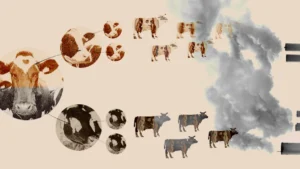
The SFT expressed concern that the Net Zero mandate can inadvertently reward intensive, industrial production systems. For instance, large-scale "Big Dairy" operations can appear carbon-efficient on paper by utilizing technical fixes to reduce methane, yet they may simultaneously contribute to biodiversity loss and poor animal welfare. The consensus among advocacy groups is that the world needs a "whole-systems" approach. This would integrate climate goals with food security and ecosystem health, ensuring that carbon sequestration does not come at the expense of ecological diversity.
Regenerative Agriculture as a Systemic Approach
The term "regenerative agriculture" continued to be a major buzzword throughout the week, though its definition remains a subject of intense debate. Participants at London Climate Week generally agreed that regenerative farming should not be viewed as a static destination or a simple set of checkboxes, but rather as a dynamic approach to land management.
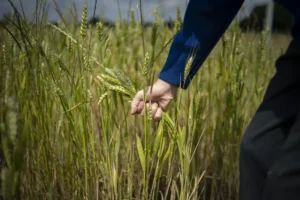
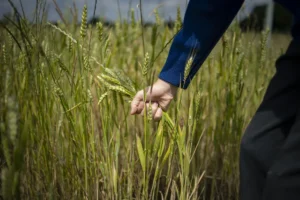
In a truly regenerative system, the unit of analysis is the entire farm rather than a single commodity. For example, "regenerative wheat" is defined not just by how the grain is grown, but by the complex crop rotations—including legumes, barley, and grass leys—that precede it. This systemic complexity poses a significant challenge for existing regulatory and financial infrastructures, which are built to handle individual commodities in isolation.
The SFT emphasized that the transition to regenerative systems requires supply chains to move away from a "dictatorship" model of procurement. Instead of simply passing the costs of transition down to the farmer or up to the consumer, the SFT argues for a model where the risk is shared across the value chain. This involves utilizing frameworks like the Regen10 Outcomes Framework, which allows for landscape-specific solutions rather than a one-size-fits-all mandate.
The Rise of Big Dairy and the Decline of the Family Farm
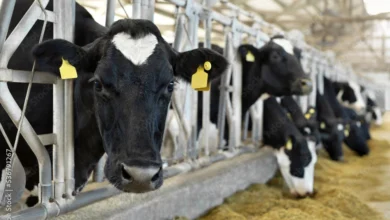
Perhaps the most contentious discussion of the week centered on the dairy industry. The SFT hosted a panel at Goals House to address the rapid industrialization of UK dairy. Data shared during the session revealed a dramatic consolidation of the sector: in 1974, there were over 54,000 dairy farms in the UK; today, that number has plummeted to fewer than 7,000. Conversely, the number of "mega-dairies" has doubled over the last decade.
Currently, approximately 60% of the milk consumed in the UK originates from "fully housed" or zero-grazing systems. This shift toward industrialization is driven by a commodity model that rewards high volume and low price above all else. Patrick Holden, founder of the SFT, noted that this "go big or get out" pressure has stripped the dairy sector of its intrinsic value and its ability to manage its own narrative.
The SFT is calling for a shared framework of measurement that rewards farmers for sustainable practices, high animal welfare, and the nutritional quality of the milk produced. They argue that the current system is optimized for a small number of large-scale actors, often at the expense of rural communities and long-term food security.
Analysis of Implications and the Path Forward
As London Climate Week 2026 concluded, the overarching sentiment was one of "urgency trapped in a room." Despite the high-level discussions and the participation of thousands of experts, observers noted a lack of mainstream media coverage. The national press remained largely silent on the specific breakthroughs regarding food and land use, focusing instead on the immediate disruptions caused by the heatwave.
The implications of this communication gap are significant. Without public awareness and political pressure, the transition to a sustainable food system remains stalled by institutional inertia. The SFT’s reflections suggest that the technical solutions—such as True Cost Accounting and regenerative frameworks—already exist. What is currently missing is the political and financial leadership to implement these solutions at scale.
For the future of food and farming, the 2026 event served as a stark reminder that the window for action is closing. The extreme temperatures experienced during the week were not just a backdrop; they were a warning. The transition from a commodity-driven, high-externalization food system to one based on resilience and health is no longer a matter of choice, but a requirement for survival in a warming world.
The SFT’s final assessment is clear: the industry must move beyond agreeing on the problem and begin the difficult work of restructuring the financial and regulatory systems that govern how we eat. This includes a fundamental shift in how "value" is defined in the food system—moving away from the "affordability trap" and toward a model that accounts for the true cost of production. Only then can the food system transform from a climate liability into a cornerstone of global resilience.