The Rise of the Arepa Burger: A Fusion Culinary Phenomenon Reshaping Global Comfort Food Trends

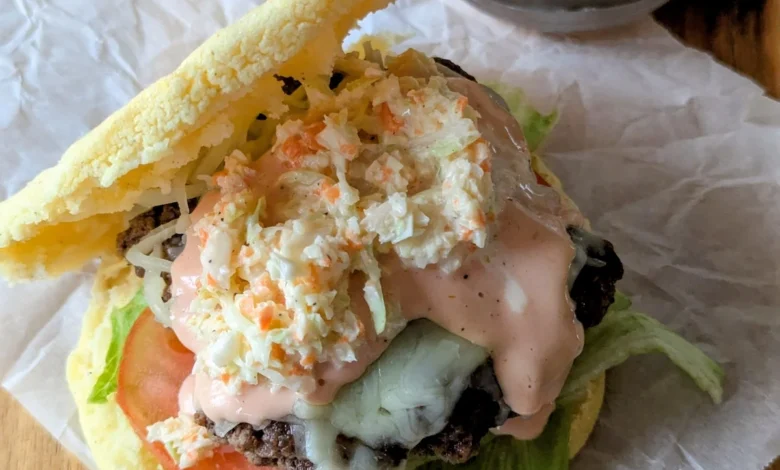
The culinary landscape of the 21st century has been defined by the convergence of traditional regional staples with the global ubiquity of the hamburger. Among the most notable manifestations of this trend is the emergence of the Arepa Burger, a creative adaptation that substitutes the conventional wheat-based hamburger bun with the traditional Colombian arepa—a dense, crispy-on-the-outside, and tender-on-the-inside cornmeal patty. This fusion dish has transitioned from a home-kitchen experiment to a staple in modern Latin-inspired gastropubs, reflecting a broader shift toward gluten-conscious dining and the celebration of ancestral grains in contemporary gastronomy.

The Origins and Evolution of the Arepa
To understand the significance of the Arepa Burger, one must first recognize the cultural weight of the arepa itself. A cornerstone of Colombian and Venezuelan diets for centuries, the arepa is derived from pre-Columbian corn-processing techniques. Traditionally made from ground, precooked cornmeal, the arepa serves as a versatile, neutral-tasting foundation for a vast array of proteins, vegetables, and cheeses.
In recent years, the democratization of global cuisine has led to an explosion of interest in Latin American staples. While the burger has long served as an icon of American fast-casual dining, its evolution into the "Arepa Burger" marks a pivotal moment where international culinary techniques meet the demand for elevated, artisanal street food. The transition of the arepa from a breakfast or side dish into a structural vessel for a full-sized beef patty represents an innovative response to the consumer desire for texture-rich, authentic, and naturally gluten-free alternatives to processed white-bread buns.

Nutritional Implications and Dietary Shifts
The shift toward the Arepa Burger is not merely a matter of flavor profile but also one of nutritional strategy. Traditional hamburger buns are often composed of refined wheat flour, which provides high caloric density with limited fiber or nutrient content. In contrast, the corn-based arepa offers a different carbohydrate profile.
Data from health-focused culinary studies suggest that replacing a standard brioche or sesame seed bun with a corn-based patty can offer a different metabolic response for diners. The use of pre-cooked cornmeal, or masa harina, provides a hearty texture that holds up well under the weight of a seasoned beef patty, lettuce, tomatoes, and various sauces. Furthermore, for the growing demographic of consumers with gluten sensitivities, the arepa serves as a functional, safe, and culturally resonant alternative to standard bread.

The Anatomy of the Modern Arepa Burger
While the foundational concept remains the same—a beef patty sandwiched between two corn cakes—the modern interpretation varies widely across culinary institutions. The standard preparation requires precision in the preparation of the corn dough. The cornmeal must be hydrated to the correct consistency, shaped into uniform rounds, and seared on a budare (a flat griddle) until the exterior achieves a golden-brown, crisp crust while the center retains its soft, steaming integrity.
The assembly process is where regional influences become apparent. In many Colombian-inspired iterations, the burger is topped with:

- Hogao: A traditional savory sauce made from sautéed tomatoes and scallions.
- Salsa Rosada: A blend of mayonnaise and ketchup, often with a hint of garlic or lime.
- Coleslaw: Providing a necessary acidic crunch to contrast the richness of the beef.
- Fresh Avocado: Adding healthy monounsaturated fats and a creamy mouthfeel.
Chronology of a Culinary Trend
The integration of these elements into a singular "burger" format gained traction in the early 2010s, as home cooks began sharing experimental recipes online, documenting the shift from the traditional "arepa con queso" to more substantial main-course applications. By 2015, major metropolitan areas with high concentrations of Latin American expatriates—such as Miami, New York, and Bogota—began to feature arepa-based burgers on upscale menu boards.
This movement mirrors the "fusion boom" seen in other sectors, such as the introduction of the Korean-Mexican taco or the sushi burrito. The Arepa Burger, however, is distinct in its simplicity. It relies on the inherent harmony between the corn’s earthiness and the savory depth of char-grilled beef, a pairing that has existed in Latin American outdoor cookouts for generations, albeit not always in the form of a handheld sandwich.

Market Impact and Future Outlook
Industry analysts monitoring food trends suggest that the growth of the Arepa Burger is part of a larger trend toward "ethnic authenticity" in casual dining. Consumers are increasingly seeking out foods that offer a narrative of heritage. The "story" behind the arepa—a food that sustains millions of people daily in its home region—adds an intangible value to the product that a standard burger cannot replicate.
Furthermore, the operational implications for restaurants are notable. Because cornmeal is a shelf-stable, dry good, restaurants can manage inventory more efficiently than with fresh-baked bread products, which have a short shelf life. This economic efficiency, combined with the dish’s high perceived value as a "specialty" item, has made it a favorite among restaurateurs looking to diversify their menus without increasing their reliance on third-party bakery suppliers.

Official Perspectives and Culinary Criticisms
Culinary historians often caution that "fusion" can lead to the dilution of traditional techniques. However, in the case of the Arepa Burger, there has been a surprisingly positive reception from traditionalists. The consensus is that as long as the arepa remains true to its preparation—specifically the reliance on high-quality cornmeal and proper griddling—the modification of the vessel is viewed as a respectful evolution rather than an erasure of culture.
Erica Dinho, a notable expert on Colombian cuisine, has frequently highlighted the versatility of the arepa, noting that its capacity to hold toppings is its greatest strength. By viewing the arepa as a canvas rather than a rigid side dish, the culinary world has unlocked a new category of food that bridges the gap between regional comfort and global convenience.

The Broader Implications of Fusion Gastronomy
The rise of the Arepa Burger serves as a case study for how globalized food systems can foster innovation. It is a reminder that the most successful culinary trends are often those that solve a problem—in this case, the need for a more robust, flavorful, and inclusive alternative to the traditional bun—while paying homage to the ingredients that have fueled civilizations for centuries.
As we look toward the future of the fast-casual sector, it is likely that the Arepa Burger will continue to see increased penetration in the market. With the rising consumer preference for whole-food ingredients and the ongoing fascination with South American flavors, the marriage of the Colombian arepa and the American burger is not merely a fleeting trend, but a permanent addition to the contemporary culinary lexicon.

The success of this dish underscores a vital lesson for the food industry: consumers are not looking for simpler food; they are looking for more meaningful food. By honoring the technical requirements of the arepa while embracing the indulgence of the burger, chefs and home cooks alike have created a dish that satisfies both the hunger for tradition and the appetite for novelty. Whether served in a bustling city market or prepared in a suburban kitchen, the Arepa Burger stands as a testament to the power of cross-cultural adaptation in the 21st century.