
French Onion Soup I

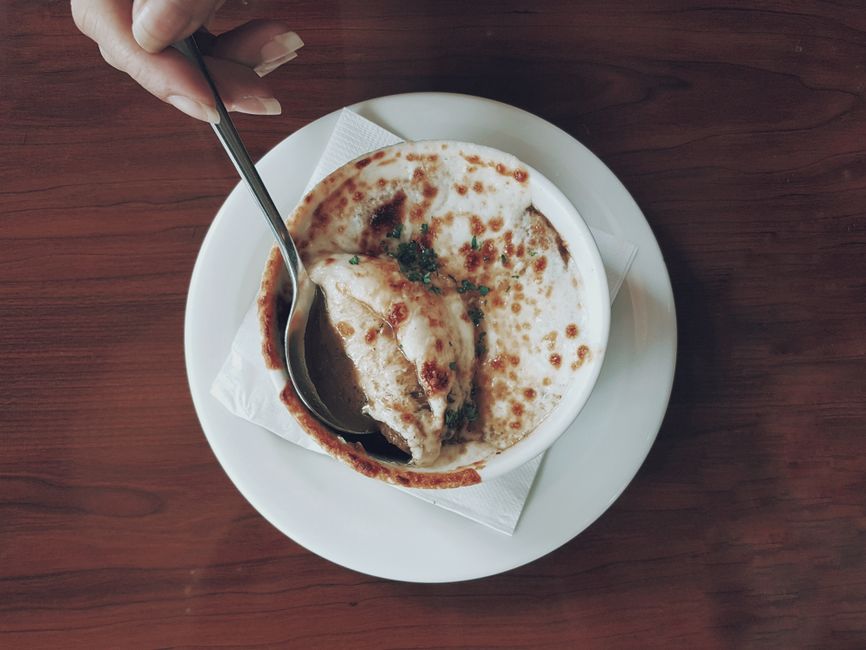
French Onion Soup: A Culinary Masterpiece of Caramelized Onions, Rich Broth, and Toasted Gruyère
French onion soup, a seemingly simple dish, is a testament to the transformative power of slow cooking and quality ingredients. At its heart lies the humble onion, coaxed through patient caramelization to unlock unparalleled sweetness and depth of flavor. This process, often taking hours, is the soul of the soup, creating a rich, savory base that is then enhanced by a robust beef broth and crowned with a generous blanket of melted, bubbling Gruyère cheese, often served atop toasted baguette slices. The symphony of textures and tastes – the tender, almost jam-like onions, the unctuous broth, the crisp bread, and the stretchy, nutty cheese – makes French onion soup a universally beloved comfort food, adaptable to both humble home kitchens and elegant restaurant tables. Its origins are debated, with some tracing it back to Roman times due to the onion’s widespread cultivation, while others point to French culinary traditions of the 18th century, particularly in Paris, where it became a staple in bistros and working-class eateries. Regardless of its precise genesis, the modern iteration, with its characteristic toasted cheese crust, is firmly rooted in French gastronomy.
The foundational element of exceptional French onion soup is the onion itself and the meticulous technique of caramelization. This is not a quick sauté; it’s a slow, deliberate process that breaks down the complex sugars within the onions, transforming them from pungent bulbs into sweet, deeply flavored morsels. A medley of onion varieties can be used, but yellow or Spanish onions are the workhorses due to their balanced sweetness and pungency. Red onions can contribute a subtle sweetness and a beautiful hue, while sweet onions like Vidalia or Walla Walla can offer an even more pronounced sweetness, though they might require a slightly more watchful eye to prevent burning. The key is to slice the onions thinly and uniformly, typically about 1/8 to 1/4 inch thick, ensuring even cooking. They are then cooked in a generous amount of fat – a combination of unsalted butter and olive oil is common, providing both flavor and a higher smoke point for the butter. The heat should be kept at a medium-low to low setting, allowing the onions to soften, release their moisture, and gradually brown without scorching. This process can take anywhere from 45 minutes to over an hour, depending on the quantity of onions and the heat intensity. Stirring is crucial, but not constant; occasional stirring to prevent sticking and ensure even browning is sufficient. As the onions cook, they will shrink considerably and develop a rich, mahogany color. The aroma that emanates from the pot during this stage is intoxicating, a prelude to the soup’s complex flavor profile.
Once the onions have achieved their desired caramelized state, the broth forms the next critical layer of flavor. While beef broth is the traditional and most common choice, its quality significantly impacts the final outcome. Homemade beef broth, simmered for hours with beef bones, aromatics like carrots, celery, and onions, and herbs like thyme and bay leaves, will yield a far superior soup than store-bought alternatives. If using store-bought broth, opt for a high-quality, low-sodium version to control the saltiness and allow the other flavors to shine. Some recipes incorporate a splash of dry white wine or brandy at this stage, after the onions have caramelized. This deglazing action not only lifts any browned bits from the bottom of the pot, adding to the flavor, but also introduces a subtle acidity that cuts through the richness of the broth and onions. A dry white wine like Sauvignon Blanc or Pinot Grigio works well, while brandy or cognac adds a touch more depth and warmth. After the wine has reduced, the beef broth is added, and the soup is brought to a simmer.
Seasoning is paramount throughout the cooking process. The caramelized onions will already contribute a natural sweetness and saltiness, so judicious seasoning with salt and freshly ground black pepper is essential. A bay leaf and a few sprigs of fresh thyme added during the simmering stage will infuse the broth with herbaceous notes that complement the onions beautifully. The soup should simmer for at least 30 minutes to allow the flavors to meld and deepen, though a longer simmer will only enhance the complexity. Some chefs even suggest simmering for an hour or more. Before serving, it’s crucial to taste and adjust the seasoning one last time. A pinch of sugar can sometimes be added to enhance the caramelized sweetness, but this should be done with caution and only if necessary.
The iconic topping of French onion soup is the toasted baguette and melted Gruyère cheese. Crusty, day-old French bread, or a similar baguette, is ideal. The bread should be sliced to about 1/2 to 3/4 inch thickness, creating sturdy croutons that can hold up to the hot soup. These slices are typically toasted until golden brown and slightly crisp, either in an oven or a toaster. Some recipes suggest toasting the bread with a little olive oil or butter for added flavor and crispness. The cheese is where true indulgence lies. Gruyère, a hard, nutty Swiss cheese, is the quintessential choice for French onion soup. Its melting properties are superb, creating a luscious, stretchy blanket that seals in the heat and flavor. Other good melting cheeses that can be used in combination with or instead of Gruyère include Emmental, Comté, or even a sharp cheddar for a different flavor profile. Generous amounts of grated cheese are piled high on the toasted baguette slices.
The final assembly and broiling are the dramatic conclusion to the French onion soup journey. Individual oven-safe bowls are essential for this step, as the soup is traditionally served in these vessels. Ladle the hot soup into the bowls, ensuring a good distribution of caramelized onions. Place one or two toasted baguette slices on top of the soup, allowing them to absorb some of the broth. Then, liberally sprinkle the grated Gruyère cheese over the bread and extending slightly down the sides of the bowl. The bowls are then placed under a hot broiler for a few minutes, until the cheese is fully melted, bubbling, and develops a beautiful golden-brown, slightly charred crust. This broiling step is critical for achieving the signature appearance and flavor. The intense heat melts and browns the cheese, creating those irresistible pockets of gooey, caramelized goodness. Extreme care must be taken during this stage as the cheese can burn quickly, so constant vigilance is required.
Variations on French onion soup exist, each offering a slightly different nuance. For a vegetarian version, vegetable broth can be used, and the richness can be amplified by adding a splash of soy sauce or tamari for umami depth. Some recipes also incorporate mushrooms, such as cremini or shiitake, into the caramelization process for added earthiness. Sherry is sometimes used in place of white wine for deglazing, offering a slightly nuttier and more complex flavor. For those seeking an extra layer of richness, a tablespoon of heavy cream can be stirred into the soup just before serving, though this deviates from the traditional purist approach. The bread can also be infused with garlic before toasting by rubbing a clove of garlic over the surface, imparting a subtle garlicky note.
The SEO potential of "French onion soup" is significant. As a globally recognized and beloved dish, it attracts a vast audience searching for recipes, historical information, and dining recommendations. High-ranking keywords would include "French onion soup recipe," "caramelized onion soup," "homemade French onion soup," "best French onion soup," "easy French onion soup," and specific regional variations like "Parisian onion soup." The article’s comprehensive nature, covering ingredients, techniques, variations, and historical context, caters to a broad range of user intent, from novice cooks seeking a straightforward recipe to culinary enthusiasts interested in the nuances of the dish. The inclusion of descriptive language, emphasizing sensory details like "rich," "savory," "sweet," "nutty," and "bubbling," enhances reader engagement and provides valuable terms for search engines to index. The detailed breakdown of the caramelization process and the importance of broth quality are key differentiating factors that appeal to those seeking to master the dish. Furthermore, mentioning alternative ingredients and techniques addresses potential user searches for ingredient substitutions or advanced preparation methods.
The appeal of French onion soup extends beyond its deliciousness. It’s a dish that evokes comfort, warmth, and a sense of occasion. The theatrical presentation in oven-safe bowls, with the bubbling cheese, makes it a centerpiece for a meal. It’s a perfect starter for a formal dinner or a satisfying main course on a chilly evening. The labor-intensive nature of the caramelization process, while requiring patience, also imbues the soup with a sense of accomplishment for the home cook. It’s a dish that rewards dedication with unparalleled flavor. The simplicity of its core ingredients – onions, broth, bread, and cheese – belies the complexity that can be achieved through careful execution. This accessibility, coupled with its sophisticated flavor profile, is a significant reason for its enduring popularity. Whether enjoyed in a cozy bistro in Lyon or recreated in a home kitchen in New York, French onion soup remains a timeless culinary classic, a testament to the power of humble ingredients transformed by skill and passion. Its ability to satisfy diverse palates and its deep historical roots ensure its continued presence on menus and in cookbooks for generations to come, making it a perpetually relevant and searchable culinary topic.


