How a Fake Macao Floating Casino Deal Brought China Its First Aircraft Carrier and Rewrote Global Naval History

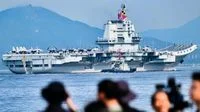
The geopolitics of the twenty-first century have been defined in no small part by the rapid maritime expansion of the People’s Republic of China. What was once a coastal defense force focused primarily on territorial waters has transformed into a blue-water navy capable of projecting power far beyond its shores. At the center of this naval metamorphosis stands a single, improbable artifact: a rust-streaked, unfinished Soviet-era hulk that was smuggled past international watchdogs under the absurdly mundane guise of a floating floating casino and resort.
The story of the Liaoning, China’s first operational aircraft carrier, is not merely a tale of engineering triumph. It is a masterclass in corporate camouflage, geopolitical patience, and strategic deception. For years, the international community—including intelligence agencies in the United States and various European capitals—miscalculated Beijing’s intentions, dismissing the acquisition of a massive warship carcass as a private commercial venture destined for the gambling parlors of Macao. Instead, that very hull became the cornerstone of China’s modern naval hegemony, permanently altering the strategic balance of power in the Indo-Pacific region.
The Genesis of an Audacious Plan: The Post-Soviet Fire Sale
To understand how China secured its first aircraft carrier, one must look back to the chaotic geopolitical landscape of the early 1990s. The dissolution of the Soviet Union in December 1991 left the newly independent nations of the former Eastern Bloc drowning in redundant military hardware, unpaid defense contractors, and severe economic paralysis. Among the orphaned assets left behind was the Varyag, a Kuznetsov-class heavy aircraft carrying cruiser taking up valuable space at the Black Sea Shipyard in Nikolayev, located in present-day Ukraine.
Construction on the Varyag had begun in 1985. By the time funding dried up and work was officially halted in 1992, the ship was roughly 68 percent complete. Designed to displace nearly 60,000 tons fully loaded, the colossal vessel was intended to carry dozens of fixed-wing aircraft and helicopters, boasting advanced radar systems and heavy anti-ship missile launchers. However, without engines, navigation systems, and crucial internal wiring, the colossal gray leviathan was essentially a floating shell—a colossal piece of scrap metal sitting idly in Ukrainian waters, accumulating rust and financial liability.
Recognizing the immense potential of acquiring a modern carrier hull, agents linked to the People’s Liberation Army Navy (PLAN) began exploring acquisition channels. Directly purchasing a military vessel from a sovereign state would have triggered immediate diplomatic protests, arms embargoes, and intense scrutiny from Western intelligence. A proxy was needed. Enter Xu Zengping, a former military basketball player turned wealthy businessman based in Hong Kong, who would become the human vector for one of the greatest military acquisitions of the modern era.
The Macao Casino Facade and the 1998 Auction
In 1998, the mechanical fate of the Varyag took a surreal turn when a newly formed shell company called Agencia Turistica e Diversoes Chong Lot Limitada—registered in the gambling enclave of Macao—stepped forward to purchase the vessel. The front man for this transaction was Xu Zengping.
To maintain plausible deniability, Xu publicly announced an ambitious and eccentric commercial vision: he intended to tow the incomplete Varyag across the globe, anchor it off the coast of Macao, and convert it into a massive, opulent floating hotel and casino complex. The project was heavily publicized, complete with mock-ups of luxury suites, restaurants, and gaming floors. Given Macao’s status as a global gambling capital, the narrative sounded plausible enough to satisfy skeptical regulators, international journalists, and foreign diplomats.
The transaction itself was a high-stakes financial gamble. Xu traveled to Ukraine to negotiate directly with shipyard officials and government representatives. In March 1998, after protracted negotiations, Xu’s company successfully purchased the Varyag at a public auction for the remarkably low price of $20 million USD.
What the public did not know—and what international financial institutions only discovered much later—was that the purchase was heavily underwritten by hidden loans and financial backing orchestrated by Chinese state entities. Xu had mortgaged his own assets, borrowed heavily, and reportedly carried suitcases of cash and high-value gifts to grease the wheels of the bureaucratic machinery in post-Soviet Ukraine. For a mere fraction of the cost of designing and building a new warship from scratch, Beijing had acquired the physical blueprint and structural skeleton of a supercarrier.
The Epic Odyssey: Towing a Warship Across Oceans
Purchasing the Varyag was only the first hurdle; moving it across the globe proved to be an epic maritime odyssey fraught with diplomatic sabotage, treacherous weather, and geopolitical maneuvering.
In 2000, the hull—still lacking engines and rudders—was hitched to a commercial tugboat, the Halani, for a grueling 15,000-mile journey to China. However, the voyage immediately ran into hostile diplomatic waters. Prompted by intelligence reports warning that the "casino ship" was destined for the Chinese military, the government of Turkey—controlling the crucial maritime bottleneck of the Bosphorus and Dardanelles straits—refused to grant passage.
Ankara cited severe navigational safety hazards, arguing that towing an unpowered, 300-meter-long hulk through the narrow, crowded straits posed an unacceptable risk to Istanbul’s maritime traffic and infrastructure. For 16 months, the Varyag remained stranded in the Black Sea, anchored off the coast of Turkey, while intense diplomatic negotiations took place behind closed doors.
China deployed heavy diplomatic capital, offering economic incentives, tourism guarantees, and security assurances to the Turkish government. Finally, in late 2001, Turkey relented, imposing strict safety conditions, including the deployment of a dozen powerful tugboats and pollution-control vessels.
Once clear of the straits, the journey was far from over. In November 2001, as the flotilla battled through the Aegean Sea, a violent storm struck. Winds gusting up to hurricane force snapped the heavy towlines connecting the Varyag to its tugs. The massive hull drifted dangerously close to the rocky shores of Skyros Island, Greece, spinning out of control. A heroic rescue effort by a Dutch salvage crew prevented disaster, though one sailor tragically lost his life during the operations.
After navigating the Mediterranean, rounding the Cape of Good Hope, and traversing the Indian Ocean and the South China Sea, the battered hulk finally dropped anchor at the Dalian Shipyard in northern China in March 2002—nearly four years after it was first purchased.
Reconstruction and the Birth of the Liaoning
Upon its arrival in Dalian, the true nature of the project was finally unveiled to the local workforce, though it remained tightly guarded from foreign espionage. The floating casino fantasy was unceremoniously discarded. Instead, the Varyag was dry-docked, and thousands of naval architects, structural engineers, metallurgists, and military scientists descended upon the vessel.
The restoration and completion process was a monumental technological challenge. Much of the internal equipment had been stripped or damaged. Engineers had to painstakingly remove tons of rust, inspect every structural weld, install modern propulsion plants, upgrade electrical grids, and construct advanced combat data systems entirely from scratch. Because China had never built or operated an aircraft carrier before, the refitting of the Varyag served as an invaluable, hands-on floating university for the PLAN’s technical corps.
For nearly a decade, the massive gray silhouette dominated the Dalian skyline behind high security fences. Western intelligence agencies watched via satellite as the ship slowly transformed. Flight decks were reinforced, arrestor gear was installed, and advanced phased-array radar systems were mounted onto the superstructure.
Finally, in August 2011, the ship—now completely modernized and structurally overhauled—put out to sea for its maiden sea trial. The psychological impact of those initial voyages sent shockwaves through defense ministries in Washington, Tokyo, New Delhi, and beyond.
On September 25, 2012, in a formal military ceremony attended by top Communist Party leadership, the former Soviet hulk was officially commissioned into the People’s Liberation Army Navy. It was officially christened the Liaoning, named after the Chinese province where it was refitted. With pennant number 16, China had officially entered the elite, exclusive club of nations operating aircraft carriers.
Strategic Implications and the Broader Impact
The commissioning of the Liaoning was never just about adding a single capital ship to a naval inventory; it marked a profound doctrinal shift in Beijing’s military strategy. For decades, China’s naval doctrine was anchored in "near-seas defense"—protecting immediate territorial waters, the coastline, and disputed islands within the first island chain.
The introduction of an aircraft carrier fundamentally altered this paradigm. By providing floating airbases equipped with carrier-based fighter jets like the Shenyang J-15, the PLAN acquired the capability to project air superiority and combat power deep into the open ocean, well beyond the reach of land-based fighter aircraft. This capability is critical for securing vital maritime trade routes, challenging regional rivals, and contesting American naval hegemony in the Western Pacific.
Military analysts at institutions such as China Power have consistently noted that the Liaoning served as the vital stepping stone for China’s subsequent carrier development program. The lessons learned during the grueling refit of the Varyag directly enabled China to design and construct its first domestically built aircraft carrier, the Shandong (commissioned in 2019), and the even more advanced, electromagnetic-catapult-equipped Fujian (launched in 2022).
Furthermore, the operational deployment of the Liaoning forced regional powers to recalibrate their defense spending and naval strategies. Japan, responding to the growing frequency of carrier strike group sailings near its southern islands, accelerated its own naval modernization programs, converting its Izumo-class helicopter destroyers into light carriers capable of operating F-35B stealth fighters. Similarly, Taiwan, India, and the United States have intensified their intelligence-gathering, submarine procurement, and anti-access/area-denial (A2/AD) planning to counter the evolving threat matrix posed by China’s expanding carrier fleet.
Conclusion: From Scrap Metal to Global Superpower Symbol
Looking back at the bizarre sequence of events that brought the Varyag from the banks of the Black Sea to the ports of Dalian, the acquisition reads like a geopolitical thriller. What began as a clandestine operation disguised as a harmless commercial venture for a floating casino ultimately reconfigured the naval balance of the twenty-first century.
Xu Zengping’s clever deception successfully bought Beijing the time, space, and hardware it needed to bypass decades of naval research and development. Today, as the Liaoning regularly leads carrier strike groups through the Taiwan Strait, the Philippine Sea, and the Western Pacific, it stands as a towering metallic monument to strategic patience and long-term planning.
The rusty hulk that was once billed as a Macao entertainment venue has fulfilled its true destiny: serving as the vanguard of China’s rise as a dominant global maritime superpower.
Related posts: