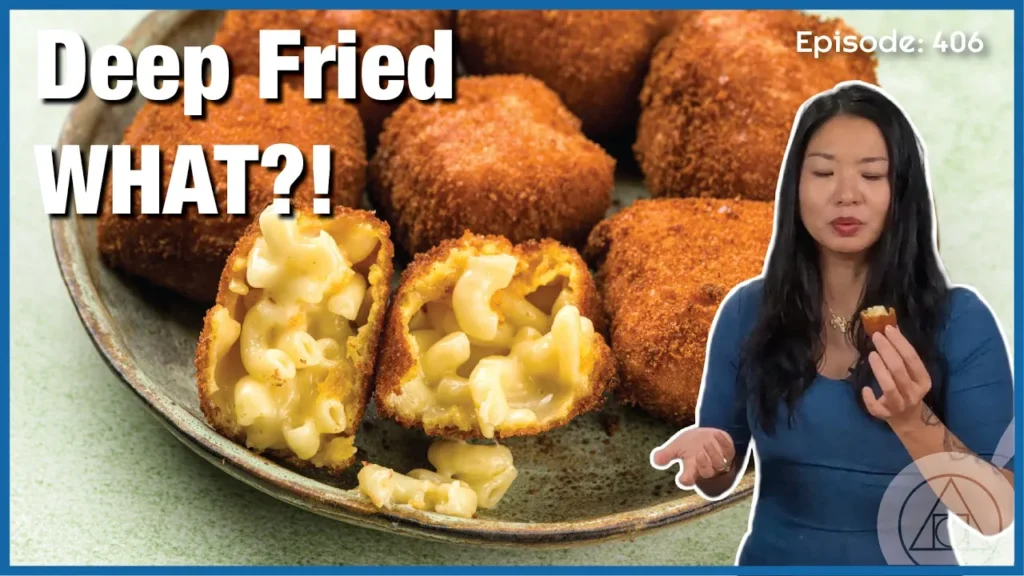
The culinary pursuit of the perfect deep-fried macaroni and cheese has long been a challenge for professional chefs and home cooks alike. The inherent difficulty lies in the physical properties of melted cheese, which, when subjected to the high temperatures of a deep fryer, typically loses its structural integrity, leading to the infamous "blowout" where the filling leaks into the oil. However, recent developments in modernist culinary techniques have introduced a method that utilizes chemical emulsification to stabilize the cheese sauce, effectively bridging the gap between comfort food and food science.
The Scientific Challenge of Frying Dairy
At the heart of the failure in traditional fried mac and cheese is the nature of an emulsion. A standard cheese sauce relies on the proteins and fats within the cheese to maintain a suspension. When exposed to the thermal shock of a fryer—which operates between 350°F and 375°F—the fats separate from the proteins rapidly. Once the structural proteins are broken down by heat, the cheese loses its viscosity, becoming a liquid that inevitably escapes the breading or batter crust.
Traditional methods often rely on cooling the mac and cheese to near-freezing temperatures before frying, or using excessive amounts of flour or starch to thicken the sauce. While these methods can mitigate the risk of leakage, they often result in a texture that is either gummy or overly floury. The innovation presented in this latest development involves the use of two specific food-grade additives: sodium citrate and sodium hexametaphosphate (SHMP).
The Role of Chemical Stabilizers
Sodium citrate acts as an emulsifying salt, a common ingredient in industrial cheese production, used to prevent oil separation. It works by altering the pH of the cheese and sequestering calcium ions, which allows the casein proteins in the cheese to remain fluid and stable even under extreme heat. By adding sodium citrate to the base, the cheese maintains a "melty" texture that does not break when reheated.
Sodium hexametaphosphate (SHMP) serves a secondary, equally critical role. It is a sequestering agent that helps manage the texture of the protein matrix. By preventing the proteins from tightening up or "seizing" during the cooking process, it ensures that the interior of the fried mac and cheese remains smooth and uniform. When combined, these agents create a cheese matrix that is essentially impervious to the standard breakdown that occurs during deep frying, allowing for a perfectly contained, molten center encased in a crispy exterior.
Chronology of Culinary Innovation
The evolution of fried mac and cheese can be tracked through the timeline of American food trends.
- Early 2000s: Fried mac and cheese begins appearing as a novelty item in state fairs and casual dining chains. These early iterations were often characterized by inconsistent quality, relying heavily on breadcrumbs and freezing.
- 2010–2015: The rise of "Modernist Cuisine" brings lab-grade ingredients into the home kitchen. Chefs begin experimenting with hydrocolloids and emulsifying salts to create stable cheese sauces for molecular gastronomy applications.
- 2020–Present: The democratization of these ingredients, facilitated by platforms like Modernist Pantry, has allowed home cooks to replicate professional techniques. The current iteration, identified in episode 406 of the "We Transform Food" series, represents the synthesis of these earlier experiments into a reliable, repeatable recipe.
Supporting Data and Thermal Dynamics
Understanding why this method succeeds requires an analysis of thermal dynamics. When a food item is submerged in oil, heat travels from the outside in. In standard recipes, the center of the mac and cheese often takes too long to heat, or the exterior crust burns before the center is sufficiently hot.
By utilizing emulsified cheese, the filling becomes a uniform, stable substance. Data from food laboratories suggest that using sodium citrate can increase the melting temperature stability of cheddar cheese by up to 15 degrees Celsius. This provides a "buffer zone" for the chef: the exterior can achieve the Maillard reaction—the browning process that creates a crispy, savory crust—without the interior reaching the point of structural collapse.
Implications for the Culinary Industry
The ability to stabilize complex emulsions has broad implications beyond the home kitchen. In the restaurant sector, consistency is the primary metric of success. A fried dish that has a 20% failure rate (blowouts) represents a significant loss in food costs and labor. By adopting these scientific techniques, kitchens can ensure a 100% success rate, which is vital for high-volume service environments.
Furthermore, this technique allows for the incorporation of a wider variety of cheeses. While sharp cheddar is the standard for mac and cheese, it is notoriously difficult to melt properly. Emulsifying salts allow chefs to experiment with cheeses that would otherwise be unsuitable for frying, such as aged Gruyère or high-moisture fresh cheeses, without fear of separation.
Reactions from the Culinary Community
Industry professionals have noted that while the inclusion of "chemical" ingredients might initially sound intimidating to the average consumer, these additives are standard components in almost all processed dairy products. The movement to bring these ingredients to the forefront of home cooking is seen as a way to "demystify" the manufacturing process.
According to the creators of the "We Transform Food" series, the goal is to provide cooks with the same tools used by research and development kitchens in the food industry. By understanding the chemical properties of ingredients, a cook shifts from following a recipe to engineering a dish. This shift in perspective is viewed as a significant step in the professionalization of home cooking.
Broader Impact on Home Gastronomy
The rise of ingredient-focused cooking reflects a larger trend in the digital age, where information on chemistry and physics is easily accessible. Platforms that provide these resources, such as Modernist Pantry, act as a bridge between the industrial food laboratory and the domestic kitchen.
This approach to cooking has also sparked interest in the nutritional aspects of processed foods. By creating these dishes from scratch using high-quality ingredients and specific additives, the cook has full control over the quality of the dairy and the nature of the additives used, avoiding the preservatives and stabilizers found in pre-packaged, frozen, or commercial versions of the same product.
Future Outlook
As the boundary between traditional cooking and food science continues to blur, it is likely that techniques involving emulsification and texturizing will become standard in culinary education. The "clean fry" method for mac and cheese is just one application of a much larger set of principles. Similar techniques are currently being explored for other applications, such as stabilizing sauces for sous-vide cooking, creating perfectly textured vegan cheeses, and improving the shelf stability of fermented products.
The "We Transform Food" series, now in its 406th episode, underscores the persistent interest in these methods. As the public continues to seek out more "memorable experiences" in the kitchen, the integration of scientific methodology into culinary practices will likely remain a robust area of development. For those interested in the craft, the transition from basic cooking to applied food science represents not just a new way to prepare a dish, but a fundamental change in how one interacts with the ingredients themselves.
In conclusion, the secret to achieving the perfect deep-fried mac and cheese is not found in a secret family recipe or a specific type of breading, but in the controlled manipulation of the cheese matrix. By utilizing sodium citrate and sodium hexametaphosphate, cooks can eliminate the volatility of dairy, ensuring that the final product meets the standards of both texture and taste. This evolution represents the successful application of modernist science to the most classic of comfort foods.