What do the reality stars drinking habits reveal about wealth, taste, status and the economics of the U.S. wine industry?


The intersection of extreme personal wealth and mass-market consumerism is nowhere more visible than in the long-running Bravo franchise, The Real Housewives. For nearly two decades, the series has served as a cultural case study in the habits of the ultra-affluent. While the franchise is synonymous with designer fashion, real estate, and high-stakes social conflict, the beverage choices of its cast members provide an unexpected window into the economics of the American wine industry.
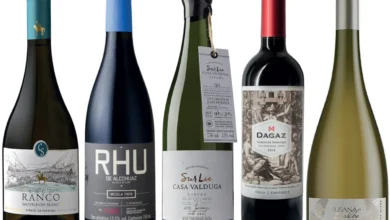
A recurring trend across the franchise is a disconnect between the cast’s portrayed net worth and their liquid assets—specifically, the wine bottles featured on their dinner tables. Industry professionals and wine educators often note that the wines consumed on screen are rarely the rare, high-end vintages one might expect of the "0.1 percent." Instead, they are frequently mass-market, high-alcohol, and high-sugar California Cabernet Sauvignons, often retailing at accessible price points.
The Parkerization of American Palates
To understand why a cast member might select a $22 bottle of wine while wearing thousands of dollars in jewelry, one must look back to the late 20th century and the rise of critic Robert Parker. In 1978, Parker launched a newsletter that would evolve into The Wine Advocate. By introducing a 100-point scoring system, he transformed wine buying from an intimidating, subjective endeavor into a clear, grade-based market.
Wineries quickly discovered that a high score from Parker could lead to an immediate sell-out. To chase these scores, producers shifted their techniques to favor the "Parker palate": wines with higher alcohol content, lower acidity, and a pronounced, fruit-forward sweetness. This phenomenon, often dubbed "Parkerization," homogenized the flavor profiles of many domestic wines. The influence of this system allowed consumers—including reality stars and the general public alike—to bypass the traditional development of individual taste in favor of a standardized metric of quality.
Economics and the Branding of Luxury
The wine industry’s reliance on these established metrics creates a unique paradox for the ultra-wealthy. In the world of high-fashion and real estate, "luxury" is defined by exclusivity. In the wine market, however, status is often signaled by brand recognition rather than rarity.
Brands like Caymus, frequently spotted in the homes of various cast members, occupy a specific space in the market: they are expensive enough to signal status to the average consumer, yet they maintain wide distribution, making them easily accessible. This serves a dual purpose for a reality television production. It provides a recognizable "prestige" label for the viewer, while ensuring the product is easily sourced by production teams.
The potential for product placement cannot be ignored. The Wonderful Company, which owns the Justin brand, has a long history of integrating its products into entertainment. While definitive confirmation of paid placement on the show is often opaque, the presence of specific, high-visibility brands on dinner tables aligns with standard Hollywood marketing strategies. For a winery, the exposure of a bottle in a heated, highly viewed social confrontation provides a level of brand retention that traditional advertising cannot match.
A History of "Housewife" Vintages
The relationship between the franchise and the wine industry extends beyond consumption; it has become an entrepreneurial venture. Since 2011, at least ten cast members have launched their own wine brands. The results, however, have been mixed.
The business model typically relies on the star’s personal brand to drive sales. For instance, in 2011, Ramona Singer of The Real Housewives of New York launched a Pinot Grigio line, capitalizing on her on-screen persona. Bethenny Frankel’s "Skinnygirl" empire proved to be the exception, evolving into a massive, multi-million-dollar success story. Conversely, many other ventures—such as those launched by Lisa Rinna—have struggled to maintain longevity. The failure of these brands often stems from the fact that they are treated as extensions of a social media presence rather than as products designed for a competitive, cooling wine market.
Market Realities and the Industry Downturn
The broader U.S. wine industry is currently facing its most significant downturn since the 2008 financial crisis. The 2026 State of the U.S. Wine Industry report by Silicon Valley Bank indicated that 60 percent of industry respondents reported a significant oversupply of wine. As production outpaces consumption, the market has become increasingly saturated, forcing smaller, boutique producers to sell at cost while larger corporations with massive distribution networks dominate shelf space.
This economic climate underscores the irony of the "Housewife" wine aesthetic. While the industry suffers from an excess of inventory and a changing demographic of drinkers, the show continues to perpetuate the consumption of mass-market, high-sugar, and high-alcohol wines.
From an academic perspective, this behavior is supported by findings in the Journal of Wine Economics, which suggests that the correlation between price and consumer enjoyment is remarkably small. Without expert-level training, the average consumer—even one with significant financial resources—often derives as much pleasure from a $20 bottle as a $200 bottle.
Implications for Future Consumption
The continued reliance on these specific wine categories suggests that for the ultra-wealthy, the wine itself is not the primary experience. Rather, it is the performance of luxury that takes center stage. When a cast member selects a bottle, they are choosing a symbol that their audience understands, rather than participating in the nuanced, often obscure world of high-end, limited-production viticulture.
As the Bravo franchise continues to expand into new markets and seasons, the cycle of product exposure and brand launches will likely persist. Whether the industry can reconcile its need for prestige with the reality of a changing, more discerning consumer base remains to be seen. For now, the "Housewife" wine choice remains a testament to the fact that while money can buy many things, it does not necessarily guarantee a refined palate, nor does it equate to an understanding of the complex, global economics of the wine trade.
The fascination with these choices—and the subsequent online discourse they generate—serves as a reminder of how deeply ingrained branding is in the American consumer psyche. Whether it is a $22 Cabernet Sauvignon or a custom couture gown, the choices made by reality stars reflect a culture that prioritizes immediate, recognizable status markers over the intangible, ephemeral qualities that define traditional luxury. Ultimately, the wine on the table is never just a drink; it is a prop in a much larger, scripted, and highly profitable performance of wealth.