Indonesia, an archipelagic nation boasting vast maritime territories, continues to grapple with a persistent paradox: despite its status as a global powerhouse in marine resources, the consumption of fish among its population remains starkly uneven. Recent data from the 2025 National Socio-Economic Survey (Susenas), conducted by the Central Statistics Agency (BPS), has shed light on this significant geographical disparity, prompting urgent calls from regulatory bodies to bridge the nutritional divide.
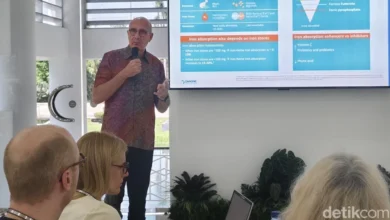
The findings were brought to the forefront during a talk show commemorating World Food Day, held at the headquarters of the Indonesian Food and Drug Authority (BPOM) on Tuesday, October 27, 2026. BPOM Head Taruna Ikrar emphasized that while national trends in fish consumption are trending upward, the underlying data reveals deep-seated structural challenges in logistics, infrastructure, and dietary habits across the archipelago.
A Modest Rise Amidst Persistent Gaps
According to official figures presented by Taruna Ikrar, national fish consumption rose from 25.31 kilograms per capita per year in 2024 to 26.8 kilograms in 2025. This represents a growth rate of approximately 3.05 percent. While this upward trajectory is technically positive, reflecting increased public awareness regarding the nutritional benefits of seafood, it masks a fragmented reality.
The granular data from the 2025 Susenas survey underscores that the "national average" is an incomplete metric. In regions with direct access to abundant marine resources, such as North Sulawesi, consumption levels soar to 48.97 kilograms per capita annually. Conversely, in the densely populated provinces of Java, consumption fluctuates between 16 and 27 kilograms. The most alarming figures, however, originate from landlocked or high-altitude regions such as the Papua Pegunungan province, where annual per capita consumption drops to a mere 10.66 kilograms.
This disparity suggests that for millions of Indonesians, particularly in the interior regions, fish remains a luxury item rather than a dietary staple, effectively limiting access to essential protein sources for a large segment of the population.
The Logistics Bottleneck: Why Geography Dictates Nutrition
The primary culprit behind this uneven consumption pattern is the logistical hurdle of maintaining a cold chain across thousands of islands and vast terrestrial distances. Indonesia’s geography—a sprawling archipelago—requires a sophisticated and robust cold chain infrastructure to transport highly perishable goods like fresh fish from coastal landing sites to inland markets.
Experts have long argued that the current lack of refrigerated storage and specialized transport at the local level results in significant post-harvest losses and increased costs. When fish is transported without adequate temperature control, its quality degrades rapidly, leading to either spoilage or the necessity of heavy salting and drying, which changes the nutritional profile and consumer appeal of the product.
"The inequality in fish consumption across regions is a clear indicator of systemic challenges in distribution and the absence of an integrated cold chain," Taruna Ikrar stated during his presentation. He noted that the inability to guarantee the safety and quality of fresh fish in non-coastal areas forces consumers to rely on alternative protein sources, which are often less nutritious or more expensive.
Technological Intervention as a Solution
To address these barriers, the government and the food industry are looking toward advanced food processing technologies. The focus is not merely on increasing production, but on transforming the way fish is distributed and consumed.
One of the most promising avenues highlighted by BPOM is the use of commercial sterilization for canned fish products. Modern food technology allows for the processing of marine products in a way that significantly extends shelf life without compromising safety. Contrary to common public misconceptions about canned goods, these products often retain their nutritional integrity.
Taruna Ikrar highlighted that sterilization technology, when applied correctly, maintains the concentration of essential proteins and long-chain omega-3 fatty acids—nutrients critical for neurological health, cognitive function, and long-term developmental outcomes. By removing the need for refrigeration during transport, canned and processed fish products can serve as a vital "bridge" to provide high-quality protein to remote or underdeveloped regions, effectively bypassing the constraints of the traditional cold chain.
Nutritional Implications and Public Health
The push to increase fish consumption is not merely an economic or agricultural goal; it is a critical public health objective. Indonesia is currently striving to reduce stunting rates and improve the cognitive development of its younger generation.
Fish is a primary source of high-quality protein, vitamin D, and omega-3 fatty acids, which are essential for brain health. Research cited by health officials indicates that consistent intake of these nutrients is correlated with improved memory retention and better cognitive performance, particularly in children. The current disparity in fish consumption means that children in landlocked provinces may be at a structural disadvantage compared to their counterparts in coastal regions, potentially impacting long-term national productivity and health outcomes.
By diversifying the forms in which fish is available—such as high-quality, processed shelf-stable products—the government hopes to democratize access to these nutrients, ensuring that the health benefits of Indonesia’s maritime bounty are not geographically restricted.
Chronology and Regulatory Context
The government’s heightened focus on this issue follows a multi-year effort to stabilize food security in the wake of global supply chain disruptions.
- 2024: National consumption data shows a baseline of 25.31 kg/capita. Policy discussions begin regarding the strengthening of the domestic fish market.
- Early 2025: BPS conducts the comprehensive Susenas survey, which identifies the specific regional disparities that would later form the basis of the 2026 report.
- Mid-2025: Regulatory reviews at BPOM identify the need for better standards in food processing technology to ensure that "shelf-stable" does not mean "nutrient-poor."
- October 2026: During World Food Day, the results of the 2025 survey are officially presented by the Head of BPOM, marking a shift toward policy interventions that prioritize distribution innovation and food technology.
Future Outlook and Policy Recommendations
To effectively narrow the gap, experts suggest a three-pronged approach:
- Investment in Cold Chain Infrastructure: Developing regional hubs with cold storage facilities to allow for the effective distribution of fresh fish.
- Expansion of Safe Processing: Promoting the adoption of advanced, safe, and nutritious processing methods, such as retort-pouch packaging and commercial sterilization, which allow for a longer shelf life without the need for harmful chemical preservatives.
- Public Education Campaigns: Addressing the stigma surrounding processed food by educating the public on how modern technology preserves nutritional value, thereby increasing the acceptance of non-fresh, shelf-stable fish products.
The challenge ahead for the Indonesian government is to transform the nation’s maritime potential into a tangible nutritional reality for all citizens. As the country moves toward 2030, the ability to harmonize logistics, food technology, and public health policy will be the deciding factor in whether Indonesia can successfully bridge the gap between its abundant seas and the dinner tables of its most remote populations.
While the 3.05 percent increase in national consumption is a start, it is clear that the path to true equity requires a fundamental shift in how the nation manages its most precious resource. By focusing on technological innovation and logistical efficiency, Indonesia aims to ensure that geography is no longer a determinant of nutritional status, but rather a foundation for a healthier, more robust, and better-nourished citizenry.