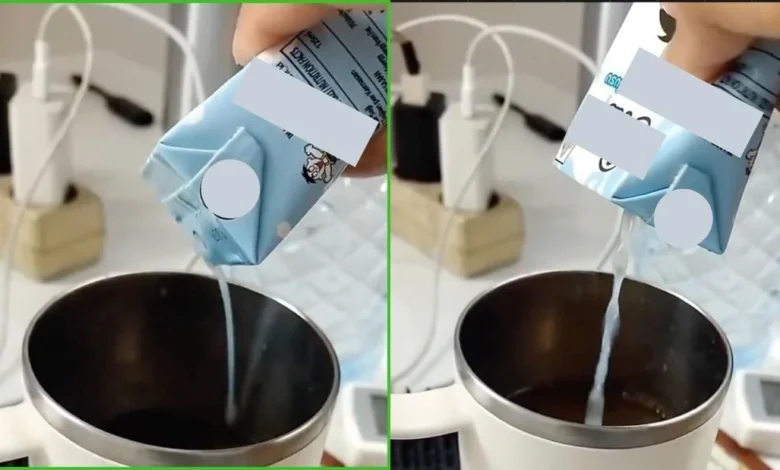
The debate surrounding the nutritional quality of school-provided beverages has recently gained significant traction following public scrutiny of the Makan Bergizi Gratis (MBG) program in Bogor. At the heart of this controversy is the use of 125 ml packaged drinks labeled as "milk-flavored beverages," which critics argue fall short of the nutritional standards expected for growing children. With labels revealing a composition consisting of 86 percent water, significant amounts of sugar, and a mere 1 percent skim milk powder, the incident has reignited a broader conversation regarding food labeling standards, regulatory classifications, and the responsibility of public health programs to ensure the quality of nutritional interventions.
The Bogor Incident: A Catalyst for Public Scrutiny
The discourse originated from observations made on social media platforms, where parents and nutrition advocates scrutinized the contents of beverage cartons distributed to kindergarten students under the MBG program. While the program was intended to bolster student nutrition, the discovery that the distributed product was not, by nutritional definition, "milk," led to widespread criticism.
The primary concern among parents and health observers is the disparity between the product’s marketing—which uses the word "susu" (milk)—and its actual nutritional composition. The ingredient list explicitly states that water is the primary component at 86 percent, followed by sugar, and then a nominal 1 percent of skim milk powder. This finding prompted immediate questions regarding whether such products should be classified as dairy or merely as sugar-sweetened beverages.
Chronology and Regulatory Context
The timeline of these concerns dates back to earlier periods of the MBG pilot phase, gaining renewed urgency as the program scaled up in 2026. Following the initial social media backlash, the Badan Gizi Nasional (BGN) issued clarifications to address the confusion. By April 2026, the BGN reiterated that the program strictly prohibits the use of imported products and mandates adherence to specific nutritional guidelines.
The regulatory framework governing these products is established by the Indonesian Food and Drug Authority (BPOM). According to BPOM Regulation Number 13 of 2023 concerning Food Categories, there is a clear distinction between "milk and dairy products" and "milk-flavored beverages."
Dairy products, categorized under 01.1, encompass liquid milk, skim milk, full cream, and reconstituted milk. These products must meet rigorous standards regarding fat content, protein levels, and the absence of non-dairy additives. In contrast, "milk-flavored beverages" are relegated to category 14.1.4, which covers "flavored water-based beverages." Under this classification, the definition is clear: a beverage is not a dairy product simply because it contains a trace amount of milk. The presence of milk in these beverages is intended solely for flavoring, and the product is fundamentally distinct from the dairy category in terms of both nutritional profile and intended use.
The Anatomy of a Label: Why 1 Percent Matters
To understand the public outcry, one must examine how food labeling works under international and local standards. BPOM regulations stipulate that ingredients must be listed in descending order by weight. When a label displays water as the primary ingredient followed by sugar, and places skim milk powder near the end of the list at 1 percent, it signifies that the nutritional value is primarily caloric from sugar, rather than protein or calcium-dense from dairy.
The fact that sugar is listed before the 1 percent skim milk powder indicates that the sugar content exceeds 1 percent, though the exact quantity remains obscured. From a nutritional standpoint, this is critical. For children in developmental stages, the consumption of sugar-sweetened beverages masquerading as dairy products poses long-term health risks, including metabolic issues and a failure to meet the intended protein requirements set by the MBG program.
Official Standards and Nutritional Requirements for MBG
The Badan Gizi Nasional (BGN) has established comprehensive technical guidelines for the procurement and distribution of milk for the MBG program, as outlined in the 2025 technical standards and the 2026 fiscal year implementation manual. These documents are explicit in their requirements:
- Primary Ingredient: The product must be derived from fresh cow’s milk.
- Minimum Content: The product must contain at least 20 percent fresh/native dairy milk (SSDN).
- Composition: The product must be full cream or plain, explicitly forbidding added sugar or artificial colorings.
- Nutritional Benchmarks: The milk must maintain a minimum of 3 percent fat, 2.7 percent protein, and 7.8 percent solids-non-fat (SNF).
By these standards, the "milk-flavored" products identified in the Bogor controversy fail on every metric. They do not meet the 20 percent fresh milk threshold, they contain added sugar, and they lack the necessary protein-to-water ratio required to be considered a nutritional supplement for children. The BGN has emphasized that these products do not align with the established menu for students, and their presence in the distribution chain appears to be a deviation from the official procurement protocols.
Implications for Public Health and Procurement
The incident highlights a significant gap in the oversight of large-scale public feeding programs. When procurement processes rely on generic descriptions or fail to audit the specific nutritional labels of distributed items, the integrity of the program is compromised. The reliance on "milk-flavored" beverages—which are essentially flavored water—rather than actual dairy products, undermines the primary goal of the MBG program, which is to combat stunting and malnutrition.
Analysts suggest that the issue is not merely one of labeling, but of systemic accountability. For a program of the magnitude of the MBG, every component of the meal must be subject to strict quality control. The confusion caused by the labeling of these products serves as a reminder of the need for greater transparency in the food industry. Consumers and public programs alike are often misled by marketing terminology that highlights a small ingredient (like "milk") while masking the bulk of the product’s composition (water and sugar).
Moving Forward: Strengthening Regulatory Oversight
As the Indonesian government continues to expand the MBG program, several steps are necessary to prevent a recurrence of this issue. First, there must be a tighter integration between the procurement office and the nutritional experts at the BGN. This ensures that every item purchased meets the technical specifications defined in the 2025 and 2026 guidelines.
Second, BPOM’s role in auditing school-distributed food must be intensified. While BPOM provides the framework, the monitoring of specific products in the field requires active cooperation with local educational authorities. Third, there is an educational component: parents and school administrators need to be empowered to read labels critically. By understanding that an ingredient list starting with water and sugar is not equivalent to a dairy product, stakeholders can better advocate for the health of the students.
In conclusion, the "milk-flavored beverage" controversy serves as a critical case study in the intersection of public policy and food labeling. The distinction between a dairy product and a flavored beverage is not merely a technicality; it is a matter of child health and fiscal accountability. As the program matures, the focus must shift from quantity—the distribution of a drink—to the quality of that drink, ensuring that the next generation receives the nutrition they were promised, rather than empty calories disguised under the banner of health. Moving forward, the adherence to the 20 percent fresh milk standard and the total elimination of sugar-laden substitutes will be the true test of the program’s commitment to the nation’s children.