From Raw Ingredients to Market-Ready: Unveiling the Rigorous Production Stages of Formula Milk


Jakarta – The journey of formula milk from its inception as raw ingredients to its final placement on store shelves is a complex and meticulously controlled process, far removed from the simplistic notion of merely mixing components. Each stage is precisely engineered to guarantee that the nutritional integrity of the formulation is maintained while ensuring the utmost safety for consumers. This intricate production lifecycle, observed at a leading facility, highlights the scientific rigor and quality control measures inherent in manufacturing infant and specialized nutrition products.
The production of formula milk involves a multi-stage process designed to preserve nutritional value and ensure product safety. This detailed examination reveals the sophisticated steps undertaken, from the initial blending of raw materials to the final release for distribution, emphasizing the commitment to quality and consumer well-being.
The Foundation: Crafting the Base Powder
The genesis of formula milk lies in the creation of a "base powder." This initial phase involves the precise amalgamation of primary raw materials, including crucial sources of protein, carbohydrates, and fats. These components are carefully combined to form a homogenous liquid solution. The quality of this base powder is paramount, serving as the fundamental building block that dictates the characteristics and nutritional profile of the final product.
Following the meticulous blending of ingredients, the liquid solution undergoes pasteurization. This critical step is implemented to eliminate any potential microbiological contaminants, thereby safeguarding the health of the end consumer. Subsequently, the mixture is subjected to homogenization. This process ensures that fats, proteins, and carbohydrates are uniformly distributed throughout the liquid. The outcome is a consistent and stable composition, a prerequisite for seamless progression into the subsequent manufacturing stages.
Lastiani Rosalina, Factory Director of Danone Specialized Nutrition East Region, elaborated on this foundational stage during a talk show at the Danone Specialized Nutrition Prambanan Plant in Central Java on Wednesday, July 8, 2026. "After mixing into a single solution, we pasteurize it to ensure the micro-content and everything is safe. After that, it goes through a homogenization process so that fats, proteins, and carbohydrates are mixed homogeneously," she explained to detikcom. This dual process of pasteurization and homogenization is vital for both safety and consistency.
The base powder, once created, is not immediately used. Instead, it embarks on a rigorous journey of quality assurance. A comprehensive series of tests are conducted, evaluating macronutrient and micronutrient content, as well as physical and chemical characteristics. Critically, microbiological safety is also assessed. Only after successfully meeting all established quality standards can the base powder proceed to the next phase of production. This stringent testing regimen underscores the industry’s commitment to delivering products that are both nutritionally sound and safe for consumption, particularly for vulnerable populations like infants.
Transforming Liquid to Powder: The Spray Drying Process
The homogenous liquid mixture, having passed its initial quality checks, then enters the spray drying phase. This sophisticated technique involves atomizing the liquid into fine droplets and exposing them to a stream of hot air, typically around 165 degrees Celsius. As the moisture evaporates rapidly, the droplets transform into fine, granular milk powder.
This spray drying process is not merely about altering the physical state from liquid to powder. It plays a crucial role in reducing the moisture content to a minimal level, which significantly enhances the product’s stability during storage and transportation. The low moisture environment inhibits microbial growth and chemical degradation, extending the shelf life of the formula.

The resulting base powder undergoes further scrutiny. Before being incorporated into specific product formulations, it is subjected to another round of comprehensive testing. This includes detailed analysis of its nutritional composition, physical properties like particle size and solubility, and its overall microbiological safety. The rigorous testing at this stage ensures that the foundation for all subsequent formulations is of the highest standard.
Precision Formulation: The Dry Blending Stage
The qualified base powder, having successfully navigated the initial quality control checkpoints, is then transferred to the dry blending area. This is where the magic of specific formulation truly comes into play. At this stage, a precise array of additional nutrients, vitamins, minerals, and flavors are incorporated according to the unique specifications of each individual product.
The composition of formula milk varies significantly based on the intended consumer. For instance, formulas designed for different age groups of infants (e.g., 3+ months, 5+ months) will have distinct nutritional requirements. Similarly, formulas tailored for expectant mothers or lactating women will possess different nutrient profiles. The dry blending process meticulously accounts for these variations, adding the exact quantities of micronutrients and flavorings required to meet these specific dietary needs.
"If we are making a vanilla formula, we add vitamins, minerals, and flavors according to its formula, whether it is for 3+, 5+, or for breastfeeding mothers. Of course, the formulas are different," stated Lastiani Rosalina, emphasizing the tailored nature of the product development.
The blending itself is executed using specialized equipment, such as paddle blenders, operating for a precisely calibrated duration. This controlled mixing ensures that all added components are evenly distributed throughout the powder. The objective is to guarantee that every single package of the final product contains a consistent and accurate nutritional composition, adhering strictly to the established formulation. This precision is vital for delivering predictable nutritional benefits to consumers.
Preserving Freshness: Nitrogen Gas Packaging
Once the dry blending process is complete, the formula milk powder is carefully transferred into its primary packaging, typically an aluminum pouch. A critical step at this juncture is the injection of nitrogen gas. This inert gas displaces the oxygen within the packaging. By significantly reducing the presence of oxygen, the nitrogen flushing process effectively inhibits oxidation reactions that can degrade the product’s quality, flavor, and nutritional value over time. This measure is crucial for maintaining the product’s freshness and efficacy throughout its shelf life.
Following the nitrogen flushing and sealing of the inner pouch, the product is then placed into its outer packaging, often a folding box. A sophisticated barcode system is implemented at this stage. This system serves as a vital quality control mechanism, verifying that the contents of the package—including the specific flavor and formula type—accurately match the external labeling. This meticulous cross-referencing ensures that consumers receive the product they expect and that no errors occur during the packaging process. This step is an integral part of the pre-distribution quality assurance protocols.
The Final Gatekeeper: End-of-Line Testing
Even after packaging, the journey of the formula milk is not yet complete. Before any batch can be released for distribution to the market, it must undergo a final release process. This comprehensive assessment, often referred to as "final release testing," is designed to confirm that all product specifications align with the company’s stringent quality standards.
This final stage involves a renewed examination of the product’s physical, chemical, and microbiological parameters. These tests serve as a final verification that the product is safe, stable, and nutritionally compliant. The entire final release process typically spans a period of four to five days. Only upon successfully passing these rigorous evaluations is the batch declared fit for distribution to retailers and ultimately, to consumers.
"Usually, we take four to five days for the release process. After it is declared successful, then the product is ready for distribution," confirmed Lastiani. This extended waiting period highlights the company’s commitment to an exhaustive quality assurance framework, ensuring that only products that meet the highest benchmarks reach the market.
Stratified Hygiene Control: A Three-Tiered Approach to Production Environments
Beyond the sequential production stages, the manufacturing facility itself is meticulously organized into three distinct zones, each defined by its level of hygiene control. This multi-tiered approach is a proactive strategy to minimize the risk of contamination throughout the production process. The zones are categorized as Low Care, Medium Care, and High Care areas, reflecting progressively stringent environmental controls.
Low Care Area: The Outer Sanctum
The Low Care area represents the most basic level of hygiene control within the facility. In this zone, the product is already contained within its packaging, meaning direct contact with the external environment is minimized. Activities typically performed here include secondary and tertiary packaging operations, such as boxing and palletizing. Despite the reduced risk of direct contamination, personnel entering this area are still required to adhere to basic hygiene protocols, including wearing designated work attire and changing footwear before entry. This ensures a baseline level of cleanliness is maintained even in areas with lower direct product exposure.
Medium Care Area: The Transitional Zone
The Medium Care area serves as a crucial transitional space, acting as a buffer before materials enter the core production processes. Here, operations such as "stripping" may occur, which involves removing outer layers of packaging from raw materials. While the product or raw material might not yet be in direct contact with the immediate production environment, hygiene protocols are significantly more rigorous than in the Low Care area. This transitional step is designed to manage the entry of materials into more sensitive zones while maintaining elevated cleanliness standards.
High Care Area: The Epicenter of Purity
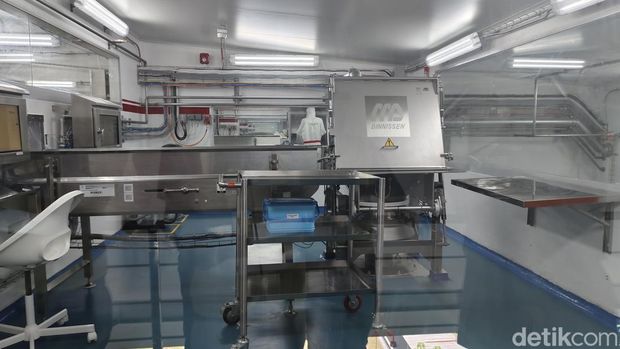
The High Care area is characterized by the most stringent level of environmental control. This zone encompasses the critical stages where raw materials and the product itself have direct interaction with the production environment. This includes processes from the initial dumping of raw ingredients to the final filling of the product into its primary packaging.
Within the High Care area, environmental parameters such as temperature, humidity, and air quality are meticulously monitored and controlled. Advanced air filtration systems (e.g., HEPA filters) are employed to maintain exceptionally clean air. Personnel working in this zone are required to wear comprehensive protective gear. This includes specialized clothing, masks, gloves, and dedicated footwear, all designed to prevent the introduction of any potential contaminants from the operators themselves into the highly sensitive production environment. Lastiani emphasized this point: "From dumping to filling, the regulation of air, temperature, and humidity is very strict. Operators must also use full protection so as not to contaminate the product." This dedication to maintaining a sterile environment in the High Care zone is fundamental to ensuring the safety and integrity of the formula milk.
The meticulous adherence to these multi-layered production stages and stratified hygiene controls underscores the sophisticated and science-driven approach employed in the manufacturing of formula milk. This commitment to quality assurance from raw ingredient sourcing to final product release is essential for building consumer trust and ensuring the health and well-being of the infants and individuals who rely on these specialized nutritional products. The entire process is a testament to the industry’s dedication to producing safe, high-quality, and nutritionally complete food products.