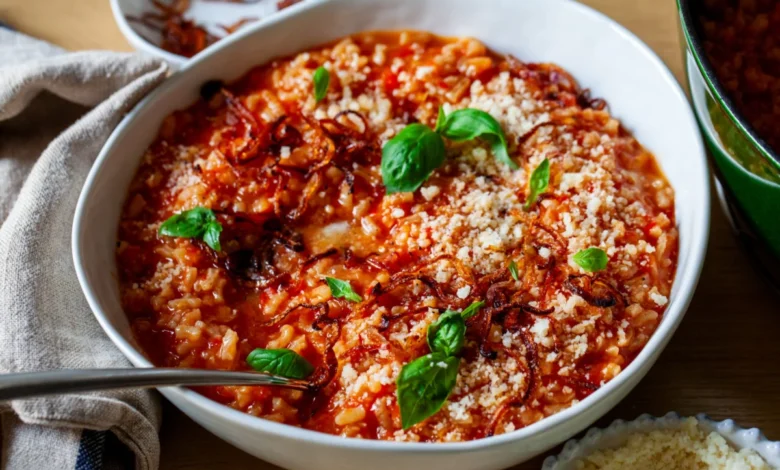
The transition from late summer to early autumn frequently brings a clash between seasonal retail marketing and actual meteorological conditions. While September often maintains high temperatures and abundant summer harvests, commercial retail sectors routinely introduce autumn-themed decor, heavy apparel, and spiced beverages weeks in advance. This early shift has generated notable consumer pushback from individuals seeking to preserve the availability of warm-weather produce, particularly fresh tomatoes, herbs, and light seasonal cooking staples. Culinary professionals and home cooking advocates emphasize that agricultural harvest schedules do not align with commercial retail calendars, creating an extended window for fresh, vibrant meals that utilize late-season crops.

Culinary Background and the Evolution of Risotto Preparation
Traditional Italian risotto preparation is historically associated with rigorous culinary techniques. Classic methodology dictates the continuous, labor-intensive addition of warm broth to short-grain rice—such as Arborio, Carnaroli, or Vialone Nano—accompanied by near-constant stirring, generous quantities of butter, and grated Parmigiano-Reggiano. Culinary historians trace this method to northern Italy, specifically Lombardy and Piedmont, where rice cultivation flourished due to the geography of the Po Valley.
However, contemporary culinary practices have challenged these long-held dogmas. Modern recipe development demonstrates that successful risotto does not strictly require constant stirring or even pre-warmed broth. Oven-baked variations of risotto have gained widespread acceptance among culinary educators and food journalists, proving that controlled thermal environments can gelatinize starches effectively while significantly reducing active kitchen labor. By combining toasted rice, aromatics, liquid, and fat in a heavy-bottomed, oven-safe vessel such as a Dutch oven, home cooks can achieve a creamy, emulsified texture with minimal supervision.

Recipe Innovation: Streamlining Tomato Risotto
The development of modern tomato risotto prioritizes purity of flavor by stripping away unnecessary heavy ingredients. Standard risotto recipes often rely on rich chicken or vegetable stocks as a base liquid. In contrast, streamlined summer iterations utilize the natural liquid and pulp of fresh, ripe tomatoes.
By utilizing a box grater to extract the pulp and juices of halved tomatoes while discarding the fibrous skins, cooks can generate a concentrated, brightly acidic base liquid. When combined with water rather than heavy stock, the pure essence of the tomato remains unmasked by animal fats or commercial bouillon flavorings. The addition of dry white wine provides the necessary acidity to balance the starch, while alliums such as garlic and red onion form the aromatic foundation.

The Role of Frizzled Red Onions as a Contemporary Garnish
Texture plays a critical role in balancing the creamy, uniform consistency of risotto. While traditional toppings frequently include cured meats such as pancetta, prosciutto, or crispy salami, alternative plant-based garnishes have emerged to add depth and crunch.
Frizzling thinly sliced red onions in olive oil over medium-high heat offers a multifaceted sensory contribution. Cooking the onions until they reach a deep golden brown and crisp texture alters their chemical composition, reducing harsh sulfurous compounds while caramelizing natural sugars. Dividing the crispy onions—incorporating a portion into the risotto base during its final resting phase and reserving the remainder as a crunchy surface garnish—infuses the dish with a fragrant, savory profile that bridges late-summer freshness with autumnal warmth.

Nutritional and Economic Implications of Seasonal Produce Utilization
The agricultural economy heavily relies on consumer demand aligning with regional harvest peaks. Nutritional studies consistently indicate that peak-season produce, particularly solanaceous crops like tomatoes, contains optimal concentrations of micronutrients, including lycopene, vitamin C, and potassium. Transporting and consuming vegetables during their natural harvest window also reduces the carbon footprint associated with out-of-season cold-chain logistics and greenhouse cultivation.
From an economic perspective, utilizing fresh tomatoes at the height of the late-summer glut provides cost-effective meal preparation for households. Farmers’ markets and local grocers frequently experience oversupply during September, resulting in favorable pricing for bulk produce purchases. Culinary experts note that preserving these flavors through simple, unmasked preparations maximizes the nutritional and economic value of seasonal grocery budgets.

Broader Cultural Impact of Seasonal Creep
The phenomenon of "seasonal creep"—where commercial entities advance holiday and seasonal transitions months ahead of schedule—has been the subject of cultural analysis by sociologists and consumer behaviorists. Retail data indicates that Halloween and autumn promotional campaigns now launch as early as late July or August. This acceleration often creates psychological friction for consumers who prefer to experience seasonal shifts organically.
Food writers and lifestyle journalists frequently utilize culinary platforms to push back against premature seasonal transitions. By intentionally focusing recipes on late-summer staples like tomatoes, basil, and fresh herbs, home cooks establish a deliberate ritual of resistance against commercial timelines. This culinary grounding allows individuals to maintain a connection to natural weather patterns and agricultural realities, reinforcing the value of seasonal mindfulness in everyday life.