Klaten, Indonesia – Anemia, particularly iron deficiency anemia, continues to be a significant global health concern, with Indonesia among the nations grappling with its prevalence. While traditional prevention strategies have largely concentrated on increasing dietary iron intake, a growing understanding highlights that simply consuming enough iron does not guarantee its optimal utilization by the body. The efficacy of iron absorption and the health of the gut microbiome are now recognized as critical, synergistic factors in combating this widespread nutritional deficiency.
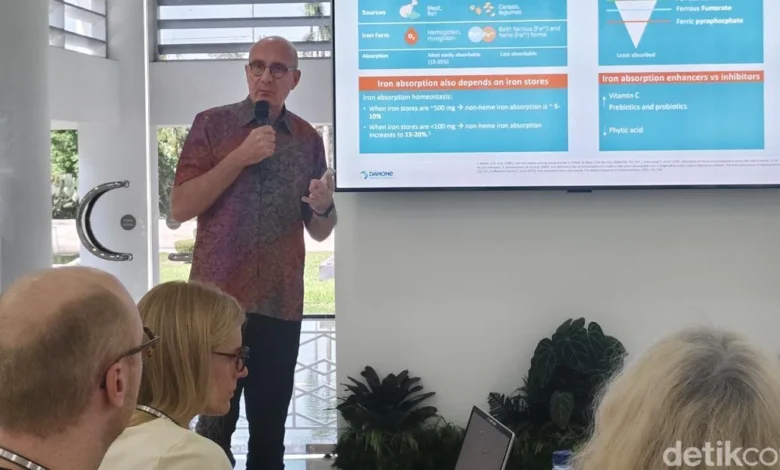
Laurent Clément, Vice President of Danone Research & Innovation for Southeast Asia, emphasized this evolving perspective during a recent talk show held at the Danone Specialized Nutrition Prambanan factory in Central Java on Wednesday, July 8, 2026. He articulated that the challenge in addressing anemia extends beyond ensuring sufficient iron availability to guaranteeing its efficient absorption without disrupting the delicate balance of the gut microbiota.
"Iron must be available in adequate quantities, but what is more critical is how the body can effectively absorb it," Clément stated, underscoring a fundamental shift in understanding iron metabolism and its impact on overall health.
Understanding the Nuances of Iron Absorption: Dietary Sources Matter
The bioavailability of iron, or the extent to which it can be absorbed and utilized by the body, varies significantly depending on its source. Clément elaborated on the disparities in iron absorption rates from different food types. He explained that iron derived from plant-based sources (non-heme iron) is generally less readily absorbed compared to iron from animal products (heme iron). This difference is influenced by a complex interplay of factors, including the presence of compounds that either inhibit or enhance iron absorption.
According to Clément, iron from plant-based foods rich in phytates or polyphenols may only be absorbed at rates as low as 2% to 5%. In stark contrast, iron from animal sources, such as red meat, can achieve absorption levels ranging from 20% to 30%. This substantial variation underscores the importance of dietary choices beyond mere quantity.
"The difference in absorption can be significant, ranging from approximately 2% to as high as 30%, depending on the iron source," Clément pointed out. This disparity has profound implications for public health recommendations, suggesting that strategies solely focused on increasing iron-rich plant foods might be less effective than anticipated if absorption enhancers are not considered.
Enhancers and Inhibitors: The Role of Concomitant Nutrients
Beyond the inherent properties of the food source, the absorption of iron is also profoundly influenced by other nutrients consumed concurrently. Vitamin C, for instance, is a well-established enhancer of iron absorption, particularly for non-heme iron found in plant-based foods and fortified products. Its presence can significantly boost the amount of iron the body can extract from these sources.
Conversely, compounds like phytates and polyphenols, often found in whole grains, legumes, and certain beverages like tea and coffee, can act as inhibitors, forming complexes with iron that hinder its absorption. This antagonistic relationship highlights the critical need for mindful food pairing to optimize iron uptake. For example, consuming vitamin C-rich fruits like oranges or bell peppers alongside iron-rich plant-based meals can significantly improve the overall iron absorption from that meal.
The Unabsorbed Iron Dilemma: Impact on Gut Microbiota Equilibrium
A crucial aspect of iron metabolism that is gaining increasing attention is the fate of iron that is not successfully absorbed by the body. This unabsorbed iron remains within the gastrointestinal tract, and its presence can have a considerable impact on the delicate balance of the gut microbiota.
Clément explained that this residual iron can alter the microbial ecosystem, potentially favoring the growth of pathogenic bacteria over beneficial ones. "What is not absorbed will remain in the gut. Therefore, we need to ensure optimal iron absorption while also maintaining the balance of the microbiota," he stated.
The gut microbiota, a complex community of microorganisms residing in the digestive tract, plays a vital role in numerous physiological processes, including nutrient metabolism, immune system development, and protection against pathogens. Beneficial bacteria, such as Bifidobacteria, are essential for maintaining gut health. An imbalance, or dysbiosis, in the microbiota can lead to various health issues, including digestive disorders and increased susceptibility to infections.
When unabsorbed iron accumulates in the gut, it can create an environment that promotes the proliferation of certain bacteria, including those that can produce harmful substances. This can disrupt the symbiotic relationship between the host and its microbes, potentially leading to inflammation and compromised gut barrier function.
Innovative Nutritional Approaches: Fortification for Enhanced Absorption and Gut Health
In response to these complex nutritional challenges, the field of nutritional science is witnessing a paradigm shift. Innovations in fortified food products are moving beyond simply increasing iron content. The focus is now on a more holistic approach that aims to enhance iron absorption while simultaneously supporting gut health.
Laurent ClÃément highlighted this evolution, stating that modern fortification strategies are increasingly incorporating a combination of iron, vitamin C, and prebiotic fibers into a single formulation. This multi-pronged approach is designed not only to boost the amount of iron consumed but also to significantly improve its absorption and contribute to the maintenance of a healthy digestive system.
The synergistic action of these components is key. Vitamin C acts as a potent enhancer, boosting the absorption of non-heme iron, which is prevalent in many fortified foods and plant-based diets. By increasing the efficiency of iron uptake, more iron is available for hemoglobin synthesis, the protein in red blood cells responsible for oxygen transport, thereby directly addressing iron deficiency anemia.
Prebiotic fibers play a complementary yet crucial role. These non-digestible carbohydrates serve as a food source for beneficial gut bacteria, particularly Bifidobacteria. By selectively feeding these good bacteria, prebiotics help to foster a balanced gut microbial community. A healthy microbiota strengthens the gut’s protective barrier, preventing the entry of harmful substances, and also plays a role in modulating the immune response.
Furthermore, the fermentation of prebiotic fibers by beneficial bacteria in the gut produces short-chain fatty acids (SCFAs), such as butyrate. These SCFAs lower the pH of the intestinal environment, creating an acidic milieu that enhances the solubility and, consequently, the bioavailability and absorption of iron. Several scientific studies have corroborated this mechanism, demonstrating how SCFAs can optimize the body’s utilization of iron.
This comprehensive approach is particularly vital because, as Clément reiterated, unabsorbed iron can disrupt the gut environment. In excessive amounts, it can alter the composition of the microbiota, favoring the growth of pathogenic bacteria and diminishing the presence of beneficial ones. This imbalance increases the risk of gastrointestinal disturbances and infections.
"Our objective is not solely to increase iron absorption but also to protect gut health through the maintenance of a balanced gut microbiota," Clément emphasized. He concluded that the combination of iron, vitamin C, and prebiotic fibers in fortified products represents one of the most advanced strategies for tackling iron deficiency anemia, with each component working in concert to provide essential nutrients, enhance absorption, and support intestinal well-being.
Background and Context: The Persistent Challenge of Anemia
Iron deficiency anemia remains a formidable public health challenge worldwide, particularly affecting women of reproductive age, infants, and young children. The World Health Organization (WHO) estimates that globally, about 1.62 billion people, or 22% of the population, are affected by anemia. In Southeast Asia, the prevalence can be significantly higher in certain vulnerable groups.
The Indonesian Ministry of Health has consistently identified anemia as a priority issue, with efforts focused on various interventions, including iron supplementation programs, food fortification, and public health education campaigns. Despite these ongoing efforts, the complex interplay of dietary habits, socioeconomic factors, and underlying health conditions means that anemia continues to be a persistent problem.
The talk show event at the Danone Specialized Nutrition factory in Prambanan served as a platform to disseminate current scientific insights and discuss innovative solutions. The choice of venue, a facility dedicated to specialized nutrition, underscored the industry’s commitment to addressing critical health issues through product development and research. The date of the event, July 8, 2026, places it within a contemporary context, reflecting ongoing scientific advancements and their application to public health.
Broader Impact and Implications
The insights shared by Laurent Clément have significant implications for public health policy, dietary recommendations, and the food industry.
- Dietary Guidance: It suggests that future dietary guidelines should move beyond simply recommending iron-rich foods to emphasizing food pairings that enhance absorption, such as combining vitamin C sources with iron-rich meals. Education on compounds that inhibit iron absorption, like excessive consumption of tea or coffee with meals, may also be beneficial.
- Fortification Strategies: The food industry has a pivotal role to play. Developing fortified foods that incorporate iron, vitamin C, and prebiotics offers a powerful tool to combat anemia, particularly in populations where dietary diversity or access to nutrient-rich foods is limited. This approach addresses the "hidden hunger" where individuals may consume enough calories but lack essential micronutrients.
- Gut Health Awareness: The emphasis on the gut microbiota highlights its integral role in overall health. Public health campaigns may need to incorporate messages about the importance of gut health and how dietary choices can influence it, further strengthening the link between diet, the microbiome, and disease prevention.
- Economic and Social Impact: Anemia, especially in children, can have long-term consequences on cognitive development, learning ability, and overall productivity. By effectively reducing anemia rates, societies can expect improvements in educational outcomes and economic productivity.
The research and innovation discussed by Clément represent a sophisticated understanding of nutrient interaction and its impact on human health. As the scientific community continues to unravel the complexities of the human gut and its microbiome, such integrated approaches to nutrition are poised to play an increasingly vital role in addressing global health challenges like iron deficiency anemia. The ongoing efforts to develop and promote these advanced nutritional solutions are crucial steps towards a healthier future.