The Essential Reading List: Transforming Our Food Systems for a Sustainable Future

The global food system currently stands at a critical juncture, facing the dual pressures of climate change and a public health crisis defined by both malnutrition and the rise of ultra-processed food consumption. As the calendar year draws to a close, a curated selection of literature has emerged to provide a roadmap for policymakers, practitioners, and consumers alike. These works collectively argue that the path toward a sustainable future requires a paradigm shift—moving from an industrialised, extraction-based model to one that prioritizes soil health, social equity, and biological diversity.

The Science of Soil and Gut Health
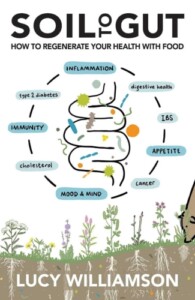
The connection between the health of the soil and the biological well-being of the human gut is no longer a fringe theory; it is a burgeoning field of nutritional science. In Soil to Gut: How to Regenerate Your Health with Food, Dr. Lucy Williamson, a veterinarian turned nutritionist, posits that the "hidden hunger" epidemic—a state where individuals consume sufficient calories but suffer from nutrient deficiencies—is a direct consequence of degraded agricultural soils.
Data from the Food and Agriculture Organization (FAO) suggests that approximately 33% of the world’s soils are already moderately to highly degraded. Dr. Williamson’s work serves as a critical bridge between environmental science and dietary practice. She argues that as soil vitality declines due to chemical-intensive farming, the nutrient density of the resulting crops decreases proportionally. By focusing on the gut microbiome as the interface between the environment and human health, the book advocates for a "whole health" approach, encouraging consumers to support farming systems that utilize regenerative practices to restore soil carbon and mineral content.
Industrialization and the Toxic Food Landscape
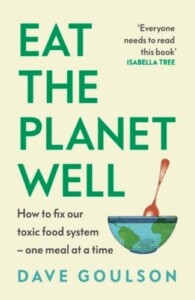
While soil health provides the foundation, the current industrial food system is increasingly criticized for its systemic toxicity. In Eat the Planet Well: How to Fix Our Toxic Food System – One Meal at a Time, environmentalist Dave Goulson addresses the intersection of public health and ecological destruction. Goulson presents a compelling analysis of how the widespread use of pesticides, synthetic fertilizers, and the proliferation of ultra-processed foods have created a cycle of environmental and physical degradation.
The implications of this system are far-reaching. According to the World Health Organization (WHO), non-communicable diseases (NCDs) are responsible for approximately 74% of all deaths globally, with dietary choices being a primary factor. Goulson’s examination of carbon footprints, land use, and the ethics of intensive animal agriculture serves as a call to action for systemic reform. His analysis emphasizes that sustainable change is not merely an individual choice but requires structural adjustments to how society values nature, water, and land rights.
Gender, Equity, and the Rebuilding of Food Systems
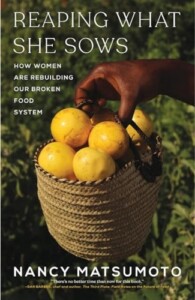
The movement to reform food production is increasingly being led by women who have historically been sidelined by industrial agricultural power structures. Nancy Matsumoto’s Reaping What She Sows: How Women Are Rebuilding Our Broken Food System highlights the role of gender in driving innovation. Matsumoto documents how women are pioneering cooperative movements and local grain economies to circumvent the hegemony of "Big Food."
The book provides a necessary critique of late-stage capitalism in agriculture, noting that women are disproportionately the ones developing resilient supply chains. By focusing on racial justice in agriculture and the restoration of local fisheries, Matsumoto illustrates that the "broken" system is not inevitable. Her findings are supported by the UN Women’s report on agriculture, which notes that if women had the same access to resources as men, agricultural yields in developing countries could increase by up to 30%, potentially reducing the number of hungry people in the world by 100–150 million.
Adapting to a Changing Climate: The Edimental Movement
Climate change has brought extreme weather patterns, including persistent droughts and heatwaves, that threaten traditional vegetable gardening. Harry Holding’s Eat Your Garden introduces the concept of "edimentals"—perennial plants that are both aesthetically pleasing and edible. As water restrictions become more common in the UK and beyond, the shift toward plants with established root systems is becoming a necessity rather than a stylistic choice.
This approach aligns with permaculture principles, which prioritize biodiversity and soil structure. By integrating edible species into ornamental garden design, Holding provides a practical solution to the "resource-heavy" gardening model. The shift to perennials reduces the need for annual tilling, which destroys soil structure and releases carbon into the atmosphere, offering a micro-level solution to macro-level environmental stressors.

Institutional Reform: Food as a Human Right
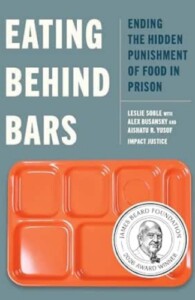
Perhaps the most harrowing critique of the current food system is found in Eating Behind Bars: Ending the Hidden Punishment of Food in Prison by Leslie Soble, Alex Busansky, and Aishatu R. Yusuf. The book documents the systemic failure to provide adequate nutrition in the American carceral system, framing food as a tool of punishment rather than a basic human necessity.
The investigation highlights the irony of incarcerated individuals working on industrial-scale prison farms to produce food for the mass market, while being served nutritionally void, often contaminated, meals themselves. This institutional failure underscores a broader societal apathy toward the fundamental needs of the vulnerable. The work of groups like Impact Justice is now shifting the discourse, proving that "food as medicine" programs can reduce recidivism and improve mental health outcomes, thereby creating safer communities.
Terroir, Microbes, and the Future of Tradition
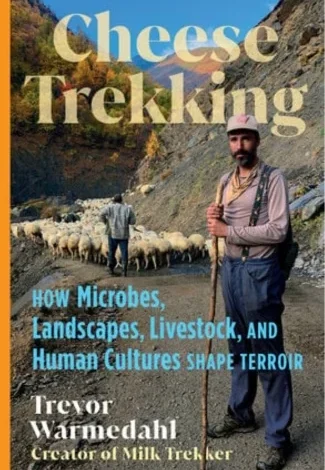
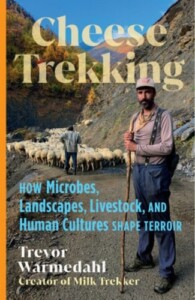
In Cheese Trekking, Trevor Wamedahl explores the concept of "deep terroir," arguing that the microorganisms present in a specific landscape are the true architects of flavor. Through his global study of traditional cheesemaking, Wamedahl challenges the standardized, sterilized processes of industrial dairy production.
His analysis is a testament to the survival of cultural knowledge. By examining the synergy between livestock, human culture, and microbial communities, Wamedahl provides a historical and scientific defense of biodiversity. His work suggests that as the world moves toward mass-produced food, the preservation of traditional methods acts as a biological "backup," maintaining the genetic and cultural diversity necessary for future food security.
Historical Context and Future Trajectories
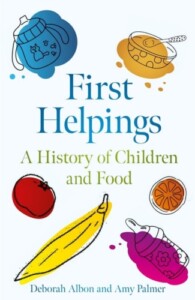
The history of how societies feed their youngest members is examined in First Helpings by Deborah Albon and Amy Palmer. By tracing the evolution of child nutrition from the medieval period to the present, the authors highlight how access to food has always been a reflection of social hierarchy. The book provides a sobering analysis of modern food poverty statistics in the UK, suggesting that despite technological advances, the fundamental challenge of ensuring equitable access remains unresolved.
Looking toward the future, Rob Hopkins’ How to Fall in Love with the Future serves as a psychological and practical guide to avoiding "climate despair." By providing concrete examples of successful local food systems—such as schools in France sourcing 80% of their food from local organic farms—Hopkins demonstrates that the transition to a sustainable future is technically and socially feasible.
Broader Implications and Call to Action
The collective insights from these publications underscore several recurring themes:
- Systemic Integration: Addressing food issues requires linking agriculture, public health, and social justice.
- Resilience over Efficiency: Moving away from intensive, short-term production cycles toward perennial and regenerative models is essential for climate adaptation.
- Consumer Agency: While systemic change is vital, the choices made at the consumer level—when supported by better information—can catalyze market shifts.
- Policy Reform: As noted in The Future of Food Policy in the UK: Recipe for Change by Honor May Eldridge, the development of robust, sovereignty-focused food policies is the only way to future-proof global supply chains against instability.
As these authors demonstrate, the current food system is not an immutable fact of life, but a result of choices that can be revisited. From the microbial communities in a wheel of cheese to the legislative halls where food policy is drafted, the movement toward a more sustainable, equitable, and nourishing food future is gaining momentum. The challenge for the coming years will be to scale these local successes into global standards, ensuring that food serves as a foundation for health and ecological restoration rather than a driver of crisis.