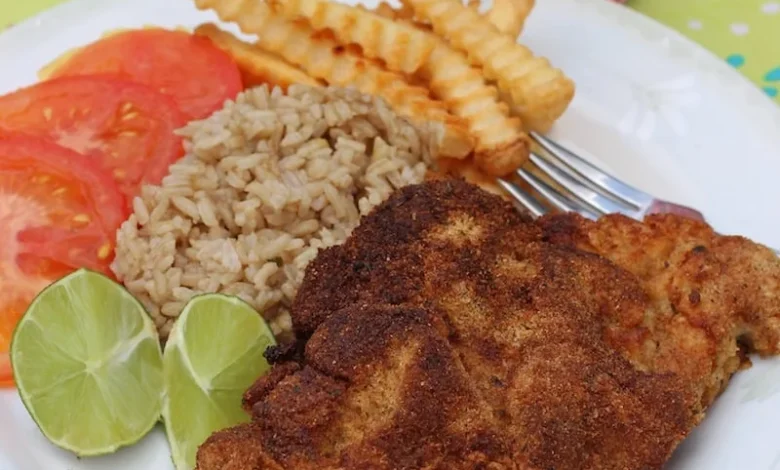
The Chuleta Valluna stands as a definitive cornerstone of Colombian gastronomy, representing the rich culinary heritage of the Valle del Cauca department. This dish, characterized by a thin, breaded, and fried pork cutlet, has transcended its regional origins to become a staple in Colombian restaurants globally. Far more than a simple fried pork chop, the Chuleta Valluna is an exercise in preparation and tradition, requiring specific techniques in meat processing, seasoning, and frying to achieve the authentic texture and flavor profile that defines the dish.
At its core, the dish consists of a pork loin or leg that has been meticulously pounded to a paper-thin consistency. This physical alteration of the protein is essential, as it tenderizes the muscle fibers and ensures that the meat cooks evenly and rapidly once submerged in hot oil. The cutlet is then subjected to a rigorous marinade, typically composed of citrus juices—often lime or orange—combined with a mirepoix of onions, scallions, and garlic, along with cumin and occasionally a touch of panela (unrefined cane sugar) to balance the acidity. Following a deep marination process, the meat is dredged in flour, dipped in a beaten egg mixture, and coated in breadcrumbs before being fried until the edges reach a characteristic golden-brown, lacy crispness.

The Historical Genesis of the Dish
The origin story of the Chuleta Valluna is firmly rooted in the mid-20th century, specifically within the bustling culinary landscape of Cali, the capital of the Valle del Cauca. According to local historical accounts, the dish’s popularity surged around 1958, largely credited to a modest eatery known as El Bochinche, operated by Fabio Medina and his mother, Doña Ema.
Historical records suggest that the concept was a culinary cross-pollination. A chef originating from Buenaventura—the country’s primary port city on the Pacific coast—reportedly suggested adapting the technique of breaded fish, a preparation common to coastal regions, to pork. Medina, possessing an abundance of pork loin, experimented with the breading method. The resulting fusion proved an immediate success with the local populace. This adaptation not only highlighted the regional ability to synthesize diverse culinary influences—from the coastal Pacific techniques to the Andean influence of interior pork preparations—but also established a template for what would become the quintessential "Valluno" meal.

Nutritional and Technical Specifications
From a technical standpoint, the preparation of the Chuleta Valluna requires precision. A standard serving of the dish, typically weighing between 150 and 200 grams, provides a significant source of protein, essential for a hearty lunch, which is the traditional time of day for its consumption. Data indicates that a standard portion contains approximately 42 grams of protein and 512 calories, though these figures vary based on the specific breading thickness and the type of oil used for frying.
The success of the dish relies on the oil temperature, which must be maintained at a steady 350°F (approximately 175°C). If the oil temperature drops, the cutlet absorbs excessive fat, losing its crispness and becoming unpalatably greasy. If the temperature is too high, the breading browns before the internal pork reaches an appropriate temperature. Chefs often use the "sizzle test"—dropping a single breadcrumb into the oil—to determine if the environment is ready for the cutlet.

Cultural Significance and Economic Impact
The Chuleta Valluna is not merely a recipe; it is a cultural identifier for the people of the Valle del Cauca. In the regional capital of Cali, the consumption of the dish is often a communal affair, typically served alongside a traditional plate consisting of white rice, crispy french fries, a fresh green salad, and lime wedges. Secondary accompaniments often include tajadas de plátano (fried sweet plantains), patacones (fried green plantains), yuca, fresh avocado, and a side of stewed beans.
The economic implications of this dish are notable within the Colombian hospitality sector. As the dish has moved from local "corrientazo" (lunch special) menus to international fine-dining establishments featuring Latin American cuisine, it has served as a vehicle for cultural diplomacy. Restaurants featuring authentic Chuleta Valluna often see higher foot traffic from both the Colombian diaspora and food enthusiasts seeking traditional flavors. The dish has also fostered a cottage industry of specialized suppliers who provide pre-pounded and marinated pork specifically for the preparation of the cutlet, streamlining the workflow for professional kitchens.

Expert Perspectives on Preparation
Culinary experts emphasize several "golden rules" to ensure the integrity of the dish. First, the importance of the marinade cannot be overstated. While a 30-minute soak provides a superficial layer of flavor, an overnight marinade allows the acidic components to break down the proteins, resulting in a significantly more tender cutlet.
Second, the structural integrity of the meat is paramount. Professional chefs advise against using bone-in pork chops, as the bone creates uneven surfaces that are difficult to pound to a uniform thickness, leading to inconsistent cooking. Furthermore, crowding the fryer is cited as a primary failure point. Overcrowding the vessel causes a rapid temperature drop, which is the leading cause of breading failure and oil saturation. Maintaining a consistent temperature is the differentiator between a home-cooked attempt and the professional standard found in Cali’s best establishments.

The Evolution of Regional Cuisine
While the traditional recipe remains the gold standard, modern variations have begun to emerge. Some chefs are experimenting with alternative coatings, such as panko breadcrumbs for a crunchier texture, or incorporating local spices like achiote into the flour for a deeper, more vibrant color. However, these innovations are often met with resistance from traditionalists who maintain that the essence of the Chuleta Valluna lies in its original simplicity: the quality of the pork, the patience of the marinade, and the mastery of the fry.
In the broader context of Colombian cuisine, the Chuleta Valluna stands alongside dishes like the Ajiaco Bogotano and the Bandeja Paisa as a defining national treasure. While the Bandeja Paisa represents the heavy, agrarian roots of the Antioquia region, the Chuleta Valluna represents the more cosmopolitan, coastal-influenced, and refined palate of the Pacific valley.

The Future of the Dish
As global food trends shift toward more authentic, regional experiences, the demand for traditional dishes like the Chuleta Valluna is likely to persist. Challenges remain, particularly regarding the sustainability of pork production and the health implications of fried foods. However, the dish’s resilience over the past six decades suggests that it will remain a permanent fixture in the culinary landscape.
For many, the Chuleta Valluna is a sensory memory—a taste of home that connects generations. Whether prepared in a high-end restaurant in Bogotá or a home kitchen in the United States, the preparation of the dish continues to follow the legacy set by the Medinas at El Bochinche. By adhering to the fundamental principles of preparation—pounding, marinating, and frying—the dish preserves a vital link to the history of the Valle del Cauca, ensuring that this humble pork cutlet remains a central figure in the narrative of Colombian food culture for years to come.