The culinary landscape of the mid-2000s was characterized by a distinct enthusiasm for approachable home baking, a movement famously chronicled by pioneering food blogs that emerged during the era’s digital boom. Among these digital mainstays is Smitten Kitchen, a platform established in 2007 that has since evolved from a modest personal project into a globally recognized culinary authority. In June of that inaugural year, the site published a recipe for a layered strawberry chiffon shortcake, introducing home cooks to a delicate, towering dessert that paired featherweight sponge layers with whipped cream and fresh seasonal berries. Nearly two decades later, this foundational recipe has undergone a comprehensive modernization process, reflecting shifts in contemporary baking methodologies, ingredient accessibility, and the practical demands of modern home cooks.
Background Context and Evolution of the Recipe

Chiffon cakes occupy a unique position in baking history, bridging the gap between rich, fat-based butter cakes and ultra-light, fat-free angel food cakes. Invented in 1927 by Los Angeles insurance agent and caterer Harry Baker—who kept his formulation a closely guarded secret for twenty years before selling it to General Mills—chiffon cakes utilize vegetable oil rather than traditional solid fats. This chemical innovation allows the cake to retain remarkable moisture while achieving the soaring height and airy crumb typical of whipped-egg-white foams.
Despite their structural elegance, traditional chiffon cakes developed a reputation among home bakers for being unnecessarily labor-intensive and technically fragile. Historical iterations typically demanded a rigorous culinary protocol: precision sifting, the substitution of standard all-purpose flour with specialized cake flour, the acquisition of superfine sugar in lieu of granulated variants, and mathematically uneven ratios of egg whites to yolks. Furthermore, bakers were routinely required to deploy a minimum of three separate mixing bowls, manage specialized ingredients like cream of tartar, and contend with the phenomenon of structural center-collapse during the cooling phase.
For the recipe’s 2026 revision, the author sought to systematically dismantle these architectural hurdles without sacrificing the dessert’s signature texture. The updated methodology streamlines the prep work, minimizes equipment friction, and adapts the vintage formula for real-world execution. Notably, the revised approach retains one of the chiffon cake’s most remarkable scientific advantages: exceptional shelf stability. Unlike traditional butter cakes that dry out within 48 hours, properly stored chiffon layers maintain their structural integrity and moisture profile for up to six days at room temperature.

Chronology of a Modern Culinary Refresh
The decision to revisit the 2007 strawberry chiffon shortcake originated within the site’s ongoing editorial review queue, designated internally for recipes requiring modernization. The development timeline culminated in June 2026, coinciding with the author’s annual birthday celebration.
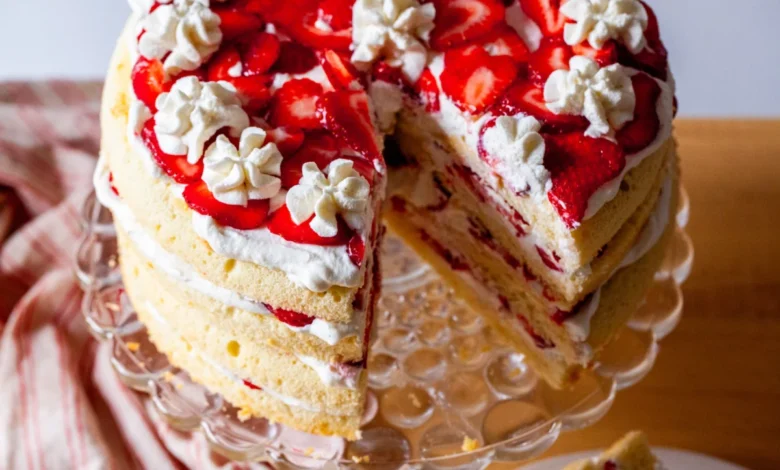
For the birthday event, a supersized, four-layer iteration of the perfected recipe was constructed to serve guests. The timeline of the evening provided an unexpected real-world stress test for the dessert’s reception:

- Pre-Event: The towering four-layer strawberry chiffon shortcake, fortified with stabilised whipped cream and fresh berries, is placed on the central serving table.
- Event Midpoint: The host steps away briefly to assist an elderly family member to their vehicle.
- Post-Event Discovery: Upon returning to the main dining area within a span of minutes, the host discovers that the massive cake has been entirely consumed, leaving behind only a single orphaned slice and a collection of untouched plates.
Statements and Reactions from Related Parties
The impromptu consumption of the dessert generated immediate commentary among attendees, offering qualitative data on the recipe’s sensory impact and textural balance.
"It is a weightless, melt-in-your-mouth dessert that defies traditional shortcake heaviness," remarked one attendee who participated in the rapid dismantling of the cake layers. Another guest noted logistical shortcomings in the serving size, stating that the sheer velocity of the consumption prevented individuals from securing standard second or third helpings, and formally recommended doubling production volume for future gatherings.

Step-by-Step Modernized Preparation Protocol
The updated 2026 recipe incorporates specific technical adjustments designed to maximize yield and structural stability while reducing procedural complexity.
Oven Calibration and Pan Preparation
Baking professionals recommend preheating the oven to 325°F (165°C). Preparation of the baking vessels is critical: two 9-inch round cake pans should have their bottoms lightly coated with nonstick spray exclusively to anchor fitted circles of parchment paper. The interior sides of the pans must remain ungreased to allow the batter to grip the metal and climb during the leavening process. Similarly, two cooling racks should be lightly misted with nonstick spray in preparation for the inverted cooling stage.

Batter Formulation
The creation of the batter utilizes a dual-bowl method designed to optimize emulsion:
- Yolk Mixture: In a primary large bowl, egg yolks, lemon zest, and one cup of granulated sugar are whisked vigorously. Although initially stiff and dry, sustained whisking for approximately one minute produces a pale yellow, thick emulsion resembling frosting. Vegetable oil, water, and vanilla extract are subsequently incorporated. A dry mixture comprising half the designated flour, salt, and baking powder is whisked in, followed by the remaining flour, yielding a dense, smooth batter.
- Egg White Foam: In a secondary large bowl, an electric mixer is utilized to whip egg whites until they achieve firm peaks. The remaining quarter-cup of granulated sugar is integrated gradually during the whipping process. Lemon juice is added at the conclusion to stabilize the protein structure.
- Folding: One-quarter of the whipped egg white volume is sacrificed to loosen the dense yolk batter. The remaining whites are gently folded in two distinct additions to preserve air incorporation.
Baking and Structural Inversion
The batter is divided equally between the two prepared pans and baked for 20 to 25 minutes until a wooden skewer inserted into the center emerges clean. Immediately upon removal from the oven, each pan is dropped vertically onto the countertop from a height of several inches—a counterintuitive physical shock that ruptures expanding air pockets and prevents post-bake shrinkage. The pans are then inverted onto the pre-sprayed cooling racks and allowed to cool completely upside down, preventing the central dome from collapsing.
Assembly and Stabilization
The finishing cream utilizes a stabilization technique involving dairy fats: heavy cream, powdered sugar, and vanilla extract are whipped to soft peaks before sour cream or crème fraîche is folded in. This addition provides sufficient structural fortitude to prevent weeping without introducing graininess.

Cakes are released from their pans via a thin spatula run along the ungreased perimeter, sliced horizontally into four uniform layers using a long serrated blade, and systematically layered with whipped cream and sliced strawberries.
Fact-Based Analysis of Implications
The successful modernization of the strawberry chiffon shortcake highlights a broader trend in contemporary baking journalism: the democratization of technical pastry techniques. Historically, chiffon cakes were viewed as high-risk endeavors restricted to experienced bakers due to stringent equipment requirements and unpredictable cooling behaviors. By demystifying the preparation steps—such as intentional pan-dropping and strategic fat stabilization in the frosting—modern recipe developers bridge the gap between professional patisserie standards and home kitchen capabilities.

Furthermore, the longevity data associated with chiffon structures challenges conventional assumptions regarding cake freshness. As consumer demand grows for make-ahead entertaining options, recipes that retain structural integrity and moisture across a five-to-six-day window provide significant practical value. The operational efficiency of preparing cake layers well in advance of an event reduces host anxiety and aligns with modern lifestyle constraints, ensuring that archival recipes remain relevant to contemporary culinary audiences.