The Clash of Green Technologies: When Renewable Energy Infrastructure Threatens the Future of Regenerative Agriculture

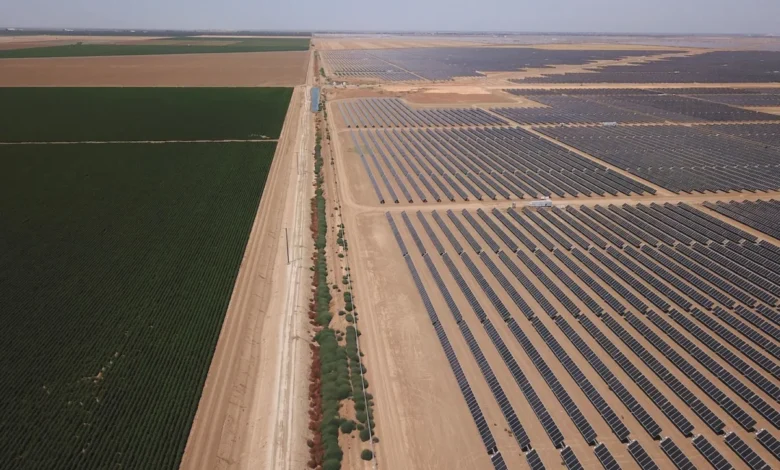
The global transition toward a low-carbon economy has created an unintended and increasingly urgent friction point between two vital pillars of climate action: the rapid expansion of utility-scale renewable energy and the preservation of productive, resilient agricultural land. Across the United States and internationally, farmers attempting to implement regenerative agriculture practices—designed to restore soil health, sequester atmospheric carbon, and secure the food supply—find themselves competing directly with clean energy developers. These solar companies offer landowners lucrative, guaranteed lease payments for acreage traditionally reserved for crops and livestock.
This growing land-use conflict highlights a complex paradox in contemporary environmental policy. While decarbonizing the electrical grid is non-negotiable for meeting international climate targets, removing millions of acres of fertile soil from food production poses long-term risks to global food security and local agrarian economies. As agricultural communities navigate razor-thin profit margins, shifting climate pressures, and generational land transitions, policymakers, researchers, and farmers are racing to find scalable compromises that allow clean energy and sustainable farming to coexist on the same landscape.
The Evolution of Regenerative Agriculture and Its Economic Hurdles
To understand the magnitude of the current land-use dilemma, one must examine the foundational goals of regenerative agriculture. Around 2011, practitioners such as Jonathan and Kaylyn Cobb of Green Fields Farm in central Texas embarked on a mission to restore degraded farmland that had spent decades under conventional row-crop production of corn and cotton. Their objective was to reverse environmental degradation by introducing diverse native prairie plants—such as silver bluestem, yellow Indian grass, and Maximilian sunflowers—whose deep roots build soil organic matter, enhance water-holding capacity, and cycle nutrients.
By integrating livestock grazing to mimic the historical impact of wild bison herds, farmers like the Cobbs sought to transform conventional acreage into carbon-sequestering ecosystems. Proponents of regenerative agriculture argue that if a fraction of the world’s agricultural soils could be induced to store additional carbon, atmospheric greenhouse gas concentrations could be significantly mitigated. Furthermore, these practices yield soils that are inherently more resilient to extreme weather events, showing superior resistance to erosion during intense storms and better performance during prolonged droughts.
Despite these environmental benefits, the transition from conventional, chemical-dependent commodity farming to regenerative systems is fraught with structural hurdles. The learning curve is steep, initial capital costs for specialized equipment—such as no-till seeders—can be prohibitive for independent operators, and resistance from older generations accustomed to traditional tilling methods often creates familial friction.
Simultaneously, the broader economic realities of farming have deteriorated. According to data from the American Farmland Trust (AFT), U.S. farmers lost approximately 11 million acres of agricultural land to development between 2001 and 2016. With operating costs mounting and food production frequently yielding narrow or negative financial returns, many landowners face immense temptation to exit the industry entirely.
The Rise of Utility-Scale Solar and the Land-Lease Dilemma
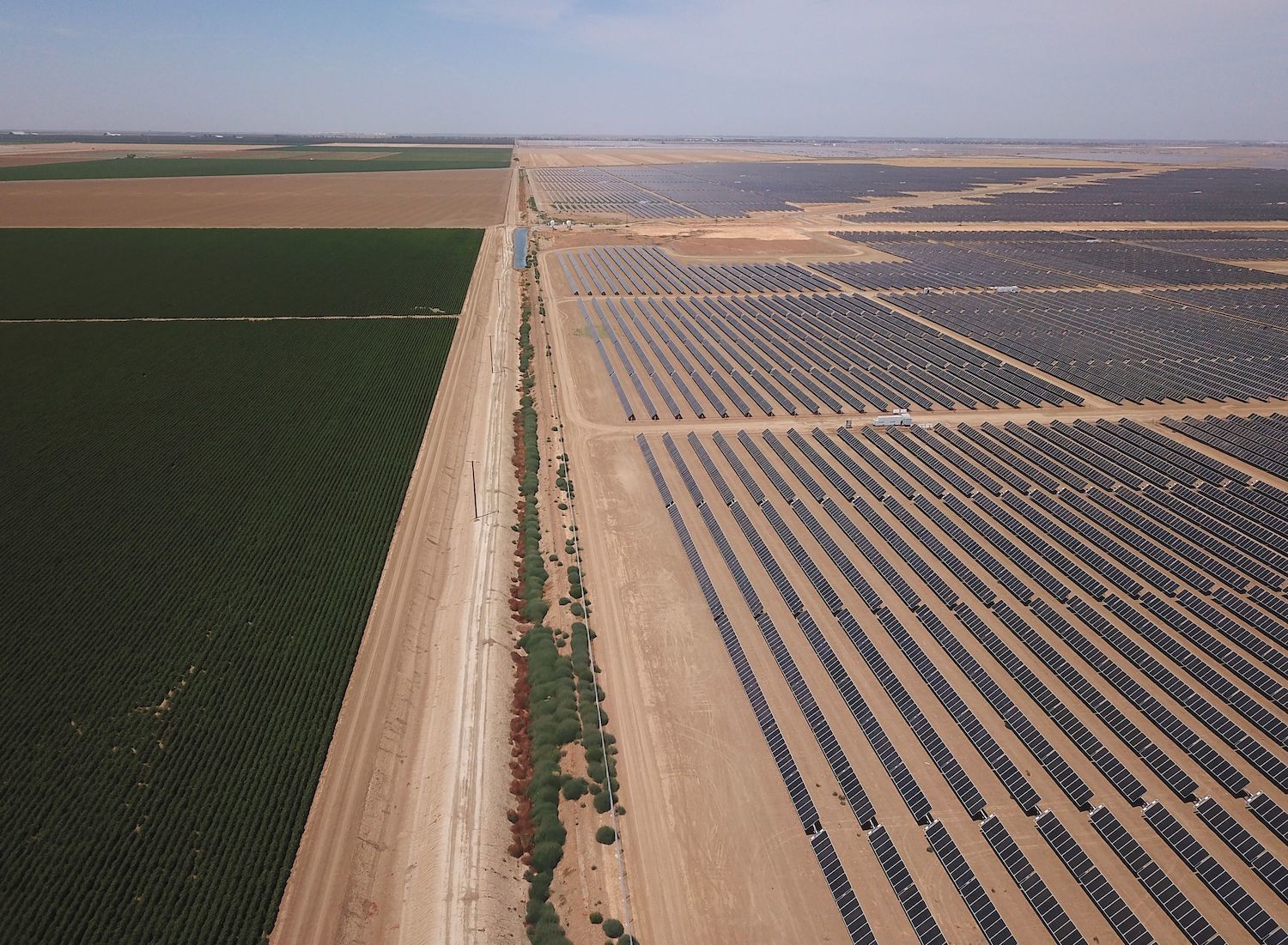
As agricultural viability wanes in various regions, the clean energy sector has emerged as a dominant competitor for rural land. Driven by federal incentives, state renewable portfolio standards, and corporate net-zero commitments, utility-scale solar installations across the United States expanded by 26 percent between 2019 and 2020 alone. Researchers like Mitch Hunter, research director at the American Farmland Trust, note that achieving national and global climate objectives requires a massive deployment of solar energy infrastructure.
However, the financial disparity between farming and leasing land to solar developers creates an insurmountable chasm for many rural communities. For aging farmers on fixed incomes or families struggling to keep solvent, signing a long-term solar lease guarantees a stable, predictable revenue stream that regenerative or conventional farming simply cannot match. For instance, an 80-acre parcel converted to solar can generate tens of thousands of dollars annually for a landowner, but taking that same acreage out of agricultural rotation can cripple neighboring operations that rely on a dense, interconnected local network of grazing lands, supply chains, and processing infrastructure.
This dynamic is not isolated to Texas. Across the globe, agricultural regions are experiencing similar pressures. The loss of a farm is rarely just the loss of dirt; it represents the permanent erasure of generational agricultural knowledge, specialized infrastructure, and rural community cohesion. While solar panels can theoretically be decommissioned after several decades, the local support systems required to restart agricultural production may have vanished entirely.
International Approaches and the Promise of Agrivoltaics
Recognizing the collision between food security and clean energy mandates, several nations have begun pioneering legislative and technological frameworks to harmonize the two sectors. Germany recently enacted legislation aimed at opening agricultural land to solar power while explicitly mandating the parallel use of areas for both food and energy production. Under these guidelines, the German government supports farmers integrating solar panels across up to 15 percent of their land, absorbing higher implementation costs to safeguard domestic food supplies.
Similarly, Japan has enforced agricultural PV regulations since 2013 under its "solar sharing" framework. This mandate requires any solar project established on farmland to maintain active crop or livestock production beneath or around the arrays, effectively using clean energy infrastructure as a tool to revitalize abandoned or underutilized rural acreage.
In the United States, researchers and agricultural engineers are investigating similar dual-use models, collectively known as agrivoltaics. Jordan Macknick, lead energy-water-land analyst at the National Renewable Energy Laboratory (NREL), directs the InSPIRE project—a Department of Energy-funded initiative studying agrivoltaic applications across 25 locations nationwide. These studies evaluate how elevated solar panels impact soil moisture, microclimates, plant yields, and erosion across crop, grazing, and pollinator habitats.
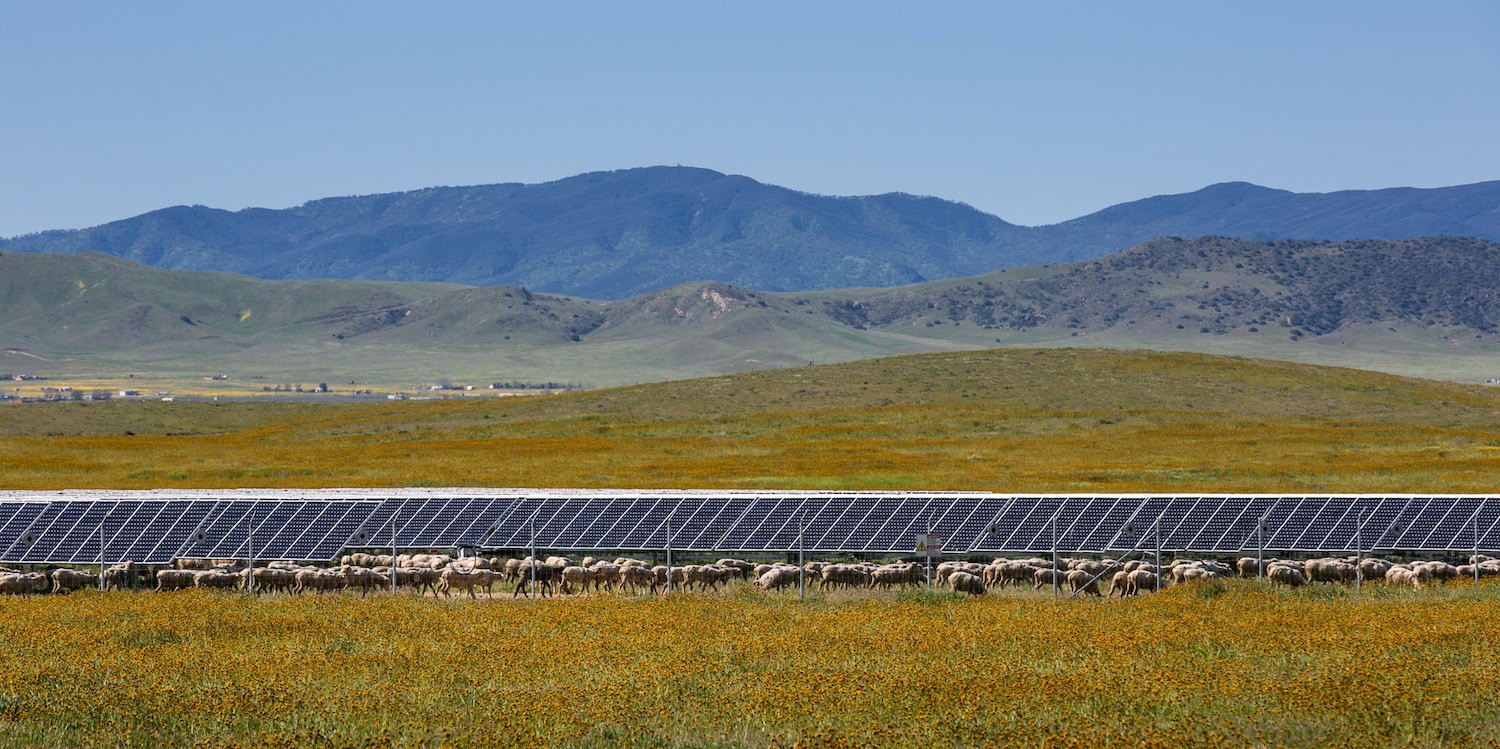
Current implementations of agrivoltaics vary widely in scale and complexity. Basic models frequently pair solar installations with sheep grazing. Because sheep are lower-slung and less destructive to electrical infrastructure than cattle, they effectively manage vegetation beneath the panels, reducing maintenance costs for solar operators while providing farmers with dual revenue streams from wool, meat, and grazing fees.
Barriers to Scalable Agrivoltaic Integration
Despite its clear potential, widespread adoption of advanced agrivoltaics faces significant engineering and economic roadblocks. Raising solar arrays high enough to accommodate large farm machinery, cattle, or tall native regenerative plant species requires substantially more structural steel, sharply increasing upfront capital expenditures. Furthermore, standard solar panel tracking systems and spacing configurations are rarely optimized to balance optimal photovoltaic energy generation with the precise light and water requirements of underlying crops.
Experts emphasize that successful agrivoltaic systems must be intentionally designed from the outset in close collaboration with farmers. Minor structural adjustments—such as increasing the distance between rows of panels, ensuring adequate turning radiuses for tractors, and strategically placing irrigation infrastructure—can dictate whether a farmer embraces or rejects a dual-use proposal.
However, analysts note that industrial row crops, which occupy a substantial majority of flat, sun-drenched agricultural land ideal for solar farms, remain poorly suited for agrivoltaics due to the sheer size of modern combines and harvesting equipment. Conversely, smaller-scale and regenerative farms exhibit much higher compatibility with thoughtfully designed solar arrays, provided financial barriers to entry are adequately lowered.
Mitigating Strategies and the Path Forward
To bridge the gap between renewable energy expansion and agricultural preservation, agricultural economists and land trusts are increasingly championing conservation easements and equipment-sharing cooperatives. Organizations like the Marin Agricultural Land Trust (MALT) and the American Farmland Trust purchase or incentivize the extinguishment of agricultural development rights, providing farmers with capital infusions to invest in value-added processing, infrastructure upgrades, or specialized regenerative machinery.
Ultimately, balancing the imperatives of climate mitigation requires a synchronized policy approach that values food systems and renewable energy as interdependent rather than competing interests. As researchers refine agrivoltaic technologies and lawmakers evaluate land-use protections, the overarching challenge remains clear: ensuring that the global transition to a green economy does not inadvertently undermine the agrarian foundations required to sustain human life.