ASDP Indonesia Ferry Anticipates Strategic Surge in Merak-Bakauheni Crossing Ahead of New Year 2016 Celebrations

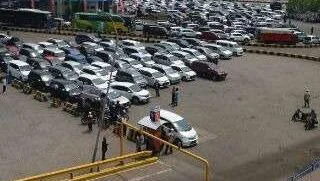
PT ASDP Indonesia Ferry (Persero) has officially released its projections for the year-end traffic flow at the Merak-Bakauheni crossing, indicating a measured but significant increase in passenger and vehicle volume as the nation prepares to transition into 2016. While the anticipated surge is expected to be less intense than the peak witnessed during the Christmas holiday period last week, the state-owned ferry operator remains on high alert to ensure operational continuity and safety across the Sunda Strait. Nana Sutisna, the Operations Manager for PT ASDP Indonesia Ferry’s Merak Branch, confirmed that while the momentum is building, the infrastructure is currently handling the load efficiently without the gridlock often associated with major Indonesian holidays.
According to internal projections, the volume of private vehicles is expected to see an uptick of approximately 8 percent, while the number of pedestrian passengers—those traveling without vehicles—is forecasted to rise by 12 percent. These figures represent a secondary wave of holiday travelers, many of whom are heading to Sumatra to celebrate the New Year with family or visiting tourist destinations in the southern part of the island. "The increase is certainly there, but we do not expect it to reach the fever pitch seen during the Christmas peak," Sutisna stated in a formal communication on Wednesday, December 30, 2015. As of the morning of December 30, the port environment was described as relatively calm, aided by favorable weather conditions that have allowed for consistent sailing schedules.
Comparative Statistical Analysis of Holiday Traffic
Data compiled by PT ASDP Indonesia Ferry from the 24-hour period between December 29 and the morning of December 30, 2015, provides a clear picture of the growing demand. During this window, 27 vessels were deployed to facilitate 93 individual trips across the strait. The total number of passengers ferried reached 33,924, marking a 9 percent increase compared to the 31,092 passengers recorded during the same period in the previous year. This steady growth reflects a broader trend in Indonesian domestic travel, where improved purchasing power and expanded road networks are encouraging more citizens to travel between Java and Sumatra.
The most dramatic growth has been observed in the two-wheeled vehicle category. The latest reports show that 1,199 motorcycles crossed the strait in the last 24 hours, a sharp 31 percent increase from the 913 units recorded in 2014. Furthermore, four-wheeled vehicles, which include a mix of private cars, small buses, and light goods vehicles, saw a 17 percent rise, moving from 5,343 units last year to the current figures. These statistics underscore a shifting preference for personal mobility among Indonesian travelers, particularly for shorter inter-island hops where ferries provide the primary logistical link.
Cumulative Performance and the Motorcycle Phenomenon
When looking at the broader window of the holiday season, specifically from December 18 to December 29, 2015, the scale of the operation becomes even more apparent. Total passenger numbers for this twelve-day period reached 480,556 individuals. This is a substantial 22.1 percent increase over the 393,543 passengers recorded during the equivalent period in 2014. In terms of total vehicle units, the port handled 95,985 vehicles, representing a 22 percent increase from the previous year’s 78,707 units.
One of the most striking data points highlighted by ASDP management is the unprecedented surge in motorcycle traffic. Over the eleven-day period, the number of motorcycles reached 18,476 units, a staggering 70.8 percent jump from the 10,819 units seen in 2014. This surge presents unique logistical challenges for port authorities, as motorcycles require specific staging areas and boarding protocols to ensure safety alongside larger commercial trucks and passenger buses. Nana Sutisna noted that approximately 7,000 of these motorcycles have yet to return to Java, suggesting that a significant "return flow" or arus balik will likely occur in the first week of January 2016, potentially putting further pressure on the Bakauheni terminal in Lampung.
Operational Readiness and Capacity Management
To mitigate the risk of congestion and ensure that the "Golden Bridge" between Java and Sumatra remains fluid, PT ASDP has optimized its fleet. Currently, 28 vessels are on standby or in active rotation. A key component of this year’s strategy involves the deployment of larger-capacity vessels. By utilizing ships with higher Gross Tonnage (GT), the operator can move more vehicles and passengers per trip, effectively reducing the waiting time in the "buffer zones" outside the port entrance.
The management of Merak Port has also focused on the "port-time" and "sailing-time" metrics. By streamlining the loading and unloading processes, ASDP aims to keep the interval between ship arrivals and departures as tight as possible. "Our priority is to ensure that the parking pockets within the port do not overflow onto the Cikuasa Atas flyover or the Tangerang-Merak toll road," Sutisna explained. Historically, heavy congestion at Merak has led to tailbacks stretching several kilometers, a scenario the authorities are desperate to avoid this year through better scheduling and real-time monitoring of vehicle arrival rates.
Recommendations for Travelers and Safety Protocols
As the peak of the New Year’s Eve travel nears, ASDP has issued several critical advisories to the public to expedite the boarding process. One of the primary bottlenecks identified in previous years is the transaction time at ticket booths. Travelers are strongly encouraged to prepare the exact amount of cash for their ticket category to minimize delays. Furthermore, the mandatory inspection of identification (KTP) remains a cornerstone of the security and manifest-recording process. Having these documents ready before reaching the counter is essential for maintaining the flow of the queue.
Safety remains the paramount concern, particularly given the unpredictable nature of the Sunda Strait’s waters during the monsoon season. While the current weather is reported as clear, ASDP works in close coordination with the Bureau of Meteorology, Climatology, and Geophysics (BMKG) to monitor wave heights and wind speeds. Any significant deterioration in maritime conditions could lead to a temporary suspension of small-vessel operations, a contingency plan that is always in place to protect passenger lives.
The Socio-Economic Context of the Merak-Bakauheni Route
The Merak-Bakauheni crossing is more than just a ferry route; it is a vital economic artery for Indonesia. It serves as the primary conduit for logistics, connecting the industrial hubs of Java with the agricultural and resource-rich provinces of Sumatra. During the holiday season, this economic role blends with social significance as millions of Indonesians engage in the tradition of visiting hometowns.
The 22 percent year-on-year increase in traffic volume is a testament to the growing demand for connectivity. Analysts suggest that this growth also places an urgent spotlight on the need for infrastructure expansion. While the 28 ships currently in operation are sufficient for the present surge, the consistent double-digit growth in vehicle numbers suggests that Merak Port will require further modernization, including digital ticketing systems and expanded pier capacities, to handle the projected demands of 2017 and beyond.
Anticipating the Return Flow (Arus Balik)
As the calendar turns to 2016, the focus of PT ASDP will rapidly shift from the outbound flow to the return journey. The "Arus Balik" is often more concentrated than the departure phase, as workers and students tend to return simultaneously to meet the start of the work and school year. With thousands of motorcycles and tens of thousands of private cars currently in Sumatra, the Bakauheni terminal is expected to face intense pressure starting January 2nd and 3rd.
To manage this, ASDP plans to maintain its high-capacity vessel rotation and will likely implement a "fast-loading" policy if queues exceed manageable levels. This involves prioritizing the filling of car decks to clear the port area as quickly as possible. Coordination with the Lampung regional police and the Ministry of Transportation will be vital to manage the traffic flow leading into the Bakauheni port complex.
In conclusion, while the immediate outlook for New Year’s Eve at Merak Port is one of manageable growth and "lengang" (quiet) conditions, the underlying data reveals a robust and expanding domestic travel market. PT ASDP Indonesia Ferry’s proactive stance in deploying larger ships and communicating clearly with the public reflects a maturing approach to transport management in one of the world’s most busy maritime corridors. As 2015 draws to a close, the successful transit of nearly half a million people in just under two weeks stands as a significant operational achievement for the state-owned enterprise.