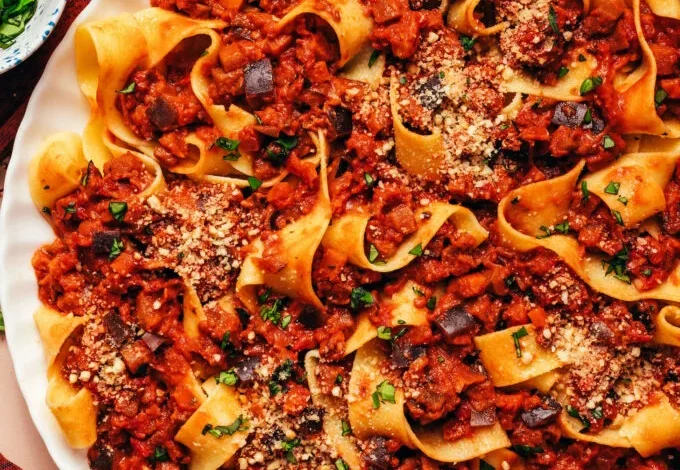
The culinary landscape has witnessed a significant shift over the past decade toward plant-forward dining, driven by rising consumer interest in sustainability, health consciousness, and culinary creativity. Home cooks and professional chefs alike continually seek innovative ways to reinvent traditional comfort foods without relying on animal proteins. A prime example of this evolution is the reimagining of classic Italian ragù, most notably Bolognese. Originating from the city of Bologna, traditional Bolognese sauce is a rich, meat-heavy staple traditionally built upon a foundational soffrito of onions, celery, and carrots, combined with minced beef or pork, white wine, milk, and tomato paste. However, contemporary nutritional preferences and seasonal cooking trends have opened the door for inventive, vegetable-centric adaptations. The latest addition to this genre is a streamlined, single-pot eggplant Bolognese that captures the savory complexity of the original dish while utilizing late-summer produce to deliver a lighter yet deeply satisfying culinary experience.
Background and Culinary Evolution of the Dish
Bolognese sauce, legally registered with the Bologna Chamber of Commerce in 1982 to preserve its heritage, has long been associated with slow-simmered meats and rich dairy components. Yet, global culinary experimentation has continually challenged these rigid parameters. In recent years, home cooking platforms and food publications—ranging from independent recipe developers to major culinary outlets like The New York Times Cooking—have popularized vegetarian iterations utilizing mushrooms, lentils, tempeh, and chickpeas.
The introduction of an eggplant-based variation addresses both texture and seasonality. Eggplant, known scientifically as Solanum melongena, possesses a spongy cellular structure that makes it uniquely suited for absorbing flavors during the cooking process. When diced finely and sautéed alongside aromatic vegetables, eggplant breaks down to mimic the hearty, rustic consistency of traditional minced meat sauces. This culinary profile makes it an ideal centerpiece for late-summer harvest cooking, a period when eggplants are abundant, nutrient-dense, and at their peak flavor profile.
Step-by-Step Preparation and Methodological Efficiency
Modern home cooking trends heavily favor efficiency, minimalism, and reduced cleanup, making one-pot meals increasingly popular among time-conscious consumers. The preparation of this eggplant Bolognese is designed around a single Dutch oven or heavy-bottomed pot, significantly cutting down on kitchen preparation and cleanup time without sacrificing depth of flavor.
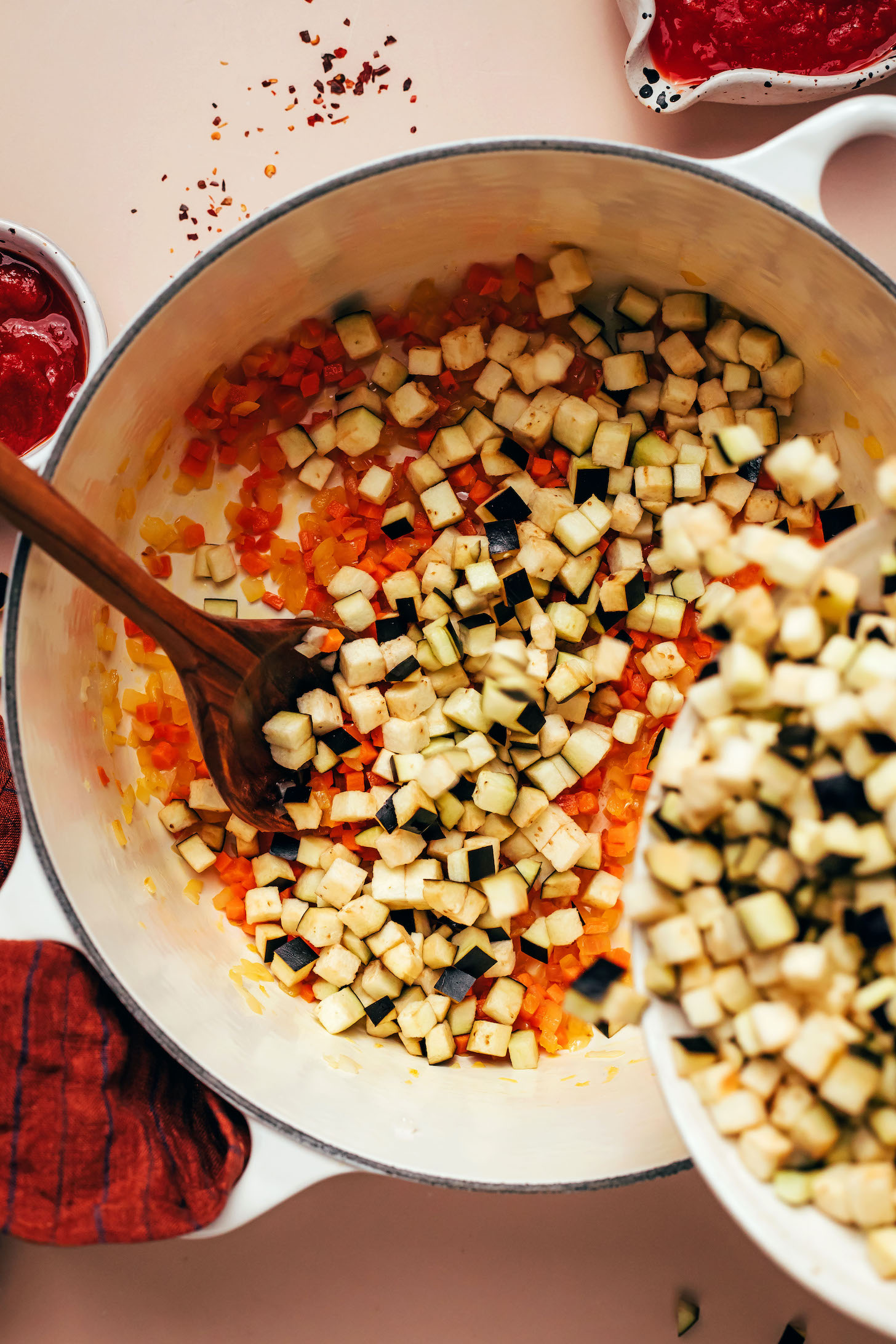
The cooking process begins with the establishment of a traditional aromatic base. Finely diced onions and carrots are gently sautéed in olive oil until translucent and sweet. Unlike traditional soffrito, celery is omitted in favor of highlighting the primary star ingredient: eggplant. The eggplant is meticulously diced into very small cubes to ensure an even distribution throughout the sauce. As the eggplant is introduced to the pot, it undergoes a crucial browning phase, where moisture is driven off and caramelization occurs, imparting a rich, savory umami note that serves as the backbone of the dish.
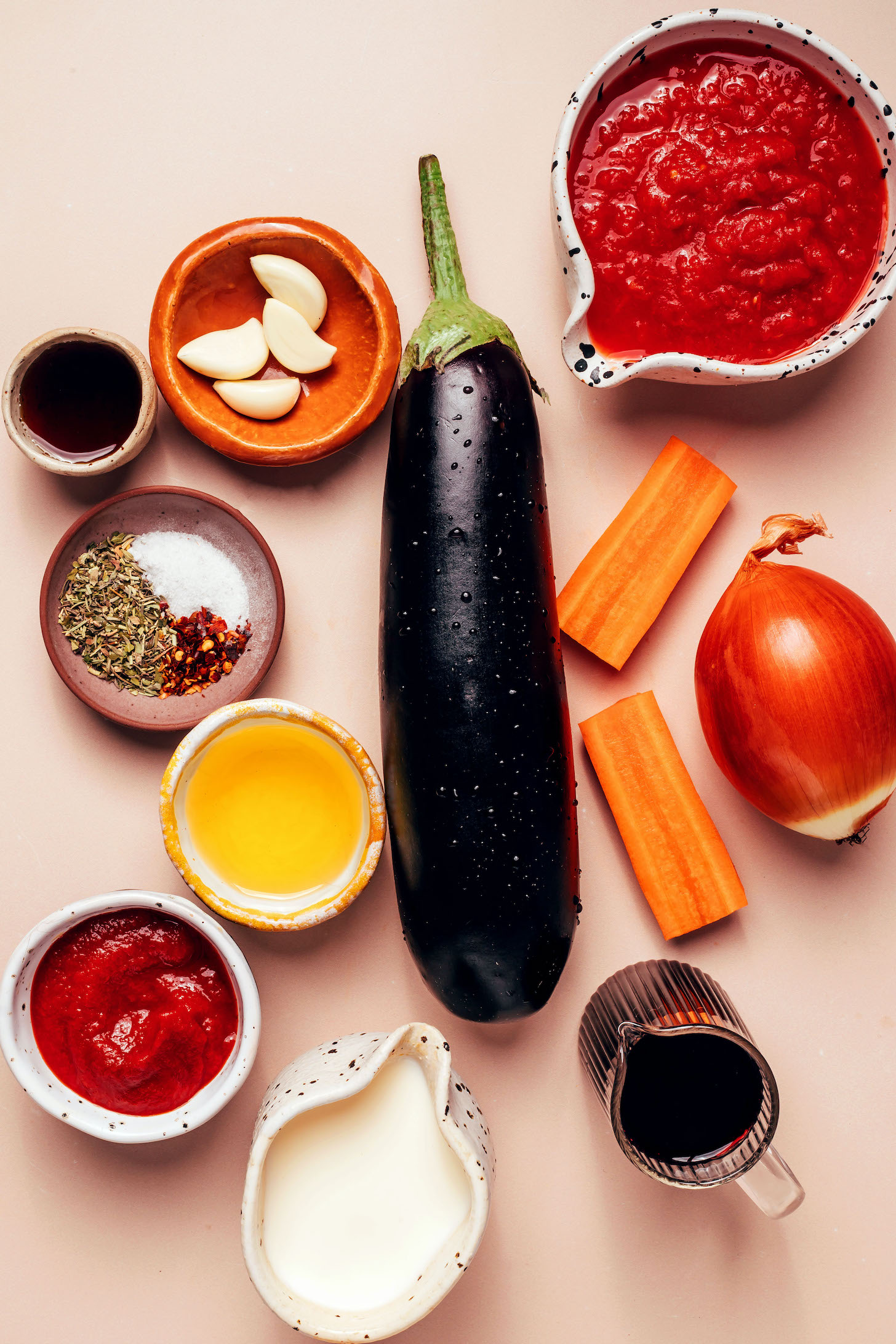
Following the browning stage, minced garlic and red pepper flakes are incorporated to build mid-layer aromatics and a subtle kick of heat. The pan is then deglazed with dry white or red wine, a chemical process that releases the browned bits stuck to the bottom of the pot, integrating deep caramelized flavors back into the sauce. Crushed tomatoes and tomato paste are subsequently folded in to establish a bright, acidic, and tomato-forward foundation.
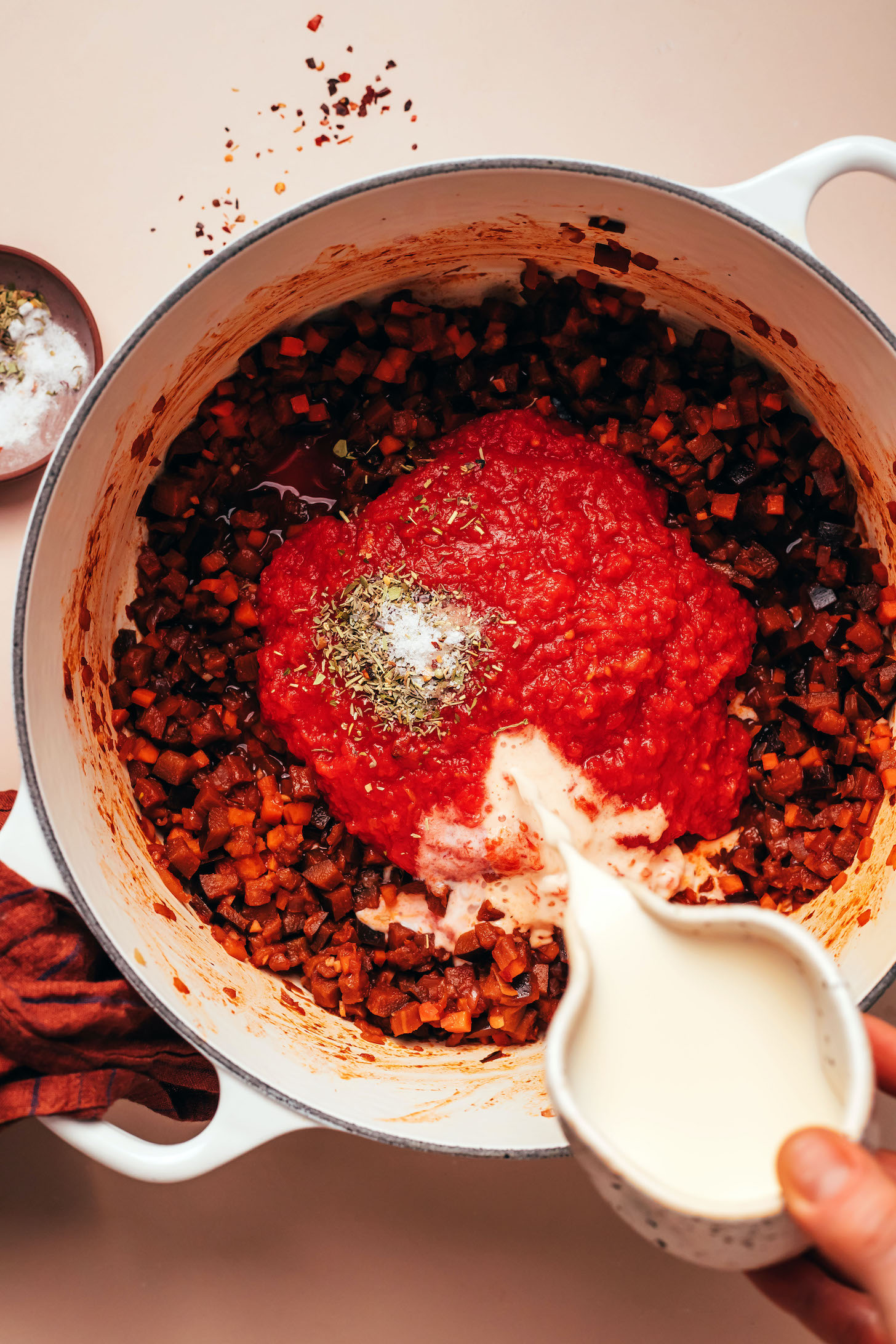
To replicate the velvety richness of traditional Bolognese—which typically relies on whole milk or heavy cream—this recipe incorporates a dairy-free alternative, specifically homemade cashew milk. This addition introduces a subtle creaminess that balances the high acidity of the crushed tomatoes. The flavor profile is finalized with a balanced blend of dried Italian herbs, including basil and oregano, sea salt, and a touch of maple syrup to neutralize any sharp acidity from the tomatoes.
Simmering Dynamics and Flavor Concentration
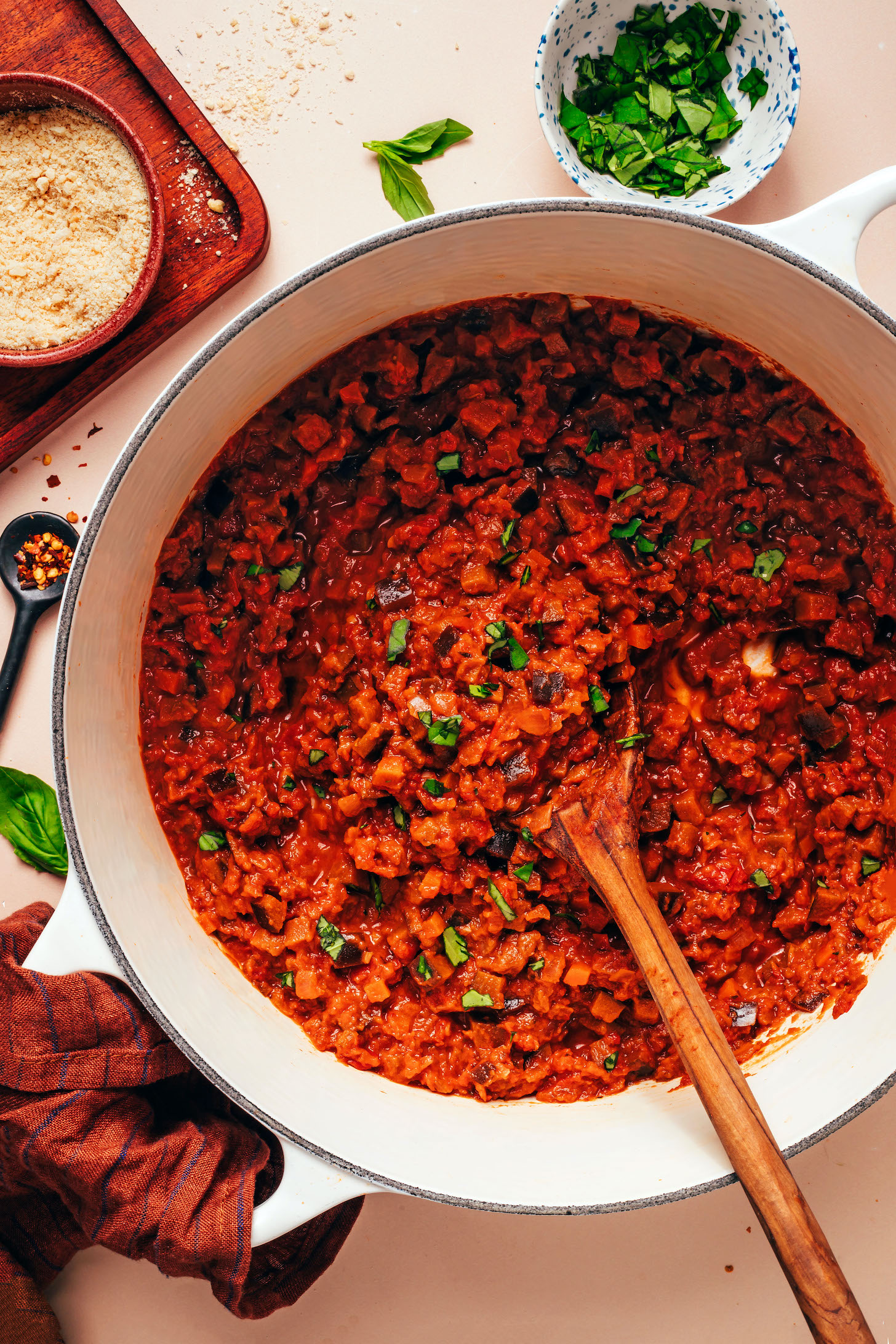
Once all components are fully integrated into the vessel, the dish enters its crucial reduction phase. Culinary science dictates that prolonged, gentle simmering allows water content to evaporate, concentrating the complex flavors of the tomatoes, aromatics, and fats while softening the vegetables into a unified sauce.
The recipe calls for a minimum simmer time of 20 to 30 minutes, which is sufficient for a quick weeknight meal. However, culinary analysts and food developers note that extending the simmer time up to one hour allows the starches and natural sugars to meld further, yielding a far more robust and rounded flavor profile. This flexibility makes the dish adaptable for both high-paced weekday dinners and leisurely weekend cooking.
Nutritional Profile and Dietary Adaptability
From a nutritional perspective, this eggplant Bolognese offers a compelling alternative to traditional meat-based sauces. Laboratory and nutritional estimations for a standard single-serving portion indicate an approximate caloric load of 284 calories, alongside 31.9 grams of carbohydrates and 17.1 grams of healthy plant-based fats, primarily derived from olive oil and nuts.
Crucially, the dish delivers an impressive 8.3 grams of dietary fiber per serving, surpassing the fiber content typically found in standard meat sauces due to the inclusion of eggplant, carrots, and tomatoes. Protein levels register at approximately 6.6 grams per serving, though the recipe’s inherent modularity allows for straightforward protein supplementation. Consumers seeking higher protein intake can easily adapt the dish by incorporating red lentils directly into the simmering sauce, serving the ragù over lentil-based pasta, or pairing it with plant-based or turkey meatballs.
Furthermore, the recipe is inherently versatile regarding dietary restrictions. It is naturally vegetarian and can be easily modified to be fully vegan by utilizing dairy-free cheese alternatives, such as a homemade almond or cashew-based parmesan. It is also inherently adaptable for gluten-free diets when paired with certified gluten-free pasta or polenta.
Serving Suggestions and Culinary Pairings
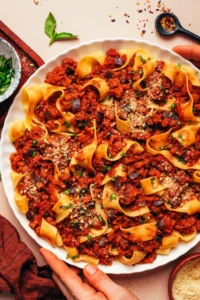
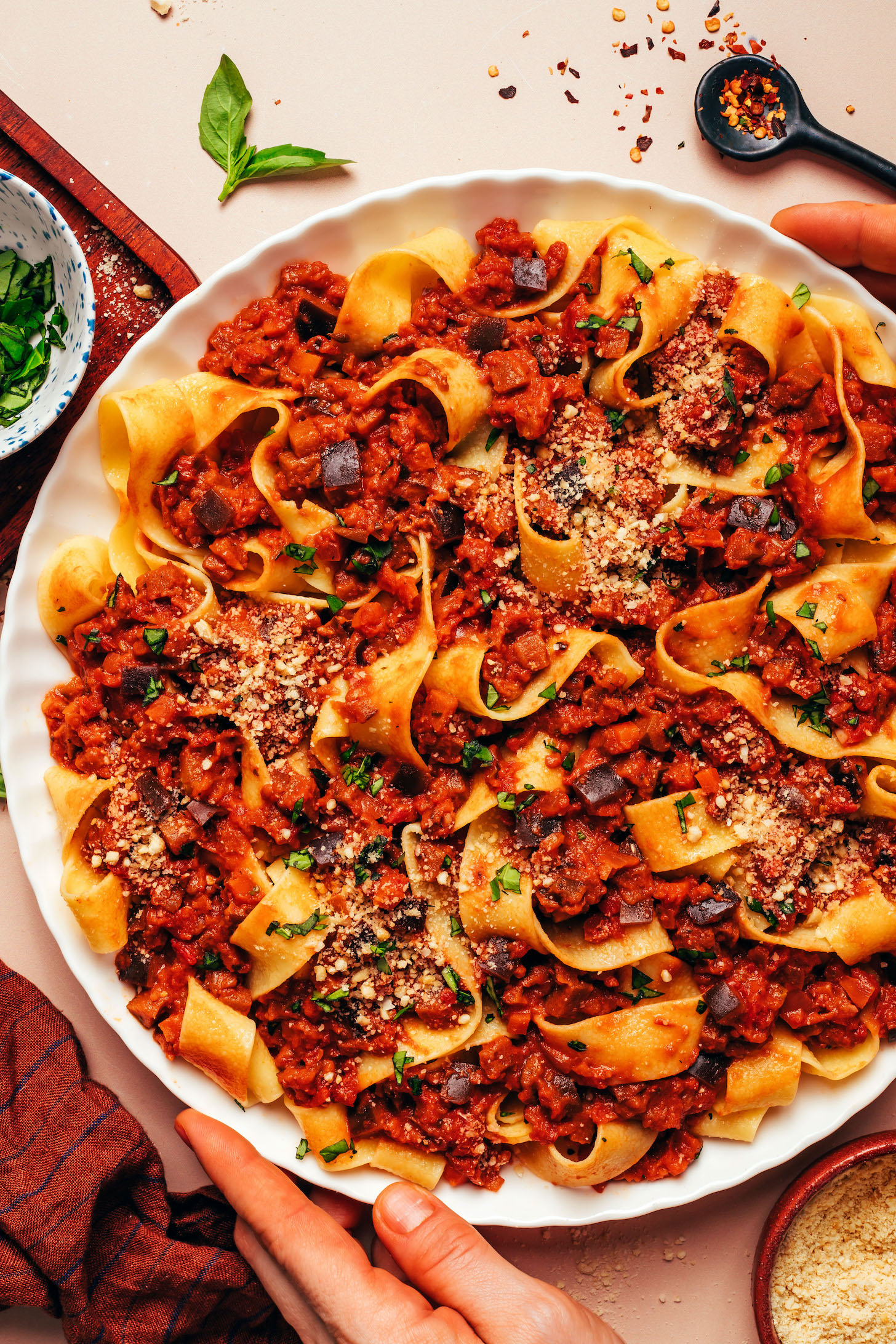
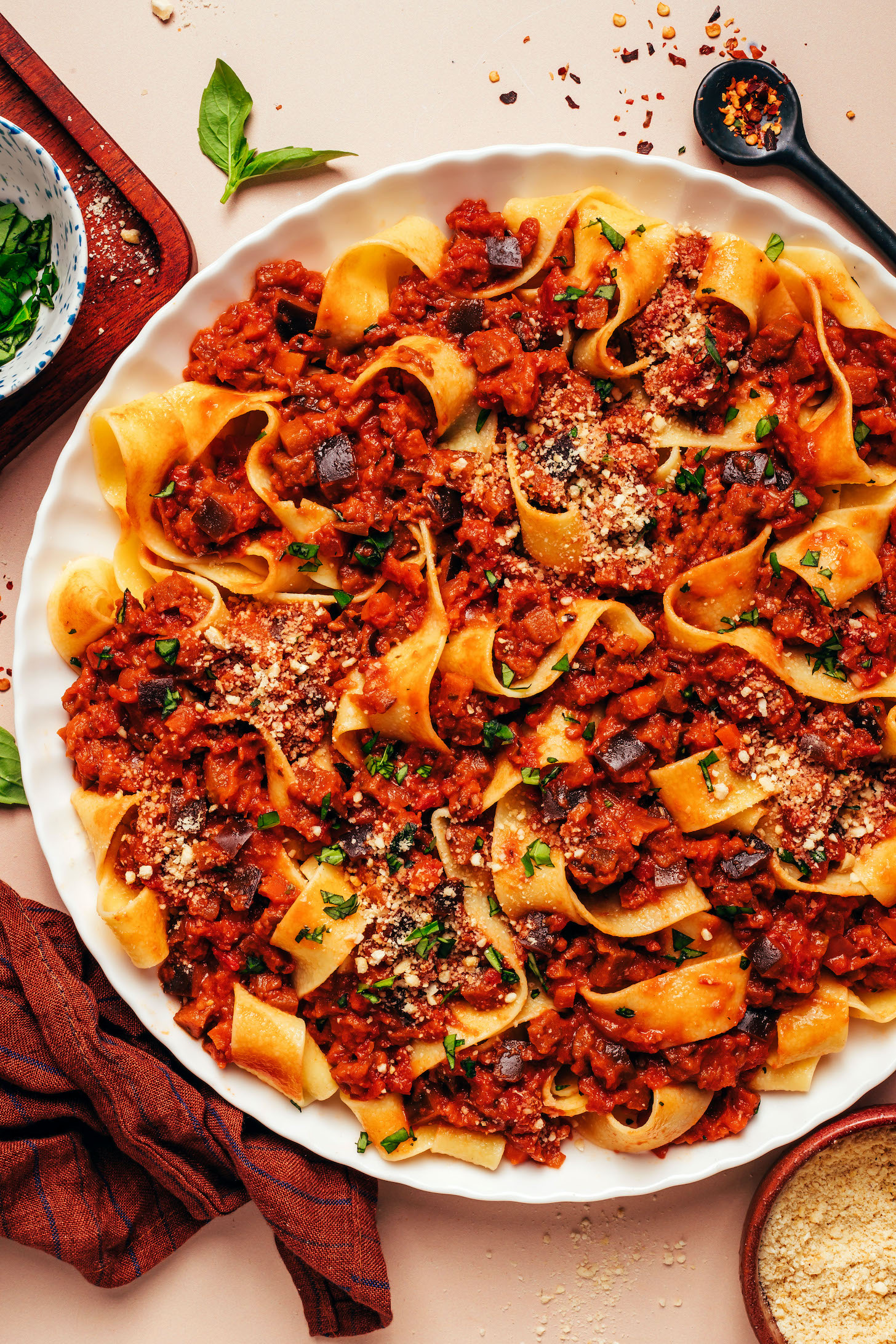
The versatility of the finished eggplant ragù extends beyond traditional long-strand pasta shapes like pappardelle or spaghetti. Culinary experts recommend serving the thick, hearty sauce over a bed of creamy, slow-cooked polenta or utilizing it as a foundational layer in vegetarian layered casseroles.
To elevate the dining experience, the dish is frequently garnished with fresh basil leaves and a dusting of dairy-free parmesan cheese, which adds a nutty, savory finish that mimics traditional Italian dairy toppings. For larger gatherings or multi-course meals, the Bolognese pairs effectively with lighter side dishes, such as a crisp chickpea Caesar salad, or alongside protein-forward additions like simple vegan meatballs or pesto turkey meatballs for non-vegetarian guests.
Storage, Preservation, and Scalability
In an era where food waste reduction is a primary concern for households globally, the storage capabilities of prepared meals are an essential metric of their practicality. This eggplant Bolognese demonstrates exceptional durability in both refrigerated and frozen environments.
When stored in an airtight container in a standard domestic refrigerator, the sauce maintains its structural integrity and safety for three to four days. Moreover, the chemistry of tomato-based sauces often benefits from overnight storage, as flavors continue to commingle and deepen. For long-term meal planning, the sauce is entirely freezer-friendly, retaining its quality for up to one month when stored at proper sub-zero temperatures. This makes it an efficient option for batch cooking and meal-prep routines.
Broader Economic and Environmental Implications
The rise of recipes like single-pot eggplant Bolognese reflects a broader cultural and economic shift in consumer behavior. With grocery inflation and environmental sustainability concerns influencing household purchasing decisions, consumers are increasingly turning to locally sourced, seasonal vegetables as cost-effective substitutes for expensive cuts of meat.
Eggplant, being a high-yield crop that thrives in temperate and warm climates during the summer months, represents an affordable and ecologically sustainable ingredient. By reducing reliance on animal agriculture—which carries a significantly higher carbon footprint—home cooks adopting plant-forward Italian dishes contribute to lower domestic greenhouse gas emissions and water usage associated with food production.
Ultimately, the integration of traditional Italian cooking techniques with modern, plant-based ingredients demonstrates that dietary adaptations do not require a sacrifice of flavor or culinary tradition. As home kitchens continue to prioritize simplicity, efficiency, and health, innovative dishes like 1-pot eggplant Bolognese are poised to remain a staple of contemporary home cooking well beyond the late-summer season.