Nasi Ulam, traditionally translated as "herb rice," stands as a cornerstone of traditional cuisine in Kelantan, Malaysia’s northernmost peninsular state. This culinary staple reflects a complex fusion of indigenous agricultural practices, coastal geography, and centuries-old preservation techniques. Beyond a simple meal of rice and vegetables, Nasi Ulam represents a multi-sensory dining experience rooted in the biodiversity of the Malay Peninsula. At the center of this culinary tradition is D’Umi Nasi Ulam, a prominent dining establishment located near the Thai border, which serves as both a local cultural hub and a late-night culinary destination for travelers and cross-border commuters.
The Historical and Cultural Context of Kelantanese Cuisine
Kelantan’s culinary identity is distinct from that of the southern and western regions of Peninsular Malaysia. Influenced heavily by its geographic proximity to Thailand and its coastal access to the South China Sea, Kelantanese food relies heavily on fresh herbs, foraged jungle produce, and fermented seafood products. The state’s cuisine historically developed out of necessity, utilizing wild flora and marine abundance to create nutrient-dense, flavorful dishes that could withstand tropical climates.

Culinary historians note that dishes like Nasi Ulam, Nasi Kerabu, and Nasi Dagang are manifestations of this resourcefulness. The use of raw herbs and wild greens—collectively known as "ulam"—has long been associated with traditional Malay wellness practices, providing dietary fiber, antioxidants, and essential micronutrients. In recent years, gastronomic tourism has elevated these regional dishes from local staples to subjects of national and international culinary interest, drawing food researchers and travelers to northern Malaysia.
Anatomy of a Nasi Ulam Feast at D’Umi Nasi Ulam

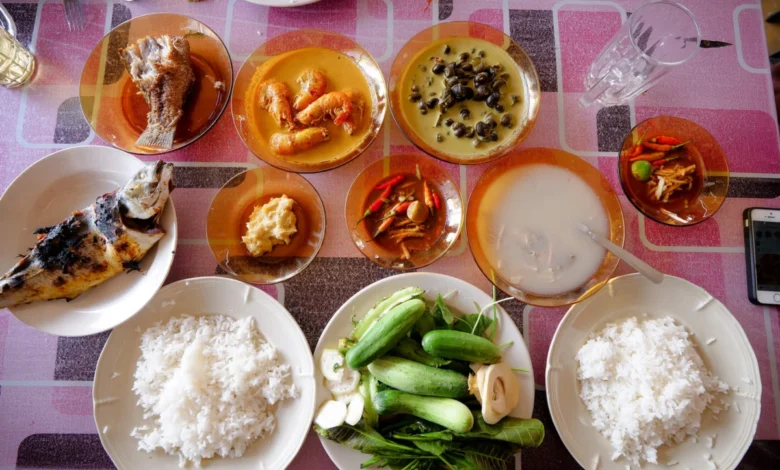
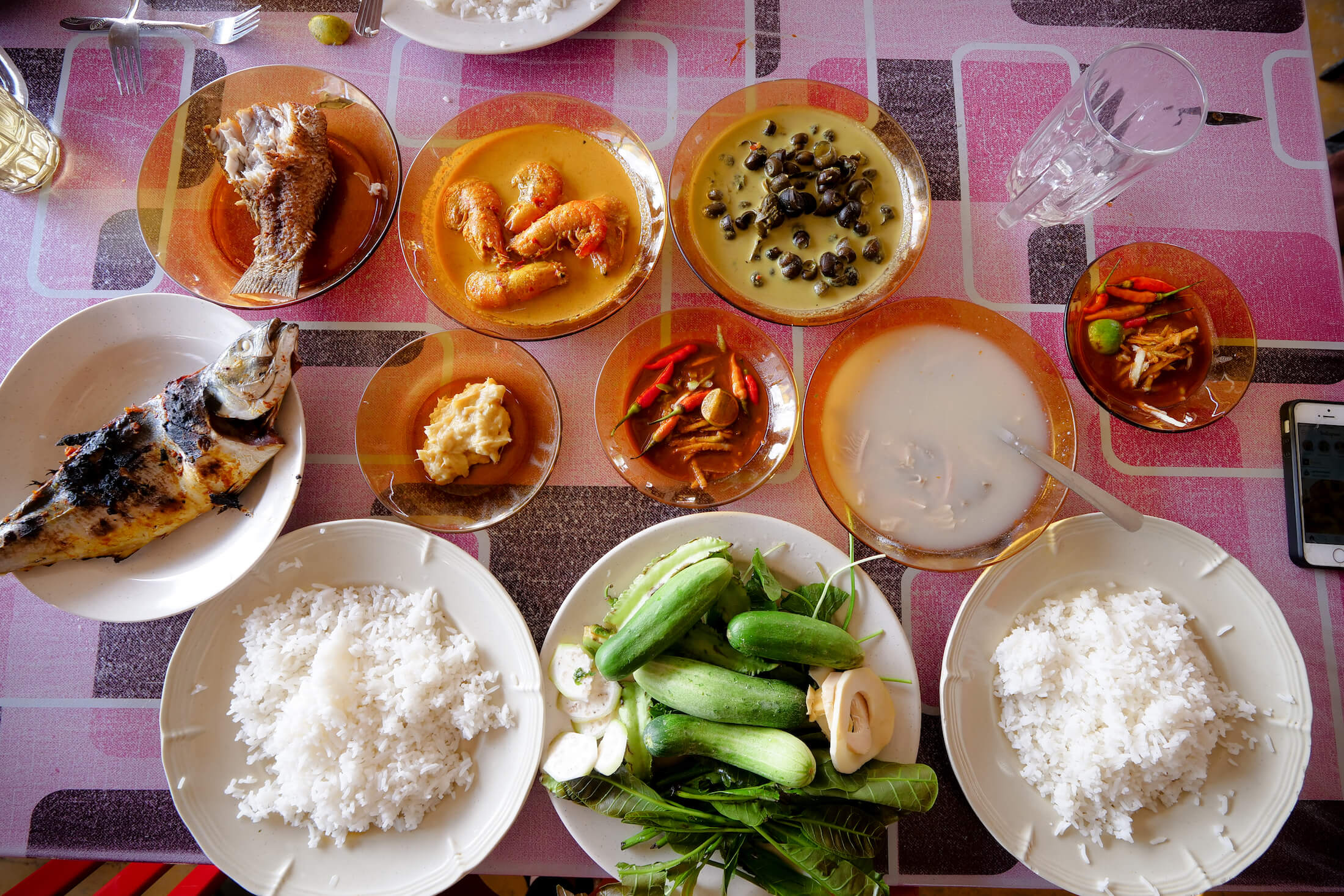
A standard serving of Nasi Ulam at D’Umi Nasi Ulam diverges significantly from its literal translation. While the foundation consists of steamed white rice, the accompanying elements comprise a vast array of foraged ingredients, proteins, and fermented condiments. Diners are presented with a self-service selection of greens and herbs, including wild jungle pepper (Piper sarmentosum), cashew tree leaves, mango leaves, Indian pennywort, Vietnamese mint, and betel leaves.
Proteins accompanying the dish typically reflect the region’s coastal geography. Charcoal-grilled mackerel (Ikan Bakar) is a primary fixture. Unlike preparation methods found in Kuala Lumpur or Melaka, where chili paste is applied externally, the culinary technique at D’Umi Nasi Ulam involves stuffing spicy red sambal directly inside the cavity of the fish before it is returned to the grill. This method allows the smoke to infuse the chili paste and the fish meat simultaneously, creating a distinct flavor profile.

In addition to finfish, the restaurant offers large ocean shrimp prepared in a creamy, mildly sweet coconut-based orange sauce, as well as sea shells simmered in spiced coconut broth. The preparation of the shells requires the removal of the sharp distal ends to facilitate extraction, a communal dining aspect that engages tactile senses.
The Science and Significance of Budu and Tempoyak

Central to the Nasi Ulam experience are two powerful condiments: Budu and Tempoyak. Budu is a traditional Kelantanese fish sauce produced through the salt-fermentation of anchovies, combined with palm sugar and tamarind over extended periods. Microbiologically, Budu is rich in halophilic bacteria, placing it within the broader global category of traditional fermented foods valued for their probiotic properties. Nutritional anthropologists categorize such condiments not merely as flavor enhancers, but as vital sources of sodium and protein in historical Southeast Asian diets.
Tempoyak, another regional specialty, consists of fermented durian pulp preserved with salt. When combined, Budu and Tempoyak create a complex flavor matrix characterized by high umami, acidity, and pungency. Culinary experts often note that the juxtaposition of salty Budu and sour-sweet Tempoyak cuts through the richness of coconut-based curries and balances the astringency of raw ulam herbs.

Operational Dynamics and Accessibility
D’Umi Nasi Ulam operates under a unique business model dictated by its strategic location. Situated near the international border crossing with Thailand, the establishment functions as a crucial waypoint for long-distance transport workers and nocturnal travelers. Consequently, while standard lunch service attracts daytime diners seeking traditional Malay midday meals, the restaurant maintains extended operational hours, remaining open through the night and closing at 5:00 AM daily (excluding Fridays).

Pricing at the establishment remains accessible, aligning with regional budget-dining standards. A comprehensive meal featuring rice, assorted herbs, grilled fish, and specialty seafood typically ranges between 15 and 20 Malaysian Ringgit (MYR) per person. This affordability, combined with the high volume of daily turnover, ensures that ingredients—particularly foraged leaves and seafood—remain fresh.
Broader Implications for Regional Gastronomy

The sustained popularity of establishments like D’Umi Nasi Ulam underscores the resilience of traditional foodways in the face of rapid modernization and fast-food expansion in Southeast Asia. Public health and nutrition specialists frequently point to traditional diets high in fresh herbs and fermented foods as models of nutrient diversity, contrasting them with modern processed diets.
Furthermore, the cross-border culinary exchange between southern Thailand and northern Malaysia highlights the fluidity of cultural boundaries in the region. Ingredients like Budu find parallels in neighboring Thai provinces, yet distinct preparation methods maintain local culinary sovereignty. As culinary tourism continues to drive economic activity in Kelantan, the preservation of these labor-intensive recipes—ranging from the precise fermentation of anchovies to the meticulous foraging of jungle greens—remains vital to the cultural heritage of the Malay Peninsula.