Exploring the Rich Heritage of Javanese Poultry Cuisine: Traditional Recipes and Cultural Significance

The culinary landscape of Java, Indonesia, has long been celebrated for its profound complexity, historical depth, and the ingenious use of indigenous spices. Among the vast array of regional delicacies, chicken-based dishes hold a preeminent position, reflecting the agricultural abundance and dietary traditions of the island. From the comforting sweetness of spiced braises to the invigorating tang of steamed broths, Javanese poultry preparations offer a window into a rich heritage that continues to shape modern Indonesian gastronomy. Culinary historians note that these dishes are not merely sources of sustenance, but rather cultural artifacts that preserve centuries-old preservation techniques, agrarian lifestyles, and trade influences.
Dishing Up History: The Evolution of Javanese Poultry Cookery
To understand the prominence of chicken in Javanese cuisine, one must examine the historical context of rural Java, where poultry was traditionally raised in domestic yards, known locally as ayam kampung (free-range chicken). Unlike modern commercial broiler chickens, ayam kampung yields a leaner, more muscular meat with a deeper, more robust flavor. This inherent gaminess required innovative culinary approaches to tenderize the meat while maximizing the absorption of local aromatics such as shallots, garlic, galangal, candlenuts, and coriander.
Over centuries, various royal courts and rural communities developed distinct flavor profiles. Central Java, particularly regions like Yogyakarta and Surakarta (Solo), became synonymous with sweet and savory flavor combinations, heavily reliant on palm sugar (gula Jawa or gula aren) and coconut milk. Conversely, coastal regions and parts of East Java often leaned toward sharper, spicier, and more pungent profiles. As these recipes were passed down through generations, they evolved into regional staples that now define the culinary identity of Indonesia on the global stage.
Culinary Analysis: The Chemistry and Craft of Javanese Braising and Steaming
The enduring popularity of Javanese chicken dishes lies in their meticulous preparation methods, which balance contrasting flavor profiles: sweet (manis), savory (gurih), sour (asam), and spicy (pedas). Food science experts frequently highlight how traditional Javanese techniques—such as ungkep (slow simmering in spiced liquid) and wrapping in banana leaves—serve practical purposes beyond flavor enhancement.
In the case of baceman, the slow reduction of coconut water combined with palm sugar and aromatics allows the natural sugars to caramelize slightly around the protein, creating a deep, complex flavor barrier. Coconut water, rich in natural electrolytes and potassium, acts as a natural tenderizer, breaking down tough muscle fibers in free-range poultry without the need for harsh chemical agents. Similarly, the use of banana leaves in dishes like garang asem acts as a natural steaming vessel that locks in moisture, infusing the chicken with subtle, earthy undertones while the acidity from local fruits or vinegars cuts through the richness of the accompanying broth.
Detailed Recipe Compilation: Authentic Javanese Preparations
For culinary enthusiasts and home cooks seeking to recreate these traditional flavors, the following authentic recipes provide a comprehensive guide to three iconic Javanese chicken dishes: Garang Asem, Ayam Goreng Baceman, and Soto Seger Boyolali.
- Authentic Garang Asem Ayam (Central Javanese Style)
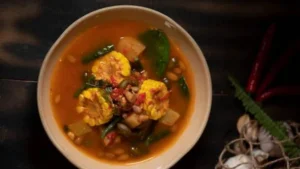
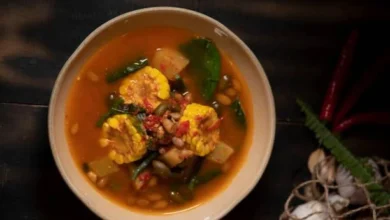
Garang Asem is a traditional Central Javanese delicacy known for its refreshing tartness, savory depth, and gentle heat. Traditionally prepared with free-range chicken, this dish relies on a unique steaming method inside banana leaf parcels, which prevents the volatile aromatics from escaping.
Preparation Details:
- Preparation and Cooking Duration: 60 minutes
- Difficulty Level: Moderate
- Yield: 4 servings
- Region of Origin: Central Java, Indonesia
- Food Category: Poultry Entrée
Ingredients:
- 500 grams chicken pieces (preferably free-range, cut into bite-sized portions)
- 3 star fruit (belimbing wuluh), sliced into rounds (or substitute with firm green tomatoes for acidity)
- 5 shallots, thinly sliced
- 3 cloves garlic, thinly sliced
- 3 bird’s eye chilies (cabe rawit), left whole or sliced according to preference
- 2 stalks lemongrass, bruised and cut into sections
- 3 kaffir lime leaves, central ribs removed
- 2 centimeters galangal, bruised
- 200 milliliters thin coconut milk (optional, for a richer broth)
- Salt and sugar to taste
- Banana leaves and toothpicks for wrapping
Cooking Instructions:
-
Thoroughly clean the chicken pieces and set them aside in a large mixing bowl.
-
In a separate bowl, combine the sliced shallots, garlic, bird’s eye chilies, star fruit (or green tomatoes), bruised lemongrass, galangal, and kaffir lime leaves.
-
Add the chicken pieces to the aromatic mixture, gently tossing to ensure the spices are evenly distributed. Season with salt and sugar to taste. If a richer flavor profile is desired, pour in the thin coconut milk at this stage.
-
Prepare the banana leaves by wiping them clean and softening them briefly over an open flame or steaming them for a few minutes to prevent tearing.
-
Spoon portions of the chicken and spice mixture into the center of the banana leaf sheets. Secure the edges tightly with toothpicks or small skewers to form secure, leak-proof parcels.
-
Arrange the parcels in a preheated steamer basket. Steam over medium heat for approximately 45 to 60 minutes, or until the chicken is thoroughly tender and has absorbed the infused aromatic liquids.
-
Remove from the steamer and serve hot, still wrapped in the banana leaves, alongside a warm bowl of steamed white rice.
-
Traditional Ayam Goreng Baceman (Javanese Sweet-Savory Fried Chicken)
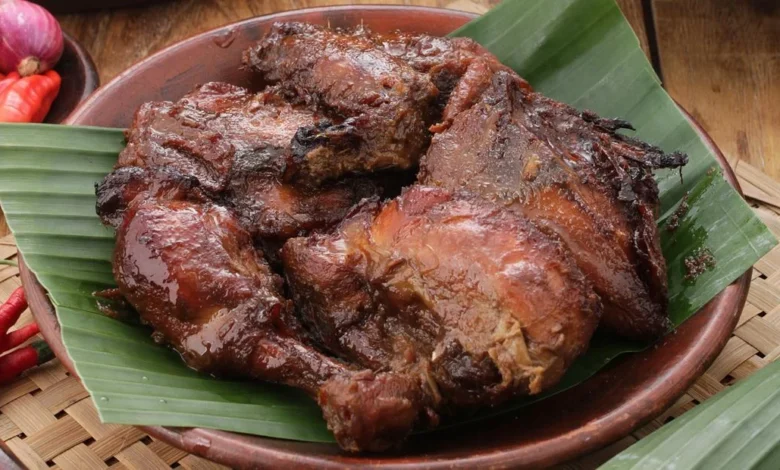
While baceman is widely recognized in Java as a method for preserving and flavoring tofu and tempeh, applying this technique to chicken yields a uniquely succulent dish with a caramelized exterior and a deeply savory interior.
Ingredients:
- 1 whole chicken (approx. 1 kilogram, cut into 8 standard portions)
- 250 milliliters water
- 500 milliliters fresh coconut water
- 100 grams palm sugar (gula Jawa), finely grated
- 3 centimeters galangal, bruised
- 3 Indonesian bay leaves (daun salam)
- Cooking oil for shallow frying
Fine Spice Paste (Bumbu Halus):
- 4 cloves garlic
- 8 shallots
- 1 teaspoon coriander seeds
- 2 teaspoons sea salt
- 1 teaspoon whole white peppercorns
Cooking Instructions:
-
Arrange the chicken pieces snugly in a wide-bottomed skillet or wok to ensure even heat distribution.
-
Pour the coconut water and plain water over the chicken. Add the grated palm sugar, bruised galangal, Indonesian bay leaves, and the freshly ground spice paste.
-
Bring the mixture to a gentle boil over medium heat, then reduce the heat to low. Cover the skillet and allow the chicken to simmer slowly, letting the liquid reduce and the aromatics penetrate the meat.
-
Stir the chicken occasionally, ensuring all pieces absorb the accumulating glaze. Continue cooking until the liquid has completely evaporated (surut) and the chicken pieces have transformed into a rich, deep brown color.
-
Turn off the heat and allow the chicken to cool slightly. At this stage, the chicken can be consumed directly, but for the traditional fried texture, proceed to the next step.
-
Heat a moderate amount of cooking oil in a frying pan over medium-high heat. Quickly fry the braised chicken pieces for a brief period—approximately 1 to 2 minutes per side—just until a light crust forms. Avoid over-frying to prevent the meat from drying out.
-
Drain on paper towels and serve immediately with warm white rice, fresh vegetable accompaniments (lalapan), and traditional chili paste (sambal).
-
Soto Seger Boyolali (Clear Javanese Chicken Soup)
Originating from the Boyolali regency in Central Java, this iteration of the ubiquitous Indonesian soto is celebrated for its exceptionally clear broth, light herbal aroma, and comforting simplicity. It is traditionally served with shredded chicken, bean sprouts, and a selection of fresh condiments.
Ingredients:
- 500 grams chicken meat (boiled and subsequently fried for shredding)
- 2 liters clean water
- 2 Indonesian bay leaves (daun salam)
- 2 stalks lemongrass, bruised
- 3 kaffir lime leaves
- 3 centimeters galangal, bruised
- 2 tablespoons chicken bouillon powder
- 2 stalks scallions, roughly chopped
Fine Spice Paste (Bumbu Halus):
- 5 cloves garlic
- 2 shallots
- 1 teaspoon whole white peppercorns
- 2 teaspoons salt
Complementary Garnishes:
- Fresh bean sprouts (tauge), blanched briefly
- Fresh limes, sliced into wedges
- Homemade bird’s eye chili sambal
- Finely sliced Chinese celery leaves (seledri)
- Crispy fried shallots (bawang goreng)
Cooking Instructions:
- Bring the 2 liters of water to a boil in a large soup pot. Add the chicken pieces and return to a boil until impurities rise to the surface as foam. Skim off the foam to maintain broth clarity.
- Once the chicken is cooked through, remove it from the pot and set aside to cool. Reserve the cooking liquid in the pot, maintaining a gentle simmer.
- Once cooled, fry the boiled chicken in hot oil until the exterior is lightly golden and crisp. Shred the meat into manageable strips.
- In a separate pan, sauté the fine spice paste until fragrant and fully cooked. Transfer the sautéed paste directly into the simmering broth pot.
- Add the Indonesian bay leaves, bruised lemongrass, kaffir lime leaves, bruised galangal, and chicken bouillon powder to the pot. Simmer gently for 15 minutes to allow the flavors to meld completely.
- To assemble, place a portion of shredded chicken and blanched bean sprouts into individual serving bowls. Ladle the piping hot, clear broth directly over the ingredients.
- Garnish generously with finely sliced celery leaves, crispy fried shallots, a squeeze of fresh lime juice, and a side of sambal for adjusted heat.
Broader Socio-Economic Impact and Cultural Preservation
The preservation and commercial viability of these traditional recipes carry significant economic and cultural implications for modern Indonesia. Street vendors, traditional dining establishments (warung), and high-end culinary tourism venues alike rely on these foundational dishes to attract both domestic and international visitors.
According to culinary economists, the demand for authentic regional dishes supports local agricultural supply chains—from free-range poultry farmers and palm sugar producers to spice growers across the archipelago. Furthermore, as Indonesian gastronomy gains international recognition through government-backed culinary diplomacy initiatives, recipes like Garang Asem, Ayam Bacem, and Soto Boyolali serve as ambassadors of cultural identity. By documenting, standardizing, and adapting these recipes for contemporary kitchens, culinary practitioners ensure that the rich heritage of Javanese cooking endures for future generations, maintaining a vital link to the island’s historical past while thriving in the modern global food economy.
Related posts: