
Indonesian Authorities Confirm ISIS Responsibility for Deadly Terrorist Attacks in Central Jakarta

The heart of Indonesia’s capital was thrust into chaos on Thursday as a series of coordinated explosions and gunfights erupted in the bustling Jalan Thamrin district, an event that authorities have now officially linked to the Islamic State of Iraq and the Levant (ISIS). National Police Deputy Chief Commissioner General Budi Gunawan confirmed the affiliation following a preliminary investigation into the tactics and materials used during the assault. The attack, which targeted a busy commercial intersection near the Sarinah shopping mall, involved a combination of suicide bombings, hand grenades, and small arms fire, marking a significant escalation in the security challenges facing the Southeast Asian nation.
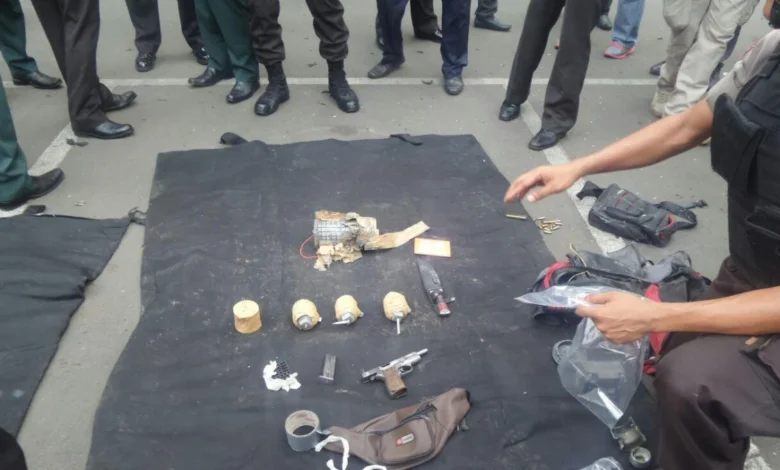
According to General Budi Gunawan, the evidence recovered from the scene and the nature of the engagement point directly to a cell inspired by or directed by ISIS. Speaking from the site of the incident, he noted that the attackers were well-armed, carrying FN-model semi-automatic pistols and a variety of explosive devices. Some of these explosives were detonated during the initial stages of the attack, while several others—including unexploded grenades and pipe bombs—were later neutralized by the police bomb disposal unit (Gegana). The presence of such ordnance in a high-traffic urban center underscores the calculated nature of the strike, which was intended to maximize both casualties and psychological impact.
The assault began in the late morning at a location synonymous with international commerce and tourism. Preliminary reports indicate that the first explosion occurred at a Starbucks outlet located in the Skyline Building, followed shortly by a blast at a nearby police traffic post. The subsequent standoff between security forces and the militants turned the thoroughfare into a battlefield, with snipers and tactical units engaging the perpetrators in a high-stakes shootout. General Gunawan reassured the public that the situation had been brought under control within hours, dismissing rumors of additional hostage situations or secondary explosions elsewhere in the city.
A Detailed Chronology of the Thamrin Attacks
The timeline of the incident reveals a swift and violent progression. At approximately 10:40 AM local time, the first explosion rocked the Starbucks café, shattering windows and sending panicked bystanders fleeing into the street. Eyewitnesses reported seeing at least three suicide bombers enter the premises shortly before the detonation. Almost simultaneously, a second explosion occurred at a police post situated in the middle of the Thamrin-Sarinah intersection. This blast was reportedly triggered by a suicide bomber who approached the post on foot, targeting the officers stationed there.
Following the initial blasts, the attackers moved to engage security forces directly. A group of militants, armed with FN pistols, began firing at police and civilians near the Sarinah parking lot. This led to a prolonged exchange of gunfire as members of the National Police’s Special Response units moved in to cordons off the area. During the firefight, two additional militants were seen throwing grenades at the police line before they were eventually neutralized. By 12:00 PM, the area had been flooded with armored vehicles and hundreds of heavily armed officers, effectively pinning down the remaining attackers.
By early afternoon, the National Police confirmed that four of the terrorists had been killed—some by their own explosive devices and others by police fire. The immediate aftermath left a grim scene of debris, damaged vehicles, and casualties scattered across the pavement. General Gunawan emphasized that while the immediate threat had been neutralized, the investigation was shifting toward identifying the broader network that facilitated the logistics of the attack.
Weaponry and Tactical Analysis
The choice of weaponry used in the Thamrin attack provides insight into the capabilities of the insurgent cell. The FN semi-automatic pistols identified by General Budi Gunawan are reliable, military-grade sidearms that suggest a level of procurement sophistication beyond typical "lone wolf" actors. These weapons, combined with the use of both suicide vests and hand-thrown grenades, indicate a hybrid tactical approach—combining the shock of a suicide mission with the sustained engagement of an active shooter scenario.
Forensic teams at the scene discovered several unexploded devices, which General Gunawan described as "still active" and highly dangerous. These included pipe bombs and modified grenades designed to spray shrapnel upon detonation. The fact that the attackers carried additional ordnance suggests they may have planned for a more protracted siege or a secondary wave of attacks. The rapid intervention by the police likely prevented a much higher death toll, as the militants were unable to utilize their entire arsenal before being intercepted.
Casualties and the Impact on Foreign Nationals
The human cost of the attack has been felt both locally and internationally. General Budi Gunawan provided a preliminary breakdown of the casualties, noting that seven people were confirmed dead in the immediate aftermath. This figure includes the four perpetrators and three victims: two Indonesian civilians and one police officer who succumbed to injuries sustained during the initial blast at the traffic post.
Among the victims were foreign nationals, highlighting the international profile of the Jalan Thamrin area, which houses numerous embassies and multinational corporate offices. General Gunawan confirmed that one foreign national was killed in the attack, while another was seriously injured and transported to a nearby hospital for emergency surgery. The identity of the deceased foreigner was later confirmed by diplomatic sources to be a Canadian citizen, while the injured individual was identified as a Dutch national.
The targeting of a Starbucks outlet and an area frequented by expatriates suggests a deliberate attempt by ISIS to strike at symbols of Western influence within Indonesia. This follows a pattern observed in other ISIS-linked attacks globally, where soft targets with high international visibility are prioritized to garner global media attention.
Official Responses and National Security Measures
In the wake of the violence, the Indonesian government has moved quickly to restore order and provide a unified front against the threat of radicalism. President Joko Widodo, who was on a working visit to West Java at the time, cut his trip short to return to the capital. He visited the site of the explosions and issued a stern condemnation of the acts, urging the public not to succumb to fear. "Our nation and our people should not be afraid. We will not be defeated by these acts of terror," the President stated, echoing a sentiment that soon trended across social media under the hashtag #KamiTidakTakut (We Are Not Afraid).
General Budi Gunawan echoed this resolve, stating that while the police remain on high alert, the city must return to its normal rhythm. However, he also issued a plea for public vigilance. "We need to anticipate further threats and not be misled by the current calm," he warned. He urged citizens to report any suspicious activities or the arrival of "new residents" in their neighborhoods who might be linked to extremist cells. The National Police have since heightened security at "Markas Komando" (Command Headquarters), government buildings, and foreign diplomatic missions across the country.
The Indonesian intelligence community is now focusing on the possible involvement of Bahrun Naim, an Indonesian militant currently believed to be in Syria fighting with ISIS. Intelligence officials suggest that Naim may have orchestrated the attack from abroad, providing funding and instructions to local cells in an attempt to assert ISIS’s dominance in the region and compete with other extremist factions like Jemaah Islamiyah.
Historical Context and Regional Implications
The Thamrin attack is the first major terrorist incident in Jakarta since the 2009 twin bombings of the JW Marriott and Ritz-Carlton hotels. For years, Indonesia’s elite counter-terrorism unit, Densus 88, had been successful in dismantling major militant networks, leading to a period of relative domestic stability. However, the rise of ISIS has presented a new challenge, as the group’s decentralized ideology allows for the emergence of smaller, harder-to-detect cells that operate independently of traditional hierarchies.
This incident also highlights the growing threat of "returnees"—Indonesian citizens who traveled to the Middle East to join the caliphate and have since returned with combat experience and extremist connections. The use of Jalan Thamrin, the city’s primary artery, as a target demonstrates a shift in strategy toward urban guerrilla warfare in the heart of the democratic Muslim-majority nation.
Regionally, the attack has prompted neighboring countries like Malaysia and Singapore to raise their own security alert levels. Southeast Asia has long been a focal point for extremist recruitment, and the Jakarta attacks serve as a grim reminder that the reach of ISIS extends far beyond the borders of Iraq and Syria. The coordination required to execute such an attack in a heavily policed capital suggests that local extremist infrastructure remains resilient despite years of government pressure.
Broader Socio-Economic Impact
Beyond the immediate security concerns, the Thamrin bombings have raised questions about the long-term impact on Indonesia’s economy and tourism sector. Jakarta is a vital hub for regional trade, and Jalan Thamrin is the epicenter of its financial district. While the Indonesian Rupiah and the local stock market showed initial volatility following the news of the blasts, they stabilized quickly as the government demonstrated control over the situation.
The "Indonesia Berani" (Brave Indonesia) movement that emerged in the hours following the attack has played a crucial role in maintaining social cohesion. By refusing to let the city be paralyzed by fear, Jakartans have sent a powerful message to extremist groups. Vendors were seen returning to their stalls near the blast site within 24 hours, and the Starbucks café—though heavily damaged—became a makeshift memorial for the victims.
However, the threat remains a significant factor for foreign investors and diplomatic missions. The targeting of "foreign objects," as General Gunawan described them, necessitates a permanent shift in how security is managed in urban centers. There are likely to be calls for legislative changes to give law enforcement broader powers in pre-emptive detentions, a move that will require a delicate balance between national security and the civil liberties that Indonesia has championed since its transition to democracy.
As the investigation continues, the National Police are working closely with international agencies to trace the financial trail of the attackers. General Budi Gunawan’s confirmation of ISIS involvement serves as a definitive marker in Indonesia’s ongoing struggle against radicalism, signaling that the fight has entered a new and more complex phase. The resilience of the Indonesian people remains the country’s strongest defense, but the events of November 14, 2016, will undoubtedly leave a lasting imprint on the nation’s security landscape.


