Michelin expands its iconic grapes ranking system to the storied vineyards of Bordeaux

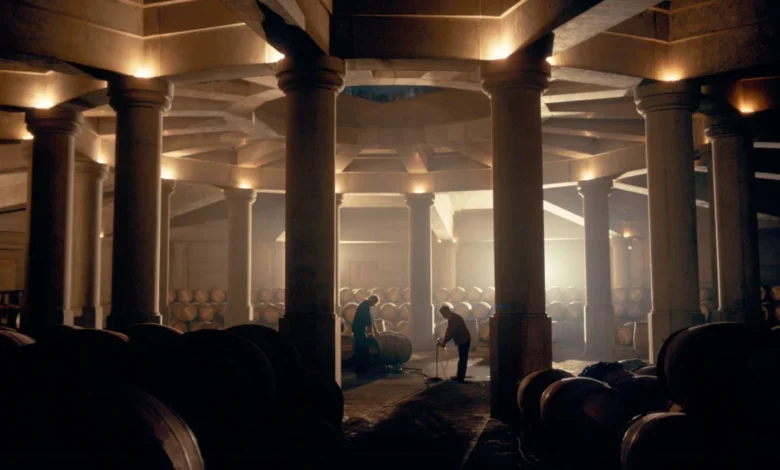
The landscape of French viticulture has shifted with the arrival of the Michelin Guide’s "grapes" classification in Bordeaux. Following a successful pilot program in Burgundy earlier this year, the world’s most recognizable arbiter of taste has turned its attention to the Médoc, St-Emilion, and beyond. This new system seeks to categorize estates based on a multi-dimensional assessment of their output, vineyard management, and historical consistency, marking a significant departure from the rigid, centuries-old classifications that have historically defined the region.
The Weight of History and the Michelin Methodology
Bordeaux has long been defined by its legacy classifications, most notably the 1855 Classification commissioned by Emperor Napoleon III. That system, which famously ranked the top Médoc estates into five tiers, remains the bedrock of Bordeaux’s global reputation, despite calls for reform over the decades. Other regional systems, such as the periodic re-evaluations of St-Emilion and the Cru Bourgeois lists, provide additional layers of structure. However, these systems are often criticized for their inherent conservatism or the political complexity involved in their periodic revisions.
The Michelin Grapes selection offers a modern, albeit controversial, alternative. Michelin’s entry into the wine sector is not intended to replace existing appellation laws or legacy rankings, but rather to provide a consumer-facing perspective based on a rigorous, independent inspection process.
According to Gwendal Poullennec, the international director of the Michelin Guide, the expansion into Bordeaux is a recognition of a region that is "deeply loyal to its history, yet never static." The inspectors tasked with this project assessed properties based on five core criteria: the quality of agronomy, technical mastery, the distinct identity of the wine, the balance of the final product, and, perhaps most crucially, consistency across multiple vintages.
Chronology of the Selection
The rollout of the Michelin Grapes system began as a strategic pivot for the brand, which has spent over a century refining its expertise in culinary evaluation.
- Early 2024: Michelin launches the "grapes" classification in Burgundy, testing the reception among traditionalist French winemakers.
- Mid-2024: The guide announces its expansion to Bordeaux, initiating a comprehensive review of hundreds of estates.
- Late 2024: The inaugural Bordeaux selection is unveiled, categorizing estates into three-grape, two-grape, and one-grape tiers, alongside a "Michelin Selected" category.
The Three-Grape Tier: A New Hierarchy
The top-tier "three-grape" designation was awarded to nine estates that the Michelin inspectors deemed to represent the pinnacle of quality. The list includes several surprises that challenge traditional hierarchies.
In the Médoc, the inclusion of Lafite Rothschild was expected, but the presence of two 1855 second growths—Montrose and Léoville Las Cases—has signaled a shift in prestige. Montrose, in particular, was highlighted for its commitment to refining vineyard management and its focus on historic plots, demonstrating that current operational excellence can rival historical status.
In the Right Bank, the list is equally elite. Petrus, the legendary Pomerol estate, was awarded three grapes, alongside the forward-thinking La Conseillante and the independent-minded Lafleur, which recently transitioned to the "Vin de France" designation to prioritize terroir over regional appellation regulations. In St-Emilion, Cheval Blanc and Figeac rounded out the top tier, while the Sauternes icon Château d’Yquem was the sole representative from the sweet wine region to reach the highest level.
The Latour Omission and the Question of Rigor
Perhaps the most discussed aspect of the announcement was the absence of Château Latour, one of the most prestigious First Growths in the world. Its exclusion prompted immediate speculation regarding the criteria used by Michelin.
In an effort to maintain transparency, a Michelin spokesperson addressed the omission directly, emphasizing that the absence of the estate was not a reflection of its quality, but rather a byproduct of the guide’s evolving internal process. "For a small number of estates, including Château Latour, our evaluation process had not been fully completed by the time this inaugural selection was finalised," the spokesperson stated. They emphasized that the guide’s "collegiate conclusion" process requires significant time and that the list is subject to annual reassessment. This statement serves as a reminder that the Michelin system is a living document, intended to be as dynamic as the vintage variations themselves.
Data and Tiered Distribution
The breadth of the survey is significant. Beyond the nine estates in the top tier, Michelin recognized a broad spectrum of producers:
- Two-Grape Tier: 16 estates, including first growths such as Château Mouton Rothschild, Château Margaux, and Château Haut-Brion. Other notable inclusions are Pichon Comtesse, Pichon Baron, Palmer, Angélus, Canon, Vieux Château Certan, and Les Carmes Haut-Brion.
- One-Grape Tier: 37 properties, featuring heavyweights like Lynch-Bages, Cos d’Estournel, Trotanoy, Le Pin, Léoville-Barton, and Bélair-Monange.
- Michelin Selected: 21 wineries, acknowledging estates that demonstrate promise or consistent high quality below the grape-ranking threshold.
Implications for the Bordeaux Market
The implications of this new classification are significant for both collectors and producers. By introducing an external, international standard of evaluation, Michelin is effectively putting pressure on the region’s long-standing, somewhat insular classification systems.
For producers, the "grapes" serve as a form of global validation that transcends the sometimes opaque political landscape of local wine syndicates. For consumers, the system provides a simplified, albeit high-level, guide that prioritizes consistent quality over historical labels. However, some traditionalists argue that a foreign entity—even one as respected as Michelin—may struggle to capture the nuance of Bordeaux’s complex soil profiles and micro-climates.
Furthermore, the "long-term view" mentioned in the Michelin methodology suggests that the guide intends to reward estates that invest in sustainable viticulture and technical modernization. This aligns with a broader industry shift toward environmental consciousness, where "quality of agronomy" is increasingly synonymous with long-term land stewardship.
Future Outlook
As the Michelin Guide continues to roll out its classification system across other French regions and eventually internationally, the impact on global wine tourism and investment will likely be profound. The ability for a winery to display a "three-grape" designation may soon become as coveted as a star is for a restaurant.
The Bordeaux launch represents a trial by fire for the system. By entering the most scrutinized wine region in the world, Michelin has invited a level of criticism that few other organizations would dare to face. Whether the market adopts these grapes as a new gold standard remains to be seen, but the initial response suggests that the guide has successfully captured the attention of the wine world, effectively forcing a dialogue about what defines excellence in the modern era of viticulture.
The annual reassessment cycle ensures that the guide will remain relevant, preventing the stagnation that has plagued other, more static ranking systems. As inspectors continue to walk the rows of the Médoc and the hills of St-Emilion, the message is clear: the history of Bordeaux is being rewritten one vintage at a time, and for the first time in a century, there is a new set of eyes judging the page.