The World of Rare Whiskey: Inside the Record-Breaking Market for Collectible Bourbons

While the broader alcoholic beverage sector currently navigates a period of global oversupply and softening consumer demand, the extreme upper echelon of the spirits market tells a dramatically different story. For decades, collectors and enthusiasts have sought out rare, aged, and allocated spirits, storing bottles in dark cellars to allow complex flavor profiles to evolve. Among all collectible categories, American bourbon has emerged as a powerhouse asset class. Even as mainstream sales cool following the explosive growth of the twenty-first-century bourbon boom, the prices commanded by ultra-rare and allocated bottlings continue to scale unprecedented heights. Data compiled by Wine-Searcher highlights this paradox, revealing that this year’s most expensive bourbon commands a price tag exceeding its predecessor by more than $10,000.
This sustained escalation in value underscores a resilient market driven by scarcity, historical lore, and the relentless pursuit of liquid history. From pre-Prohibition medicinal spirits to ultra-limited Japanese export editions, the world’s most expensive bourbons represent more than just luxury consumables—they are tangible artifacts of a bygone manufacturing era.
The Economic Paradox: Oversupply Versus Sky-High Valuations
The American whiskey industry is currently experiencing a complex economic adjustment. Following years of exponential growth, characterized by massive investments in distilling infrastructure, barrel production, and global marketing, the market has hit a plateau. Industry analysts point to a contemporary oversupply of standard and mid-tier whiskey. Production capacity outpaced immediate consumption, leading to bloated inventories for several major producers.
Yet, this macroeconomic sluggishness has zero impact on the secondary market for allocated, vintage, and high-age-statement bourbons. Wealthy collectors and investors view these scarce assets as liquid gold, insulated from standard market corrections. The rationale is simple: while standard bourbon can be produced in virtually unlimited quantities given time, historical barrels distilled decades ago—especially those from shuttered distilleries—are finite. As fewer bottles remain in existence, competition intensifies, pushing prices exponentially higher regardless of current economic headwinds.
A Chronological Journey Through Liquid History
To understand why these specific bottles command small fortunes, one must look at the timeline of American whiskey production, noting how historic events shaped the liquid inside the glass.
The Pre-Prohibition Era and Medicinal Whiskeys
The earliest entries on the elite market trace back to the early twentieth century. When the 18th Amendment ushered in Prohibition in 1920, the landscape of American distilling was decimated. However, a crucial legal loophole permitted certain distilleries to continue producing and selling whiskey for medicinal purposes under physician prescriptions.
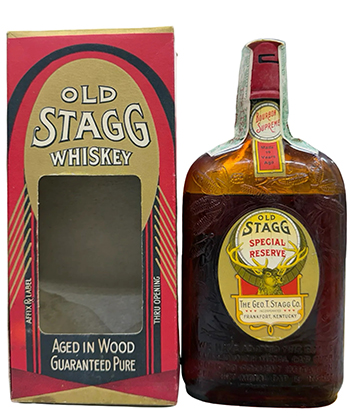
Bottles such as the Old Stagg 19 Year Old Straight Bourbon Whiskey, distilled in 1914 at the original George T. Stagg Distillery (now Buffalo Trace) in Frankfort, Kentucky, and bottled in 1933, serve as direct historical time capsules. Similarly, the Old Rip Van Winkle Bottled in Bond Kentucky Straight Bourbon Whiskey—produced in 1916 and released in 1934—reflects an era when whiskey was crafted in Kentucky, aged in specialized warehouses across state lines, and ultimately packaged in pint-sized decanters for pharmacy distribution.
The Mid-Century Masterpieces and Shuttered Distilleries
The middle decades of the twentieth century produced legendary distillates from facilities that no longer exist, making their contents entirely irreplaceable.
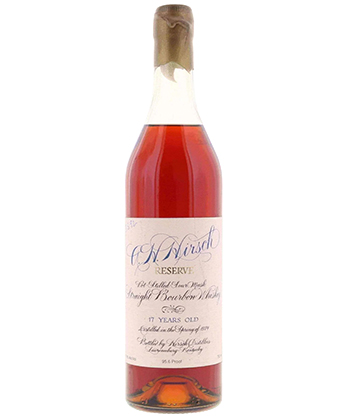
In 1974, Adolph Hirsch commissioned a 400-barrel batch of whiskey from a distillery in Schaefferstown, Pennsylvania. These barrels rested untouched for fifteen years until the facility ceased operations in 1989 amid a severe industry slump. The remaining stock was subsequently transferred to Kentucky to complete its maturation, ultimately yielding the iconic A.H. Hirsch Reserve 17 Year Old Straight Bourbon Whiskey.
Around the same timeframe, the historic Stitzel-Weller Distillery and the Old Boone Distillery were crafting wheated and pot-stilled expressions that would later become foundational legends of modern collecting. In 1975, Stitzel-Weller produced a wheated bourbon specifically for the legendary Sacramento grocery store Corti Brothers. When the time came to bottle the liquid in 1994, retailer Darrell Corti convinced Julian Van Winkle III to house the spirit in distinctive cognac-style decanters, establishing the precursor to modern luxury packaging.
The Rise of Modern Collaborations and Experimental Releases
As the twenty-first century progressed, the Van Winkle name became synonymous with ultra-premium collecting, leading to unique, one-off partnerships with high-end establishments and international markets.
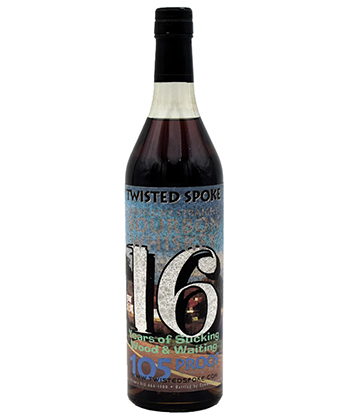
In 1999, Julian Van Winkle III bottled a 16-year-old expression specifically for the Twisted Spoke, a notorious biker-themed Chicago establishment that operated for decades before closing in 2025. A few years later, in 2003, Van Winkle curated the "Blue Smoke" 18-year-old bottling exclusively for restaurateur Danny Meyer’s famed New York City barbecue joint of the same name. Though the precise distillery origin of the Blue Smoke juice remains officially unconfirmed, industry experts universally attribute it to Stitzel-Weller.
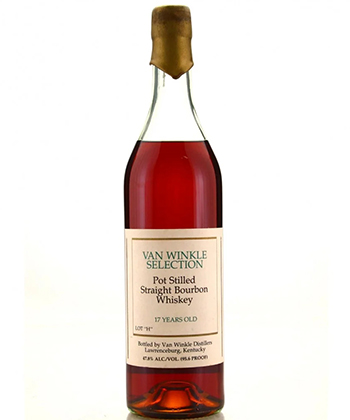
International markets also played a pivotal role in shaping today’s most expensive bottles. Long before domestic consumers recognized bourbon as a luxury collectible, producers targeted discerning foreign palates. The Old Rip Van Winkle Selection 17 Year Old Pot Stilled Straight Bourbon, casked in 1974 and bottled in 1991, was originally intended for the Japanese market before trickling into the Pappy Van Winkle Family Reserve lineage.
Perhaps the most enigmatic example of this international targeting sits at the very top of the market. The Society of Bourbon Connoisseurs 20 Year Old Cask Proof Bourbon Whiskey features a prestigious title entirely invented by Julian Van Winkle III specifically for a batch of high-strength bourbons destined for Japan. Despite no official "Society" ever existing, the branding and liquid quality have elevated it to the pinnacle of global valuation.
The Definitive Ranking: World’s Most Expensive Bourbons
According to comprehensive market data gathered by Wine-Searcher, the ten most expensive bourbons currently circulating on the global secondary market reflect a blend of extreme age, historic provenance, and legendary curation:
-
Society of Bourbon Connoisseurs 20 Year Old Cask Proof Bourbon Whiskey, Kentucky, USA
Context: A bespoke Japanese market release curated by Julian Van Winkle III under a fictional society title, representing the absolute ceiling of modern bourbon valuation. -
Old Rip Van Winkle Bottled in Bond Kentucky Straight Bourbon Whiskey, USA
Context: Distilled in 1916 and released in 1934, this medicinal-era relic showcases pre-Prohibition craftsmanship preserved in pint-sized decanters.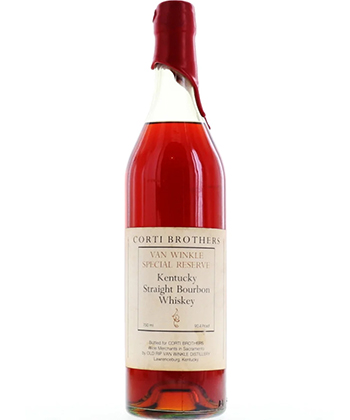
-
Old Rip Van Winkle “Twisted Spoke” 16 Year Old Kentucky Straight Bourbon Whiskey, Kentucky, USA
Context: Bottled in 1999 as a proprietary collaboration for Chicago’s famous biker bar, combining rarity with pop-culture whiskey lore. -
Old Rip Van Winkle 25 Year Old Kentucky Straight Bourbon Whiskey, Kentucky, USA
Context: Distilled in 1989 at the former Shively distillery and finished in stainless steel tanks to halt wood degradation, limited to a mere 710 bottles. -
Old Rip Van Winkle “Blue Smoke” 18 Year Old Kentucky Straight Bourbon Whiskey, Kentucky, USA
Context: A 2003 collaborative release crafted exclusively for Danny Meyer’s New York barbecue restaurant, believed to contain legendary Stitzel-Weller stock.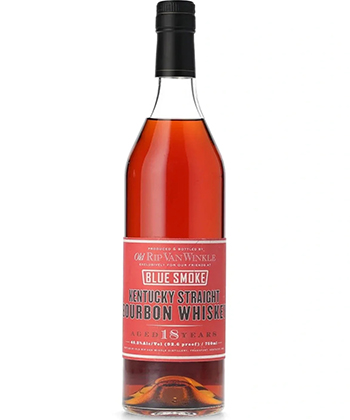
-
Old Rip Van Winkle “Van Winkle Special Reserve” Corti Brothers 19 Year Old Straight Bourbon Whiskey, Kentucky, USA
Context: A 1975 vintage wheated bourbon from Stitzel-Weller, bottled in 1994 in unique cognac decanters at the behest of Sacramento merchant Darrell Corti. -
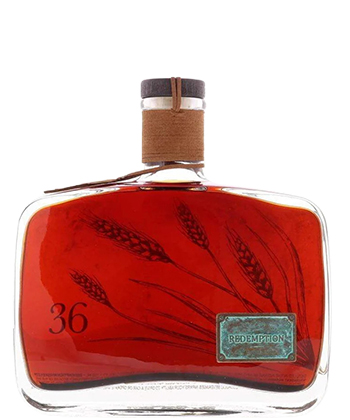
Redemption 36 Year Old Barrel Proof Straight Bourbon Whiskey, USA
Context: Released in 2017 as part of "The Ancients" series, this cask-strength bottling is one of the oldest commercially released bourbons ever brought to market, with a microscopic run of just 18 bottles. -
Old Stagg 19 Year Old Straight Bourbon Whiskey, Kentucky, USA
Context: Distilled at the height of World War I in 1914 and bottled as medicine in 1933, serving as the historical blueprint for Buffalo Trace’s modern Prohibition Collection.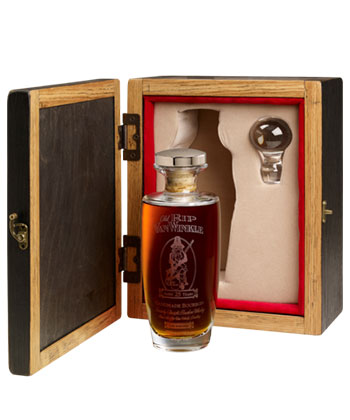
-
Old Rip Van Winkle Selection 17 Year Old Pot Stilled Straight Bourbon Whiskey, Kentucky, USA
Context: Casked in 1974 and bottled in 1991, this pot-stilled expression from the Old Boone Distillery was initially exported to Japan before entering elite domestic collecting circles. -
A.H. Hirsch Reserve 17 Year Old Straight Bourbon Whiskey, Pennsylvania, USA
Context: Distilled in Schaefferstown, Pennsylvania, in 1974, aged through the closure of the facility, and finished in Kentucky, this label remains the gold standard of historic bourbon lore.
Broader Implications for the Spirits Industry
The widening chasm between the oversupplied commercial whiskey market and the skyrocketing prices of ultra-rare bottlings signals a structural evolution in consumer behavior. Distillers are increasingly recognizing that the future of high-end profitability relies not on volume, but on exclusivity, heritage preservation, and luxury tiering.
As historical stocks dwindle and the generation of pre-Prohibition and mid-century barrels edges closer to total depletion, market analysts predict that values for these top-tier bottles will remain remarkably resilient. For collectors, these bottles represent liquid investments that transcend traditional asset classes. For the industry at large, they serve as a testament to the enduring craftsmanship of American distilling history—proving that while market trends fluctuate, true liquid rarity is entirely timeless.