ISIS Claims Responsibility for Deadly Terrorist Attacks in Central Jakarta as Security Forces Neutralize Multiple Assailants

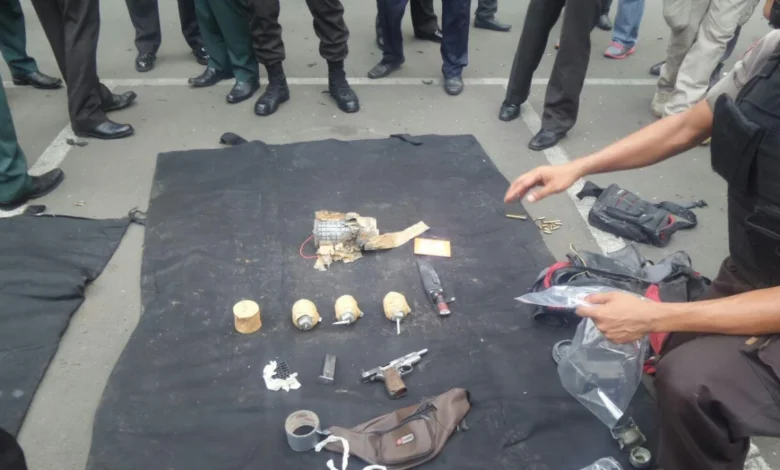
The heart of Indonesia’s capital was thrust into a state of emergency on Thursday following a series of coordinated explosions and gun battles that left several dead and many more wounded. In a definitive statement issued from the scene of the violence on Jalan Thamrin, Central Jakarta, Deputy Chief of the National Police (Wakapolri) Commissioner General Budi Gunawan confirmed that the international terrorist organization ISIS (Islamic State of Iraq and the Levant) was the architect behind the assault. The attack, which targeted high-profile public areas and security outposts, utilized a lethal combination of suicide bombs, hand grenades, and firearms, including semi-automatic FN pistols.
As the smoke cleared from the busy intersection near the Sarinah shopping mall, Commissioner General Budi Gunawan addressed the media, providing critical details on the weaponry recovered from the neutralized militants. He confirmed that the attackers were heavily armed, carrying not only functional firearms but also a cache of unexploded ordnance. "It is confirmed to be ISIS," Budi Gunawan stated, clarifying the ideological origins of the cell. "We found FN-type handguns, active bombs, and grenades at the location. Some of the explosives were still live and had to be rendered safe by our disposal teams."
The assault represents a significant escalation in the security challenges facing Indonesia, a nation that has spent over a decade battling domestic extremism. While the situation was brought under control within hours, the brazen nature of the daylight attack in a high-security zone—home to government buildings, international embassies, and multinational corporations—has sent shockwaves through the region.
A Detailed Chronology of the Thamrin Assault
The violence began mid-morning, around 10:39 AM local time, at one of Jakarta’s most iconic and busiest intersections. The initial explosion occurred at a police traffic post located at the junction of Jalan MH Thamrin and Jalan KH Wahid Hasyim. Witnesses reported seeing a man approach the post before a massive blast shattered the structure, killing at least one police officer and several civilians in the immediate vicinity.
Almost simultaneously, a second set of explosions rocked a nearby Starbucks café located in the Menara Cakrawala building, directly across from the Sarinah department store. This secondary blast targeted a location frequented by both local professionals and foreign expatriates, aligning with the attackers’ intent to strike "foreign objects," as noted by the Wakapolri.
Following the initial detonations, the situation transitioned into a terrifying urban guerrilla skirmish. At least two gunmen emerged in the middle of the street, brandishing FN pistols and firing indiscriminately at police officers and bystanders who had gathered to witness the aftermath of the first blast. Amateur footage captured by office workers in surrounding skyscrapers showed a tense standoff between the militants and police units. The attackers utilized the chaos to lob hand grenades at responding officers before being cornered near the parking lot of the Sarinah complex.
By approximately 12:00 PM, elite tactical units from the Indonesian National Police, including the Densus 88 counter-terrorism squad, had flooded the area. Snipers were positioned on rooftops, and armored vehicles moved in to provide cover. After a fierce exchange of gunfire, the police confirmed that all active assailants had been neutralized. "We can confirm that four terrorists were killed during the operation," Budi Gunawan reported. "The area is now secure, and there are no ongoing hostage situations or secondary explosive threats."
Casualty Reports and the Impact on Foreign Nationals
The human cost of the attack became clearer as the afternoon progressed. Preliminary data provided by the National Police indicated that in addition to the four deceased terrorists, the toll included two civilians and one police officer. The number of wounded was significant, with dozens being rushed to nearby hospitals, including Gatot Soebroto Army Hospital and Cipto Mangunkusumo Hospital.
Among the victims were foreign nationals, a detail that underscores the international implications of the event. Budi Gunawan confirmed that one foreign national had been killed in the crossfire, while another was seriously injured and receiving medical treatment. While the identities were initially withheld pending notification of kin, the presence of foreign victims highlights the attackers’ strategic choice of targets—places where the global community intersects with Indonesian society.
"The targets were clear," the Wakapolri explained. "They targeted police headquarters, government officials, and objects associated with foreign interests. This was a calculated move to garner international attention and destabilize the sense of security in the capital."
Security Response and Public Safety Measures
In the wake of the neutralized threat, the Indonesian government moved quickly to reassure the public while maintaining a high state of vigilance. Commissioner General Budi Gunawan urged citizens to remain calm but alert, particularly concerning the presence of suspicious individuals in their neighborhoods.
"We must remain cautious to ensure we are not caught off guard by secondary cells or follow-up attempts," he warned. The police have called upon local community leaders and residents to report any new or suspicious tenants in residential areas, as previous investigations into extremist cells have often led back to rented "safe houses" in the city’s outskirts.
Security cordons remained in place throughout Jalan Thamrin for several hours as forensic teams and the bomb squad (Gegana) scoured the area for evidence. The recovery of FN pistols is of particular interest to investigators, as it suggests a sophisticated supply chain for illegal firearms, possibly linked to insurgent networks in the southern Philippines or domestic radical groups with access to illicit arms manufacturing.
Contextualizing the Rise of ISIS in Southeast Asia
The confirmation of ISIS involvement in the Jakarta attacks marks a pivotal moment for Indonesian counter-terrorism efforts. For years, the primary threat in the archipelago was Jemaah Islamiyah (JI), the Al-Qaeda-linked group responsible for the 2002 Bali bombings and the 2009 hotel bombings in Mega Kuningan. However, the emergence of the Islamic State has shifted the landscape, attracting a younger generation of radicals through social media and digital propaganda.
Security analysts suggest that the Thamrin attack may have been orchestrated by Bahrun Naim, an Indonesian militant believed to be fighting with ISIS in Raqqa, Syria. Naim has long been suspected of attempting to coordinate "Paris-style" attacks in Southeast Asia to prove his leadership capabilities and to establish a regional province of the caliphate, often referred to as East Asia Wilayah.
The use of small arms and localized explosives in a busy urban center mirrors the tactics used in the November 2015 Paris attacks. By moving away from large-scale truck bombs toward more mobile, "lone wolf" or small-cell tactics, the militants aim to make detection more difficult for intelligence agencies.
Official Reactions and National Resilience
The response from the highest levels of the Indonesian government was swift and resolute. President Joko Widodo, who was on a working visit to West Java at the time of the blasts, immediately cut his trip short to return to the capital. In a televised address, the President condemned the "acts of terror" and offered his condolences to the victims.
"Our nation and our people should not be afraid. We will not be defeated by these acts of terror. I hope the public remains calm," the President stated. This sentiment was quickly echoed across social media through the hashtag #KamiTidakTakut (We Are Not Afraid), which became a rallying cry for Jakartans and Indonesians nationwide, signaling a refusal to let fear dictate the rhythm of life in the city.
International leaders also weighed in, offering support to Indonesia’s security forces. The attack has highlighted the necessity for increased regional intelligence sharing among ASEAN member states, as the porous borders of the region allow for the relatively easy movement of militants and illicit goods.
Broader Implications for Indonesia’s Security Landscape
The Thamrin incident will likely prompt a significant review of Indonesia’s anti-terrorism laws. Currently, Indonesian authorities face challenges in arresting individuals who have traveled abroad to join militant groups unless they can be directly linked to a specific crime upon their return. The Wakapolri’s report on the sophisticated nature of the weapons used—FN pistols and grenades—will almost certainly lead to intensified crackdowns on illegal arms trafficking and more aggressive surveillance of known extremist sympathizers.
Economically, the attack poses a temporary challenge to Indonesia’s investment climate and tourism industry. Jalan Thamrin is not only a commercial hub but also a gateway for tourists visiting the city’s historical sites. However, analysts note that Jakarta has historically shown remarkable resilience in the face of such events, with markets often stabilizing within days as the government demonstrates its capability to restore order.
The successful neutralization of the attackers by the police within less than three hours has been praised as a sign of the improved tactical readiness of the Indonesian National Police. Unlike previous decades where responses were sometimes fragmented, the coordination between the Wakapolri’s office, tactical units, and local precincts during the Thamrin assault showed a modernized approach to urban crisis management.
Conclusion: A City on Guard
As night fell over Jakarta, the heavy presence of police and military personnel served as a reminder of the day’s tragedy. While the immediate threat has been eliminated, the investigation into the broader network behind the four deceased terrorists continues. The confirmation by Commissioner General Budi Gunawan that ISIS has successfully directed or inspired an attack in the heart of the capital marks the beginning of a new chapter in Indonesia’s long-standing battle against extremism.
The focus now shifts to the "behind-the-scenes" actors—the recruiters, the financiers, and the bomb-makers who remain in the shadows. For the citizens of Jakarta, the events of January 14 serve as a somber reminder of the persistent threat of radicalism, but the unified response from the government and the public suggests that the city’s spirit remains unbroken. The "objects of foreign interest" and government offices mentioned by the Wakapolri will remain under heightened security for the foreseeable future, as Indonesia reaffirms its commitment to purging the influence of ISIS from its shores.