The Evolution of the Dirty Martini and the Bartenders Defining the New Standards of Brine

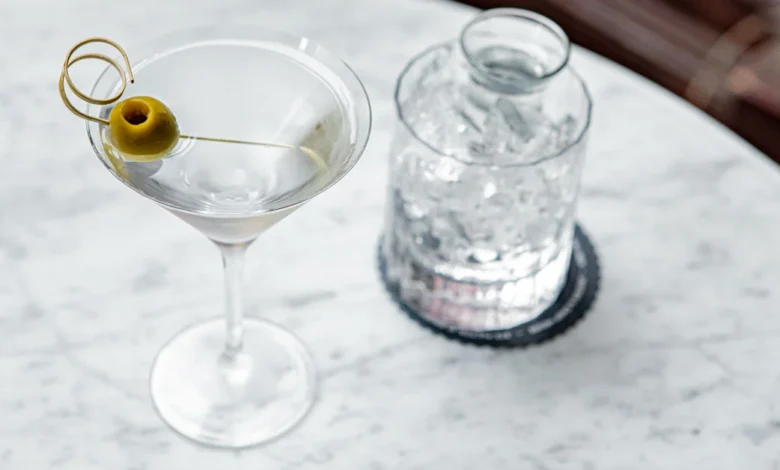
The cocktail landscape is currently witnessing a significant shift in the preparation and categorization of the Dirty Martini, a classic drink that has evolved from a simple bar staple into a highly technical and customizable craft experience. As consumer demand for savory, high-sodium profiles increases, bartenders across the United States are moving away from nebulous descriptors and toward a codified system of "dirtiness." From Brooklyn to Palm Springs, the industry is grappling with a central question: exactly how much brine constitutes a Dirty Martini, and at what point does it transition from a cocktail into a "nuclear" culinary experience?
The Quantification of Salt: Bar Rêve and the Numerical Scale
At the forefront of this movement is Bar Rêve, a recently established cocktail destination in Brooklyn that has sought to eliminate the ambiguity of guest requests. The establishment’s signature offering, the Dirty Martini Chargé, has become its most popular order, largely due to its transparent customization process. The term "Chargé," derived from the French word for strength or intensity, reflects the bar’s philosophy of precision.
Bartenders at Bar Rêve utilize a house-made "blistered olive brine," a sophisticated concoction that moves beyond the liquid found in standard olive jars. This infusion includes rosemary, garlic, bay leaves, dry white wine, and citrus peels from both oranges and lemons. To manage the intensity of this flavor profile, the bar employs a one-to-five scale. A "one" on this scale represents a subtle hint of salinity, utilizing only one-eighth of an ounce of brine. The "three" serves as the house standard, incorporating a half-ounce. For those seeking the maximum savory impact, the "five" delivers a full ounce of the blistered infusion.
This move toward quantification is not isolated. Other New York establishments, such as Tigre and Better Luck Tomorrow, have introduced similar systems where guests order by specific ratios or select from a curated list of garnishes. This shift reflects a broader trend in the hospitality industry where the "bespoke" experience is being replaced by "precision-engineered" cocktails, allowing for consistency across different shifts and bartenders.
A National Survey of Brine Ratios and Bartender Standards
While Bar Rêve has established a numerical scale, a survey of Martini-focused bars across the country reveals a wide variance in what is considered "standard." In the Lower East Side of Manhattan, Bar Valentina operates with a default of a half-ounce of brine. According to Tanya Jamieson, a representative of the bar, they typically only deviate by a quarter-ounce in either direction based on specific guest requests. This conservative approach ensures the structural integrity of the base spirit—usually gin or vodka—is not entirely overwhelmed by sodium.
Similarly, Cecchi’s in New York, known for its "New York Happy Meal" (a pairing of a Martini with fries), maintains a half-ounce default. However, they have codified the term "filthy" to mean a full ounce of brine. This distinction between "dirty" and "filthy" is becoming a common linguistic tool in the industry to help bridge the gap between customer expectations and the final pour.
In different geographical markets, the ratios continue to fluctuate based on the type of brine used. At Bar Cecil in Palm Springs, the bar utilizes olives grown in Northern California which yield a less aggressive, less salty brine. Because the salt content is lower, their "classic" Dirty Martini starts at three-quarters of an ounce. Their "not-so-dirty" version uses a quarter-ounce, while the "filthy" iteration matches the one-ounce mark seen in New York.
The city of Philadelphia offers a unique perspective via the bar R&D. Partner Aaron Deary notes that they use a half-ounce of Castelvetrano olive brine as their baseline. Castelvetrano olives are prized in the craft cocktail world for their buttery, mild flavor compared to the more astringent Manzanilla olives. To mitigate the "fear of adding any more sodium" directly into the glass, R&D often serves a "sidecar" of chilled olive brine. This allows the guest to control the final salinity of their drink at the table, a move that combines hospitality with a cautionary approach to flavor balance.
The Rise of the Savory Cocktail and the Nuclear Option
The trend toward extreme salinity has reached new heights in cities like Chicago and Portland, Maine. At Kitty’s Cosmopolitan Club in Chicago, the house version of the Dirty Martini begins at 30 milliliters, or approximately one ounce. Beverage director Kevin Beary has even introduced what he calls the "nuclear option." This involves the deployment of an olive brine foam—originally developed for low-ABV cocktails—to add a textured, aromatic layer of saltiness that traditional liquid brine cannot achieve.
In Portland, the Supper Club has embraced the "brinier" end of the spectrum. Front-of-house manager Zakk Nix reports that their standard pour is a "shy three-quarters of an ounce." For guests requesting an "essence of dirt," the bar drops to a quarter-ounce. Conversely, a "filthy" request results in 1.25 ounces. Nix admits that for certain regulars, whom he affectionately refers to as "freaks," the brine content has reached as high as two ounces—essentially making the brine the primary component of the drink rather than a modifier.
The Science of Brine: Why the Dirty Martini is Dominating the Market
The surge in Dirty Martini popularity can be attributed to several factors, including the "savory revolution" in the food and beverage industry. Research into flavor perception suggests that salt acts as a flavor enhancer, suppressing bitterness and highlighting the botanical notes in gin or the crispness of vodka. As the American palate shifts away from sugary, fruit-forward cocktails—a staple of the early 2000s—the salt-and-acid profile of the Dirty Martini has become the preferred choice for a more mature, culinary-focused demographic.
Furthermore, the introduction of MSG (monosodium glutamate) and other umami-rich ingredients into cocktail programs has primed consumers for more aggressive savory profiles. The "blistered olive brine" at Bar Rêve, with its inclusion of garlic and bay leaves, mirrors the flavor base of a savory broth or marinade, blurring the lines between the kitchen and the bar.
Historical Context and the Evolution of the Garnish
The Dirty Martini’s origins are often traced back to 1901, when New York bartender John O’Connor reportedly found inspiration in the classic Martini’s olive garnish. Initially made by muddling the olive in the glass, and later by adding a splash of the olive’s brine, the drink was considered a "crude" variation for decades. It was famously criticized by traditionalists who believed that the addition of brine masked the quality of the vermouth and the base spirit.
However, the late 20th century saw the drink’s rehabilitation, largely fueled by its association with pop culture icons and its reputation as a "power drink" in urban financial centers. The current era represents the third wave of the Dirty Martini, characterized by artisanal brines, specific olive cultivars (such as Cerignola or Lucques), and the aforementioned quantification of "dirtiness."
Economic and Cultural Implications for the Hospitality Industry
The rise of the "quantified Martini" has practical implications for bar owners. Standardizing brine measurements allows for better inventory management and more accurate cost-per-drink calculations. In an industry where margins are increasingly thin, the ability to charge a premium for a "Level 5" or "Filthy" Martini—often involving labor-intensive house-made brines—is a significant economic driver.
Culturally, the Dirty Martini has become a symbol of the "new classicism" in American bars. It represents a move toward simplicity and high-quality ingredients, even as the definitions of those ingredients become more complex. The "Martini Happy Meal" at Cecchi’s illustrates how the drink has been repositioned as an accessible yet sophisticated accompaniment to casual dining, bridging the gap between high-end mixology and everyday comfort.
As bartenders continue to experiment with "olive brine foams," "sidecars of salt," and "blistered" infusions, the Dirty Martini is likely to remain a focal point of cocktail innovation. Whether a guest prefers an "essence of dirt" or a "nuclear" two-ounce pour, the industry’s move toward precision ensures that the modern Martini is no longer a guessing game, but a carefully measured science.