
Twice Baked Potatoes For The Freezer

Twice Baked Potatoes for the Freezer: A Comprehensive Guide to Preparation, Storage, and Reheating
Twice baked potatoes, with their creamy interiors and often crispy skins, are a beloved comfort food. Their versatility makes them a fantastic candidate for freezer meals, offering convenience without sacrificing flavor. This guide delves into the intricacies of preparing twice baked potatoes specifically for long-term freezer storage, covering every step from potato selection and cooking to efficient freezing techniques and successful reheating methods. Mastering this process allows for quick and satisfying meals on demand, transforming a time-consuming dish into a readily available pantry staple.
The foundation of excellent freezer-friendly twice baked potatoes lies in the potato itself. Opt for starchy varieties such as Russet, Idaho, or Maris Piper. These potatoes possess a fluffy texture when baked and are less prone to becoming watery or mushy after freezing and reheating. Waxy potatoes, while delicious for other preparations, tend to retain more moisture and can develop an undesirable texture when frozen. Size matters too; choose medium to large potatoes that will hold their shape and provide a satisfying portion. Avoid small potatoes as they may overcook during the initial baking and become too soft for freezing. Thoroughly wash the potatoes under cold running water to remove any soil or debris. Prick each potato several times with a fork. This crucial step allows steam to escape during the initial baking, preventing them from exploding in the oven and ensuring a more even cook.
The initial baking of the potatoes is critical for setting them up for successful freezing. Preheat your oven to 400°F (200°C). Rub the pricked potatoes lightly with olive oil or your preferred cooking oil, and sprinkle with salt. This oil creates a slightly crispy skin, which is desirable even after reheating, and the salt enhances the potato’s natural flavor. Place the oiled and salted potatoes directly on the oven rack or on a baking sheet. Bake for approximately 45-60 minutes, or until they are tender when pierced with a fork but not falling apart. The exact baking time will vary depending on the size of the potatoes. Overbaking at this stage will result in a mushy texture post-freezing. It’s better to slightly underbake them initially, as they will cook further during the second baking after reheating.
Once the potatoes are baked and slightly cooled, it’s time for the "twice-baked" component. Carefully slice each potato in half lengthwise. Using a spoon, gently scoop out the flesh from each half, leaving about a ¼-inch border of potato attached to the skin. Be careful not to puncture the skins, as these will serve as edible vessels for your filling. Place the scooped-out potato flesh into a mixing bowl. Mash the potato flesh until it is smooth and lump-free. A potato ricer or a sturdy masher works best for achieving a creamy consistency.
The filling is where personalization and flavor truly shine. For a classic twice baked potato, combine the mashed potato with butter, milk or cream, shredded cheese (cheddar, Gruyère, or a blend are excellent choices), salt, and black pepper. Other popular additions include sour cream, chives, bacon bits, garlic powder, or even a pinch of nutmeg. When preparing fillings for freezing, it’s advisable to use slightly less liquid than you normally would for immediate consumption. Excess moisture can lead to ice crystal formation and a less desirable texture upon reheating. For instance, if you typically use ½ cup of milk, try starting with ¼ to ⅓ cup and adding more during reheating if needed. Ensure all ingredients are thoroughly incorporated for an even distribution of flavor.
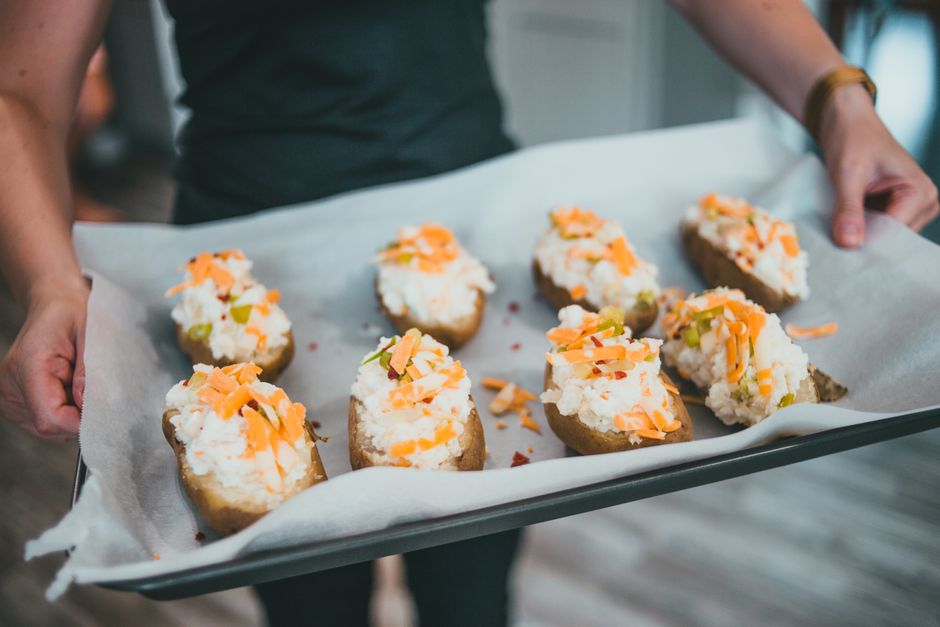
Once the filling is prepared and well-mixed, spoon it back into the hollowed-out potato skins. Mound the filling generously, creating a slight dome. Press the filling down gently to ensure it’s compact and to prevent it from falling out during freezing or reheating. At this stage, you have a decision to make regarding the final baking. For optimal freezer results, it’s generally recommended to bake the filled potatoes a second time before freezing. Preheat your oven to 350°F (175°C). Place the filled potato halves on a baking sheet and bake for 15-20 minutes, or until the filling is heated through and the cheese is melted and lightly golden. This pre-baking step helps to set the filling, making it more stable for freezing and ensuring a shorter reheating time later.
After the second baking, allow the potatoes to cool completely. This cooling process is critical. Placing warm or hot food directly into the freezer can raise the internal temperature of the freezer, affecting other frozen items and increasing the risk of bacterial growth. Once cooled to room temperature, it’s time to prepare them for freezing.
There are several effective methods for freezing twice baked potatoes. The most common and arguably the most straightforward involves individual wrapping. For each potato half, wrap it tightly in plastic wrap, ensuring no air is exposed. Then, place the plastic-wrapped potato half into a heavy-duty freezer bag. Press out as much air as possible from the freezer bag before sealing it. Alternatively, you can use aluminum foil as an initial layer of protection, followed by a freezer bag. Label each bag with the date of preparation and the contents, for example, "Twice Baked Potatoes – Cheddar & Chives – [Date]."
Another excellent freezing method is to arrange the cooled, twice-baked potato halves in a single layer on a baking sheet. Once they are firm (this may take an hour or two in the refrigerator), you can then transfer them to a freezer bag or airtight container. This flash-freezing technique prevents them from sticking together and allows you to easily grab individual portions. This is particularly useful if you have made a large batch and want the flexibility to reheat one or two at a time.
For larger batches, consider using a combination of both. Flash freeze them on a baking sheet until solid, then individually wrap each potato half in plastic wrap before placing them into a large freezer bag. This multi-layer approach offers superior protection against freezer burn.
Proper storage is paramount for maintaining the quality of your frozen twice baked potatoes. Store them in a deep freezer set to 0°F (-18°C) or below. When stored correctly, twice baked potatoes can retain their quality for up to 3-4 months. Beyond this timeframe, while still safe to eat, the texture and flavor may begin to degrade. Ensure freezer bags are sealed tightly to prevent air from entering, which is the primary cause of freezer burn. Freezer burn manifests as dry, discolored patches on the food, affecting both its appearance and taste.
Reheating frozen twice baked potatoes is a straightforward process, and the method you choose will depend on your desired outcome. For the most satisfying result, oven reheating is highly recommended. Preheat your oven to 350°F (175°C). Remove the plastic wrap and aluminum foil from the frozen potato halves. Place them on a baking sheet. If they were flash-frozen and are not individually wrapped, you can place them directly on the baking sheet. If you are reheating from fully frozen, allow for approximately 30-40 minutes of baking time. If you have thawed them in the refrigerator overnight, the reheating time will be shorter, around 20-25 minutes. You can add a splash of milk or butter to the filling during reheating if it appears dry. For an extra crispy topping, you can increase the oven temperature to 400°F (200°C) for the last 5-10 minutes of reheating.
Microwave reheating is the quickest option, but it can sometimes result in a less desirable texture. Remove the plastic wrap and aluminum foil. Place the potato half on a microwave-safe plate. Microwave on medium power (50%) for 3-5 minutes, or until heated through, rotating halfway through. Be cautious not to overheat, as this can lead to uneven heating and a rubbery texture. You may wish to finish in a toaster oven or a conventional oven for a few minutes to improve the crispness of the topping and skin.
Reheating in an air fryer can also yield excellent results, offering a good balance of speed and crispness. Preheat your air fryer to 375°F (190°C). Place the frozen twice baked potato half (without any plastic or foil) in the air fryer basket. Air fry for 15-20 minutes, or until heated through and the topping is golden brown and bubbly.
When reheating, remember that these are already twice baked, so the goal is to heat them through and restore their desirable texture. Overheating can lead to a dry or mushy potato. It’s always better to reheat them at a slightly lower temperature for a longer period than at a high temperature for a short period.
Customization of fillings is where the true magic of freezer-friendly twice baked potatoes lies. Beyond the classic cheese and bacon, consider these variations:
- Broccoli and Cheddar: Incorporate steamed and finely chopped broccoli florets into the mashed potato filling along with sharp cheddar cheese.
- Spinach and Feta: Combine wilted, squeezed-dry spinach with crumbled feta cheese and a hint of garlic.
- Pulled Pork or Chicken: Mix in pre-cooked shredded pulled pork or chicken for a hearty, flavorful meal.
- Spicy Southwestern: Add corn, black beans, diced jalapeños, and a pinch of chili powder to the filling.
- Mushroom and Gruyère: Sautéed mushrooms and nutty Gruyère cheese create an elegant flavor profile.
When freezing these more complex fillings, ensure any vegetables are pre-cooked and any meats are fully cooked and cooled before incorporating them into the potato mixture. This ensures even heating and prevents any undercooked components from compromising food safety or texture.
Thawing twice baked potatoes before reheating is optional but can sometimes lead to a more even cook, especially when using oven or air fryer methods. To thaw, transfer the frozen, wrapped potatoes from the freezer to the refrigerator and allow them to defrost overnight. Once thawed, they can be reheated as described above, with a reduced reheating time.
Troubleshooting common issues can enhance your freezer baking experience. If your twice baked potatoes develop freezer burn, it’s usually due to insufficient packaging or prolonged storage. While they are still safe to eat, the texture and flavor will be compromised. To mitigate freezer burn in the future, ensure a double layer of protection (e.g., plastic wrap and freezer bag) and remove as much air as possible from packaging. If the filling seems dry after reheating, a small splash of milk or cream added during the reheating process, or a dollop of sour cream or butter after reheating, can help. If the potato skin becomes soggy, increasing the oven temperature for the final few minutes of reheating or using the air fryer can help crisp it up.
The economic benefits of freezing twice baked potatoes are significant. By preparing large batches when potatoes are in season or on sale, you can save money compared to purchasing pre-made frozen meals or making them individually as needed. The time investment is front-loaded, but the payoff is having healthy, homemade meals ready in minutes on busy weeknights or weekends.
In conclusion, freezing twice baked potatoes is a practical and rewarding endeavor. By carefully selecting potatoes, mastering the initial baking and filling process, employing effective freezing techniques, and understanding optimal reheating methods, you can consistently enjoy delicious and convenient twice baked potatoes whenever the craving strikes. This versatile comfort food, when prepared with freezing in mind, becomes an indispensable asset in any busy kitchen, offering a taste of homemade goodness with unparalleled ease.


