Slow Cooked Red Braised Pork Belly
The Ultimate Guide to Slow-Cooked Red Braised Pork Belly (Hong Shao Rou)
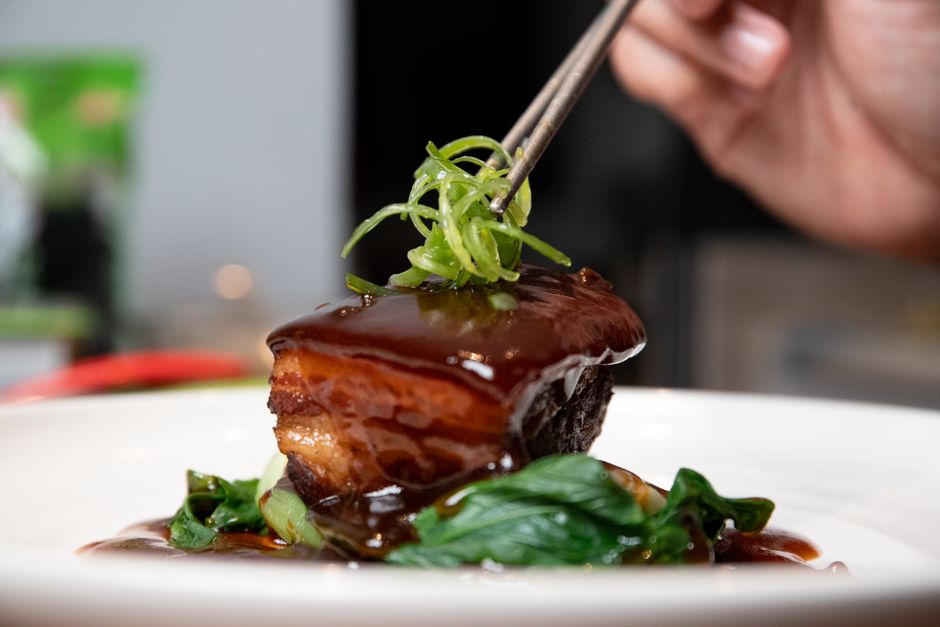
Slow-cooked red braised pork belly, known as Hong Shao Rou in Mandarin, is a culinary masterpiece embodying the essence of Chinese home cooking. This dish, characterized by its impossibly tender, melt-in-your-mouth pork belly cubes, coated in a glossy, deeply savory, and subtly sweet sauce, represents a perfect marriage of rich flavors and comforting textures. The "red braising" technique, central to its creation, involves slow simmering in a liquid seasoned with soy sauce, Shaoxing wine, rock sugar, and aromatic spices. This method not only tenderizes the dense layers of fat and meat but also allows the pork to absorb the complex flavor profile of the braising liquid, transforming it into something truly extraordinary. Achieving the signature glossy sheen and mahogany hue requires careful attention to ingredient ratios and cooking time, making it a rewarding endeavor for both novice and experienced home cooks. The inherent richness of pork belly, when subjected to the slow, gentle heat of braising, undergoes a remarkable transformation, yielding a dish that is both decadent and deeply satisfying, a cornerstone of many Chinese banquets and everyday meals.
The foundation of exceptional Hong Shao Rou lies in the quality of the pork belly. Opt for a cut with distinct, evenly layered strips of lean meat and fat. Avoid excessively fatty or entirely lean cuts. A good ratio is crucial for achieving the desired texture and flavor balance. The fat renders during the slow cooking process, basting the meat and contributing to its succulence, while the lean meat remains tender and flavorful. Begin by selecting a piece of pork belly that is approximately 1.5 to 2 inches thick, ensuring good separation between the fat and meat layers. Inspect the skin for cleanliness and remove any excess impurities. Some recipes advocate for blanching the pork belly before braising, a step that serves multiple purposes. Blanching helps to remove any residual blood and impurities from the meat, resulting in a cleaner flavor and a less "gamey" taste. It also tightens the meat fibers, which can contribute to a more uniform texture during the long braising process and aids in achieving a cleaner braising liquid. To blanch, submerge the pork belly in cold water, bring it to a boil, and simmer for 5-10 minutes. Drain the pork, rinse it thoroughly under cold water, and pat it dry. This preliminary step is vital for setting the stage for a superior braised product.
The braising liquid is where the magic of Hong Shao Rou truly unfolds, infusing the pork with its characteristic depth of flavor and color. The core components are essential: soy sauce, Shaoxing wine, and rock sugar. Low-sodium soy sauce is often preferred to control the overall saltiness, allowing the nuanced flavors of other ingredients to shine. Shaoxing wine, a fermented rice wine, provides a distinctive aromatic complexity and helps to tenderize the meat. Rock sugar, as opposed to granulated sugar, imparts a more subtle, mellow sweetness and contributes to the glossy finish of the sauce. Beyond these staples, aromatic elements are paramount. Star anise, cinnamon sticks, Sichuan peppercorns, and dried chili peppers are common additions, lending their unique fragrances and subtle heat. Ginger and garlic, sliced or smashed, form an aromatic base, adding pungent notes that cut through the richness of the pork. The specific proportions of these ingredients can be adjusted to personal preference, but a well-balanced braising liquid is key to achieving the signature Hong Shao Rou profile. Experimentation with spices like cloves, bay leaves, or even a touch of five-spice powder can further elevate the complexity of the sauce.
The cooking process for Hong Shao Rou is a testament to the principle of "low and slow." After preparing and potentially blanching the pork belly, it’s typically cut into bite-sized cubes, usually around 1-1.5 inches. This size allows for optimal surface area exposure to the braising liquid and ensures even cooking. A common initial step after cubing is to pan-fry or sear the pork belly pieces. This caramelizes the exterior of the pork, locking in juices and developing a richer flavor base. It also helps to render some of the fat before the braising begins. Heat a wok or heavy-bottomed pot over medium-high heat. Add the pork belly cubes and cook, stirring occasionally, until browned on all sides. Do not overcrowd the pan; cook in batches if necessary to ensure proper searing. Once seared, remove the pork from the pot and set aside. Drain off most of the rendered fat, leaving a small amount to sauté the aromatics.
Next, introduce the aromatics to the pot. Sauté sliced ginger and smashed garlic cloves until fragrant, typically for about a minute. This fragrant base is crucial for building layers of flavor. Then, add the star anise, cinnamon sticks, Sichuan peppercorns, and dried chili peppers, toasting them briefly until their aromas are released. Deglaze the pot with Shaoxing wine, scraping up any browned bits from the bottom. This process infuses the liquid with the flavors developed from searing the pork and toasting the spices. Once the wine has mostly evaporated, return the seared pork belly to the pot.
The braising liquid is then added. Pour in enough soy sauce, water, and optionally, a touch of dark soy sauce for enhanced color. The liquid should come up to about two-thirds of the way to cover the pork belly. Add the rock sugar and bring the mixture to a simmer. Once simmering, reduce the heat to the lowest possible setting, cover the pot tightly, and let it braise. The duration of braising is critical and typically ranges from 1.5 to 2.5 hours, depending on the thickness of the pork belly and the desired tenderness. The goal is for the pork to be fork-tender, yielding easily when pierced. During the braising process, it’s beneficial to check on the pork occasionally and stir to ensure even cooking and prevent sticking. If the liquid level becomes too low, you can add a small amount of hot water or more braising liquid.
As the braising time nears its end, the sauce will naturally thicken and reduce. For an even more glossy and concentrated sauce, a final reduction step is often employed. Once the pork is tender, remove the lid and increase the heat to medium-high. Allow the sauce to simmer and reduce, stirring frequently, until it coats the pork belly beautifully. This process can take another 15-30 minutes. The reduction caramelizes the sugars and soy sauce, creating the signature sticky, glossy glaze that defines Hong Shao Rou. Be mindful not to over-reduce, as the sauce can become too thick or even burn.
Serving Hong Shao Rou is an experience in itself. The rich, unctuous pork belly is typically served hot, often with steamed white rice to absorb the abundant, flavorful sauce. The rice acts as a neutral canvas, allowing the complex flavors of the pork and sauce to take center stage. Garnish is usually minimal, to let the dish’s natural beauty and flavor shine. A scattering of fresh cilantro or thinly sliced scallions can add a touch of color and freshness. Some variations may include the addition of hard-boiled eggs or tofu knots during the last hour of braising, which soak up the delicious sauce and become incredibly flavorful. These additions are often referred to as "braised accompaniments."
The versatility of slow-cooked red braised pork belly extends beyond its immediate consumption. Its rich flavor profile makes it an excellent ingredient for subsequent dishes. The leftover braising liquid, now imbued with the essence of pork and aromatics, can be strained and used as a base for other stir-fries, noodle dishes, or even as a flavor enhancer for soups. The tender pork belly itself can be sliced thinly and used in fried rice, congee, or as a topping for other savory preparations. This economical and delicious aspect of Hong Shao Rou further solidifies its place as a beloved staple in Chinese cuisine, minimizing waste and maximizing flavor.
Troubleshooting common issues is an essential part of mastering Hong Shao Rou. If the pork is too tough, it likely requires more braising time. Conversely, if it becomes too mushy, the braising time might have been excessive, or the heat too high. A sauce that is too thin indicates insufficient reduction, while an overly thick or burnt sauce suggests it was reduced for too long or over high heat. Adjustments to soy sauce and sugar can be made during the braising process to fine-tune the saltiness and sweetness. Ensuring the right balance of aromatics from the outset is key to avoiding a bland or overly spiced final product. The quality of ingredients, particularly the Shaoxing wine and rock sugar, can significantly impact the final taste and texture.
The historical and cultural significance of Hong Shao Rou is deeply rooted in Chinese culinary traditions. While its exact origins are debated, red braising is a technique that has been perfected over centuries, evolving with regional preferences and ingredient availability. It’s a dish that evokes feelings of home, family, and celebration. The vibrant red hue achieved through the combination of soy sauce and rock sugar is not merely aesthetic; it symbolizes good fortune and prosperity in Chinese culture. This dish is often prepared for special occasions, family gatherings, and during festive periods, underscoring its importance as more than just a meal but as a culinary symbol. The very act of slow cooking signifies patience and care, reflecting the values embedded within the dish.
Optimizing Hong Shao Rou for SEO involves incorporating relevant keywords naturally throughout the text. Terms like "red braised pork belly," "Hong Shao Rou recipe," "slow-cooked pork," "Chinese pork belly," "braising pork," "melt-in-your-mouth pork," "savory pork," "sweet and savory pork," "traditional Chinese cooking," and "easy pork belly recipe" should be woven into the narrative. Utilizing headings and subheadings (H2, H3) will enhance readability and SEO performance. Descriptions of the cooking process, ingredients, and serving suggestions are crucial for search engine algorithms to understand the content’s relevance. Including variations and tips for troubleshooting also adds value and can attract a wider audience searching for specific solutions. The detailed explanation of the braising technique and the cultural context of the dish provide ample opportunities for keyword integration. The comprehensive nature of this article, covering everything from ingredient selection to cultural significance, aims to establish it as a definitive resource for anyone interested in preparing or understanding this iconic Chinese dish, thereby improving its visibility and ranking in search engine results.